


Immutable Games’ popular Web3 trading card game, Gods Unchained, has made its debut on the Epic Games Store, granting access to its impressive player base of 230 million customers. This exciting development was officially announced on June 21.
Gods Unchained is a captivating collectible trading card game that draws comparisons to popular titles like Hearthstone and Magic: The Gathering Arena.
However, what sets it apart is its innovative use of nonfungible tokens (NFTs) to represent each card.
These NFTs are built on the Ethereum layer-2 network known as Immutable X. Since its initial release in June 2019, Gods Unchained has steadily amassed a dedicated player base, reaching an impressive milestone of 80,000 weekly active players by January 2022.
The Epic Games Store, a digital game distribution platform akin to Steam and GOG.com, boasts a vast user base of over 230 million PC gamers.
This recent integration with the Epic Games Store marks a significant milestone for Gods Unchained, according to Daniel Paez, the executive producer of the game.
Paez expressed his enthusiasm, stating, “It is hard to overestimate the significance of Gods Unchained’s launch on Epic Games Store, one of the largest PC gaming platforms in the world.
We are extremely excited to present our game to a completely new and truly massive audience of traditional PC gamers and TCG enthusiasts.”
This release comes at a time when Web3 publishers are grappling with challenges from Steam, the dominant PC game distributor worldwide.
In October 2021, Steam made a controversial announcement, declaring that Web3 games were not welcome on its platform. In addition, it delisted Age of Rust due to the benefits it provided to owners of its NFTs.
Responding to Steam’s actions, former MetaMask team members took action and introduced a competing distribution platform called Hyperplay.
Hyperplay aims to counter Steam’s restrictions and provides access to the Epic Games and GOG.com stores through its own interface. Additionally, it curates a selection of Web3 titles. To further develop the platform and expand its reach, the Hyperplay team recently secured $12 million in funding on June 8.
With Gods Unchained now available on the Epic Games Store, it opens up new opportunities for the game’s growth and introduces it to a vast community of traditional PC gamers and trading card game enthusiasts.
This collaboration between Immutable Games and Epic Games marks an exciting chapter in the history of Gods Unchained, solidifying its position in the gaming industry.
Other Stories:
Moody’s Issues Warning About Lack of Bipartisan Support for Crypto Regulation in the US
Binance Takes Steps Towards Enhanced Bitcoin Transactions with Lightning Network Integration
Binance Takes Steps Towards Enhanced Bitcoin Transactions with Lightning Network Integration

Apple has taken down a fraudulent Trezor wallet app from its App Store, but concerns remain as other copycat apps continue to linger.
The removal came after Rafael Yakobi, Managing Partner at Crypto Lawyers, alerted users to the presence of a malicious app disguised as the popular crypto hardware wallet, Trezor. Yakobi warned that the app, named “Trezor Wallet Suite,” was designed to steal cryptocurrency by requesting users’ seed phrases.
Although the total number of victims remains unknown, Yakobi suggested it could be in the hundreds or thousands.
Upon searching the US version of the App Store, Cointelegraph failed to find the referenced malicious app. Apple typically acts swiftly to remove suspicious or fraudulent apps once they are notified.
However, a search for “Trezor Wallet Suite” did yield another potentially suspicious application called “MyTREZŌR Suite: One Edition.”
With only two reviews, both warning of the app’s scam nature and its intention to steal crypto, it appears that Apple has not yet fully addressed the issue.
Apple maintains that apps on its official App Store undergo thorough vetting and security clearance. To ensure the safety of downloading mobile applications for crypto wallets, users are advised to obtain them exclusively from the manufacturers’ official websites.
Although an iOS app is available for Trezor users, it serves as a companion app with limited functionality.
According to reports from Apple news outlet 9to5mac.com, the tech giant is generally stringent in its approval of crypto-related apps, allowing them only under strict circumstances.
However, despite Apple’s claims that the App Store is a trustworthy platform, the outlet highlights the challenges the company faces in completely eradicating scams from the store.
Instances of fake wallet apps on Apple’s App Store are not new. In 2021, a user allegedly lost $600,000 worth of Bitcoin after downloading a malicious Trezor app from the store.
To mitigate such risks, it is crucial for users to exercise caution and opt for trusted sources when downloading crypto-related applications.
Other Stories:
United States Agencies Unite to Form Task Force Targeting Darknet and Cryptocurrency Crimes
Binance Takes Steps Towards Enhanced Bitcoin Transactions with Lightning Network Integration
Moody’s Issues Warning About Lack of Bipartisan Support for Crypto Regulation in the US
Valkyrie, a cryptocurrency fund manager, has joined the rush of financial firms applying for a Bitcoin spot exchange-traded fund (ETF).
This move comes as several other companies have recently filed similar applications with the United States Securities and Exchange Commission (SEC). On June 21, Valkyrie submitted an S-1 registration form for a Bitcoin spot ETF, with plans to list the fund on the Nasdaq under the symbol BRRR.
Valkyrie is no stranger to the world of Bitcoin futures ETFs. In October 2021, it launched the Valkyrie Bitcoin Strategy ETF (BTF), becoming the second BTC futures ETF in the U.S. Later in December, the firm introduced the Valkyrie Balance Sheet Opportunities (VBB), which it eventually liquidated in October 2022. Valkyrie also manages the Valkyrie Bitcoin Miners ETF (WGMI), which tracks companies that generate revenue or profits from BTC mining.
The recent activities of its competitors seemingly motivated Valkyrie to take action.
In a podcast interview with Cointelegraph’s Hashing It Out in March, Steven McClurg, Valkyrie Investments’ chief investment officer, expressed his belief that a BTC ETF would only be possible “in a future administration after the next elections or through legislative action.”
However, Valkyrie’s move comes amidst a flurry of ETF applications. BlackRock applied to list a BTC spot ETF as a trust on the Nasdaq on June 15, while WisdomTree and Invesco followed suit with similar applications on June 20.
Additionally, there are unconfirmed reports that Fidelity is also preparing to file an application for a BTC spot ETF. As these developments unfold, the price of BTC continues to rise, currently up 6.41% at the time of writing.
With the growing interest in cryptocurrency investments, financial firms are recognizing the demand for regulated investment vehicles like ETFs.
These funds provide investors with exposure to Bitcoin without having to directly hold the digital asset. While the SEC has yet to approve any Bitcoin spot ETF applications, the increasing number of filings indicates a growing push for such investment products in the market.
Valkyrie’s decision to apply for a BTC spot ETF aligns with its existing offerings in the cryptocurrency space.
If approved, the ETF would provide investors with another option to gain exposure to Bitcoin’s performance. The SEC’s review process will determine the fate of these applications and shape the future of cryptocurrency investment opportunities for retail and institutional investors alike.
Other Stories:
United States Agencies Unite to Form Task Force Targeting Darknet and Cryptocurrency Crimes
Moody’s Issues Warning About Lack of Bipartisan Support for Crypto Regulation in the US
Polygon Co-founder Suggests Proposal to Improve Security of PoS network

Moody’s, the credit ratings agency, has issued a report warning that the lack of bipartisan support for crypto regulation in the United States could make the country less attractive to investors and companies.
The report, released on June 20, highlighted the political divide among lawmakers regarding legislation focused on digital assets, specifically in relation to stablecoins and the establishment of a comprehensive regulatory framework.
Moody’s identified significant disparities between the approaches of Democrats and Republicans when it comes to crypto-focused legislation.
One key area of contention is the regulation of stablecoins, with lawmakers differing on whether oversight should be conducted at the federal or state level. Another concern is the need to address consumer protection issues, especially in light of several crypto companies going bankrupt in 2022.
The report stated, “Despite agreement on the need for consumer protections and a harmonized framework for digital assets, Democrats and Republicans hold different views on how to achieve these objectives.”
Moody’s warned that the failure to reach a bipartisan agreement and advance legislation specifically addressing digital assets could diminish the attractiveness of the United States compared to other jurisdictions that are actively implementing comprehensive rules.
Moody’s specifically highlighted the contrasting views between Patrick McHenry, Chair of the House Financial Services Committee and representative of the Republican party, and Maxine Waters, ranking member and representative of the Democratic party.
Both expressed their concerns during a hearing on the future of digital assets held on June 13. However, Moody’s noted that the gathering only served to highlight the deepening political disagreements surrounding the establishment of a crypto framework.
The uncertain path toward bipartisan agreement and the anticipation of extensive debates in Congress have raised concerns among many crypto firms.
Numerous companies have criticized U.S. lawmakers for the lack of regulatory clarity and have indicated that relocating outside the country might be in their best interest.
For instance, executives from Coinbase, currently based in the U.S. and facing legal action from the Securities and Exchange Commission, visited the United Arab Emirates in May to explore the region as a potential strategic hub.
In conclusion, Moody’s report underscores the need for bipartisan support and cooperation among lawmakers in order to create a favorable regulatory environment for digital assets in the United States.
Without such support, the country risks losing its appeal to investors and companies, who may seek more crypto-friendly jurisdictions elsewhere.
Other Stories:
Analysis: Why is Bitcoin (BTC) Price Up Today?
Big Eyes Launch: Did All of the Investors Just Get Scammed?
Fund Manager Predicts Bitcoin Will Reach $1 Million, Gives Bullish Coinbase Assessment

Polygon co-founder Mihailo Bjelic has put forward a proposal to enhance the security of the Polygon proof-of-stake (PoS) network by upgrading it to a “zkEVM validium” version.
The suggested upgrade, as outlined in a forum post on June 20, involves leveraging zero-knowledge proofs to bolster security measures.
Polygon PoS, an Ethereum scaling solution introduced in 2019, currently handles over 2 million transactions daily and has more than $900 million locked within its contracts.
In March, the Polygon team launched another network called Polygon zkEVM, utilizing zero-knowledge proof rollups to scale Ethereum.
In Bjelic’s proposal, he suggests upgrading the existing PoS network to a zero-knowledge Ethereum Virtual Machine (zkEVM) version, aligning both networks with zero-knowledge proofs.
However, unlike the recently launched network, the updated Polygon PoS will not function as a rollup. Instead, it will be a “validium” that stores only validation proofs on layer 1, while the transaction data will reside on a separate chain.
This compromise will result in lower transaction fees for Polygon PoS compared to Polygon zkEVM. Moreover, it will enhance the security of Polygon PoS by allowing it to inherit the security features of Ethereum, Bjelic explained.
Following the implementation of this upgrade, Polygon zkEVM could be utilized for high-value transactions requiring heightened security, while Polygon PoS may become the preferred network for gaming and social media enthusiasts.
Bjelic emphasized that the upgraded Polygon PoS (zkEVM validium) would provide high scalability and low fees, making it suitable for applications with high transaction volumes and the need for affordable transactions, such as Web3 gaming and social platforms.
Bjelic proposed a timeline for the implementation, suggesting that his informal proposal could be transformed into a formal Polygon Improvement Proposal by November. Subsequently, the upgrade could be deployed on the mainnet between February and March 2024.
The introduction of Polygon zkEVM and the upgrade of Polygon PoS are part of the team’s broader vision to establish a “Supernet” that unifies diverse application-specific chains.
This initiative, referred to as “Polygon 2.0,” aims to enhance the overall capabilities and offerings of the Polygon ecosystem.
On a separate note, it’s worth mentioning that eToro delisted Polygon on June 13 due to concerns raised by the United States Securities and Exchange Commission regarding the security’s registration status. However, the Polygon team has refuted any violation of U.S. laws in its fundraising activities.
Other Stories:
Analysis: Why is Bitcoin (BTC) Price Up Today?
Fund Manager Predicts Bitcoin Will Reach $1 Million, Gives Bullish Coinbase Assessment
Bitcoin Surpasses 50% Market Dominance For First Time in 2 Years
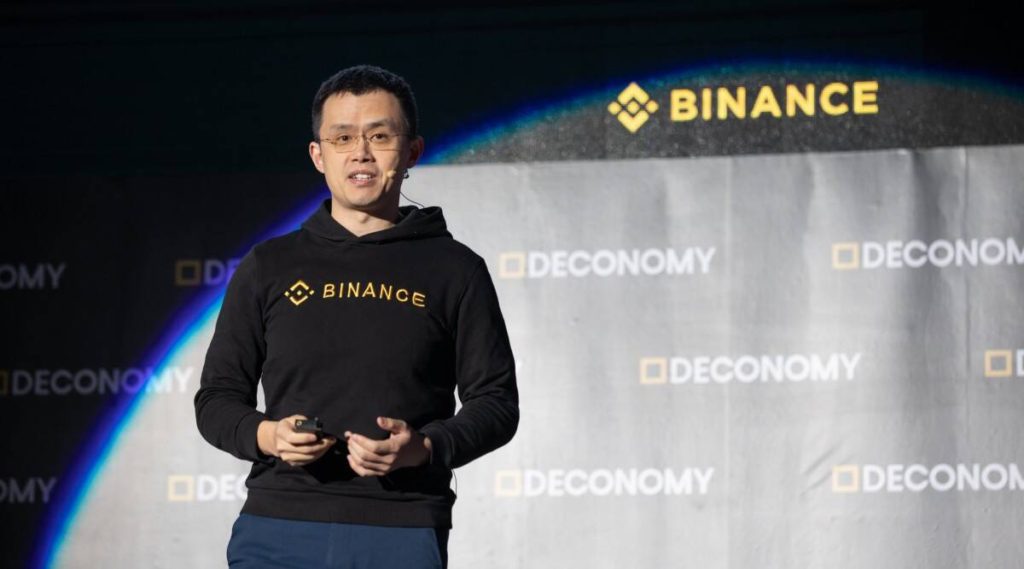
Binance, one of the leading cryptocurrency exchanges, has announced its plans to implement Lightning Network nodes to enhance Bitcoin transactions.
The exchange aims to enable smoother BTC deposits and withdrawals while addressing network congestion issues.
On June 20, Binance took a significant step towards integrating the Lightning Network by initiating the operation of nodes on the network. In a tweet, Binance acknowledged the presence of these nodes and expressed gratitude to users who noticed them.
However, the exchange also mentioned that further technical work needs to be completed before the Lightning integration can be fully implemented. Binance has assured users that updates will be provided as progress is made.
The decision to incorporate the Lightning Network came in response to the congestion witnessed on the Bitcoin network on May 7.
Binance recognized the potential of the Lightning Network in alleviating bottlenecks and enabling BTC withdrawals during such situations.
The increased congestion was primarily caused by a surge in BRC-20 transactions, with the popularity of memecoins contributing to the issue.
The Bitcoin Lightning Network is a layer-two protocol built on the Bitcoin blockchain, specifically designed to address scalability challenges. By creating payment channels and conducting off-chain transactions, participants can achieve faster and more cost-effective transfers.
Settlements on the Bitcoin blockchain occur only when necessary, enhancing the speed, scalability, and privacy of Bitcoin transactions. The Lightning Network is particularly beneficial for microtransactions, reducing fees and congestion on the main network.
While implementing the Lightning Network, Binance has also been dealing with a legal battle with the United States Securities and Exchange Commission (SEC). This situation has created a period of uncertainty for the company.
However, there has been a recent development that brought some relief. Judge Amy Berman Jackson of the U.S. District Court for the District of Columbia approved a consent agreement between Binance, Binance.US, and the SEC.
This agreement effectively dismissed the temporary restraining order filed by the SEC, which would have frozen all Binance.US assets.
In conclusion, Binance’s decision to implement Lightning Network nodes demonstrates its commitment to improving the efficiency of Bitcoin transactions.
By integrating the Lightning Network, Binance aims to alleviate network congestion and provide smoother BTC deposits and withdrawals for its users. Additionally, the recent resolution of the legal dispute with the SEC brings some stability to the company’s operations.
Other Stories:
Fund Manager Predicts Bitcoin Will Reach $1 Million, Gives Bullish Coinbase Assessment
Bitcoin Surpasses 50% Market Dominance For First Time in 2 Years

A joint effort among five United States enforcement agencies to combat crimes related to the darknet and digital currency has been formalized with the establishment of the Darknet Marketplace and Digital Currency Crimes Task Force.
The task force aims to target a range of “cryptocurrency-enabled crimes,” including drug trafficking, money laundering, personal information theft, and child exploitation.
Representatives from Homeland Security Investigations (HSI) Arizona, the Office for U.S. Attorneys, the Internal Revenue Service Criminal Investigation, the Drug Enforcement Administration, and the Postal Inspection Service recently signed a memorandum of understanding to solidify their collaboration.
Since 2017, these agencies have been working together and have witnessed a surge in the utilization of cryptocurrency for illicit activities.
In a statement, they highlighted the mission of the task force: to disrupt and dismantle criminal organizations that exploit the perceived anonymity of the darknet or employ digital currency for illegal purposes.
This move reflects a global trend of law enforcement agencies establishing specialized units dedicated to tackling crypto-related crimes. Interpol, for instance, established its own crypto crimes unit in late 2022, while Canadian cities have formed local task forces.
With 93 overseas locations in 56 countries, the HSI ensures that the new task force will have an international reach.
Within the United States, the Federal Bureau of Investigation created a Virtual Asset Exploitation Unit in February, which collaborates with the Justice Department’s National Cryptocurrency Enforcement Team.
Furthermore, the Securities and Exchange Commission expanded its Cyber Unit by nearly doubling its size in the previous year.
The magnitude of the challenge faced by law enforcement is substantial. Chainalysis estimates that more than 4,000 cryptocurrency whales possess unlawfully acquired funds, while crypto phishing attacks experienced a 40% increase last year.
Nevertheless, there is evidence that the concerted efforts of law enforcement are yielding results.
Other Stories:
Bitcoin Surpasses 50% Market Dominance For First Time in 2 Years
Fund Manager Predicts Bitcoin Will Reach $1 Million, Gives Bullish Coinbase Assessment

Despite recent uncertainties surrounding the crypto industry due to regulatory concerns and a lingering market downturn, Martin El-Khouri, a Senior Director at Bertelsmann Investments, views investment in Web3 as a strategic move for the firm. Speaking at the Proof of Talk conference, El-Khouri articulated the continued interest from venture capital (VC) investors, with European decentralized finance startups observing almost a 120% rise in VC funding in 2022.
Web3, the next generation of the internet integrating blockchain technologies and decentralized systems, remains an attractive prospect for major investment firms like Bertelsmann. With approximately 1.7 billion euros invested across over 400 companies worldwide, Bertelsmann started venturing into Web3 as early as 2016. El-Khouri stressed that the current market state is advantageous to discern between the value-creating and hype-driven projects in the sector.
El-Khouri views investments in Web3 as a “hedge against disruption”. Convincing top-tier leadership in global corporations about the viability of Web3 can be challenging due to the industry’s volatile image. However, he emphasizes that regulatory clarity helps investors evaluate business risks better, facilitating informed decisions.
The spotlight is also shifting towards AI startups and generative artificial intelligence, with the AI market projected to reach $407 billion by 2027, a significant leap from $86.9 billion in 2022. Despite the growing interest in AI, El-Khouri maintains that the importance of blockchain and crypto will continue to rise.
In El-Khouri’s perspective, the major selling points of Web3 are being amplified by advancements in generative AI. As AI content creation gains traction, blockchain technology will be critical in addressing the double-spending problem, acting as an intermediary-free solution while providing provenance to digital assets. His comments underscore the continued faith in Web3 among investment firms, despite the recent turbulence in the crypto market.
Other Stories:
Fund Manager Predicts Bitcoin Will Reach $1 Million, Gives Bullish Coinbase Assessment
Bitcoin Surpasses 50% Market Dominance For First Time in 2 Years

Tech giant Alibaba has announced the appointment of a crypto-friendly chair following the departure of Daniel Zhang. Joe Tsai, the current executive vice chair, will take over as the company’s chair.
Tsai has shown support for various cryptocurrency projects through his wealth manager, Blue Pool Capital. He has made investments in crypto firms such as FTX, Polygon, and Artifact Labs.
Tsai’s appointment comes as Zhang steps down as chair and CEO of Alibaba, with plans to continue serving as the chair and CEO of Alibaba Cloud Intelligence Group.
Replacing Zhang as Alibaba CEO and joining the company’s board of directors will be Eddie Yongming Wu, the chair of Taobao and Tmall Group.
Alibaba is one of the world’s largest companies, with a market capitalization of over $225 billion. Tsai expressed excitement about working with Wu to drive the company’s growth through technology and innovation.
China’s stance on cryptocurrencies and blockchain technology has been a mix of regulations and trials. In 2021, the country cracked down on mining firms, leading to many companies relocating to other jurisdictions.
However, China has also been actively exploring the implementation of a digital yuan through the People’s Bank of China.
The regulation of nonfungible tokens (NFTs) in China remains uncertain. Alibaba ventured into the NFT space by launching an NFT marketplace for copyright trading in 2021. However, the company’s NFT solution under its cloud business unit was mysteriously removed shortly after its launch.
With Tsai’s appointment as chair, there are expectations that Alibaba may further explore and embrace cryptocurrencies and blockchain technology.
Tsai’s previous investments in crypto firms indicate his positive sentiment toward the industry. As China continues to navigate the regulatory landscape for cryptocurrencies and blockchain, Alibaba’s position and future involvement in this space will be closely watched.
Other Stories:
Big Eyes Launch: Did All of the Investors Just Get Scammed?
Bitcoin Surpasses 50% Market Dominance For First Time in 2 Years
Fund Manager Predicts Bitcoin Will Reach $1 Million, Gives Bullish Coinbase Assessment

According to new research by analytics firm Glassnode, Bitcoin investors may face a period of “sideways boredom” that could last up to 18 months.
Despite a 70% gain in the first quarter of 2023, Bitcoin has struggled to maintain its momentum, leaving investors uncertain about its future price action.
Glassnode suggests that a classic pre-bull market phase is currently unfolding, but long-term holders will need to exercise patience.
The research examines the “liveliness” of the Bitcoin supply, which refers to the tendency of holders to spend or hold their coins. It reveals a trend of mass accumulation as coins gradually migrate into cold storage, effectively reducing the available supply.
The study estimates that this steady and gradual accumulation began over two years ago and predicts that it may continue for another 6 to 12 months.
Meanwhile, short-term holders, who have held their coins for a maximum of 155 days, form the more speculative end of the investor base and are being closely monitored.
While whales, the largest-volume holders, are currently net distributors, Glassnode suggests that there is an undercurrent of demand despite recent regulatory pressures on major exchanges.
The research concludes that digital asset markets are currently displaying low volatility, volumes, and realized value, indicating a period of investor apathy.
Nevertheless, the pattern of wealth transfer to the price-insensitive hodler cohort remains intact, suggesting that a phase of sideways boredom may lie ahead, potentially lasting between 8 to 18 months, based on historical cycles.
In summary, Glassnode’s research suggests that Bitcoin investors should prepare for a potentially long and uneventful period before significant price movements occur.
While the market is currently characterized by accumulation and decreasing liquidity, the research indicates that the underlying demand for Bitcoin remains, despite the regulatory challenges faced by the industry.
Other Stories:
Crypto exchange criticised by FDIC for spreading misinformation