


The current gambling scene in New Zealand is still a work in progress. The government has recently announced that an initial 15 new online casino licenses will be offered to prospective gambling sites wanting to set up and build the Kiwi market.
The Ministry of Internal Affairs alongside with the Governance and an Administration Committee have drafted a bill that will see 15 new brands offered licenses to operate and kickstart the New Zealand online gaming market. At present, Kiwis that wish to indulge in playing at online casinos, would need to visit, register and play at offshore sites, which in the eyes of the Kiwi law are deemed as illegal.
Does illegal mean unlicensed and unregulated?
Let’s take a look at this with the help of the team at OnlineCasinosRealMoney.co.nz; Illegal sites can be both licensed and unlicensed gaming sites. Since the law in New Zealand is still being implemented and new casinos are in the process of acquiring a license, all other casinos are regarded as illegal. A site could either hold an offshore license, e.g. an MGA (Malta Gaming Authority) or a UKGC (United Kingdom Gambling Commission) approval and still be regarded as illegal for Kiwis. Such sites would still allow New Zealanders to play, yet since online casinos are currently not allowed in the NZ market, the site is dubbed ‘illegal’. Below, we highlight the difference between licensed and unlicensed illegal sites.
Offshore Legal Sites
- Licensed by a regulator that is not the NZ Commission.
- Allow Kiwi players to register and play
Offshore Illegal Sites
- Unlicensed online casinos that operate with no gaming license
- Allow Kiwi players to register and play.
When Kiwi players register and play at the above listed websites, New Zealand does not get any tax or GGR or revenue out of the gameplay. This is the main reason that sites are listed as ‘illegal’.
The Upside for Kiwis playing at Offshore Online Casinos
A good number of offshore casinos allow New Zealand players to play at their online casinos. Potential players can look up the FAQ section to check if NZ punters are allowed to join. Whilst the Government of New Zealand might see the sites as illegal, you will be amazed with the upsides of playing at offshore sites.
They are not actually unlawful
It is not illegal to play at offshore sites. Whilst the term ‘illegal’ might sound unlawful, players will not go to jail when playing. The only thing we always suggest is checking that the site does hold a gambling license. This information is easily available at the site’s ‘About Us’ section. The situation got so weird that ‘local’ casinos like SkyCity and Christchurch Casino have online options operating from Malta.
Tax Free Play
With the current legislation currently underway, playing at offshore sites whilst in New Zealand is indeed tax free. Players that are lucky enough to generate a win, will not have to pay tax on winnings. This benefit is only operational whilst no actual online casinos are operational in NZ. Once the law is implemented, we envisage that winnings from offshore sites will also be subjected to tax.
NZ targeted Payment Methods
Players visiting offshore online casinos from NZ, can still benefit from payment options that target the Kiwi market. Such payments include Paypal, Skill, Mastercard, Visa and Poli that all allow transactions with the NZ$. This means that New Zealand punters would not need to pay any foreign exchange fees when playing at offshore sites.
Accessible from anywhere
Whilst some offshore sites require you to use a VPN to connect and play via a local server, most of the sites do not. You would just need a decent mobile / data connection to connect and login at offshore sites. Most online casinos also go the extra mile in offering dedicated mobile applications. This allows Kiwis to register and play both at home and on the go.
Unlimited pokies and table games
Offshore online casinos are not limited when it comes to poker availability. Many players in New Zealand enjoy the thrills that poker games offer. The instant gratification feeling is unlimited with the wide variety of pokies located at offshore websites. Traditional, bonus pokies and jackpot games are all available. Other games that NZ punters can binge on at offshore sites include table games, instant games and even live casinos.
Offshore casinos offering sportsbook
New Zealand rallies around national teams when international Cricket or Rugby games are sanctioned. The country is well known for the famous, drawing many crowds to the sport. Along with following local and international sporting events, Kiwis also like to place bets on their teams, with the country’s GGR revenue expected to peak at US$516.43m by end 2025. Many offshore sites also offer sports betting with dedicated NZ betting markets available. This offers a one stop shop option for punters looking to play casino games and wager bets on local sporting events.
The downside cost of playing at Offshore casinos sites
Many attributes paint offshore sites attractive to Kiwi punters. Not paying any taxes on winnings and availability to play are top of the bill, yet not everything that glitters is gold in the offshore casino market. Many Kiwi players registering and playing at offshore sites might face challenges that include some of the following:
Lack of Regulation
When a regulator is available within the country, a dispute committee is also launched. This committee is set up to be available for the player should any disputes arise. Disputes include payment payouts, game issues or RG matters. With online gambling currently illegal in New Zealand, there is no regulator to appeal to should Kiwis encounter any issues when gambling at offshore sites.
Risk of playing at unlicensed offshore sites
With no actual legal sites operational within the New Zealand gaming market, players might be inclined to join offshore unlicensed sites. Such websites do not have a gambling license, hence no regulation to uphold. Sometimes referred to as ‘rouge sites’ these sites might dedicate rules as they go along, with the player potentially facing issues.
No RG Tools, potentially leading to Problem Gaming
Both the MGA and the UKGC require each license holder (aka offshore sites accepting Kiwi players) to offer RG tools. Such tools include deposit limits, loss limits and even barring oneself from gambling. Other offshore regulators along with potential rogue sites might not offer such services. This could possibly lead to gambling addictions.
Keep in mind that ‘rouge’ casinos have no regulator or laws to abide by and have no interest in offering responsible gambling tools. This does not apply to all ‘rouge’ sites.
Potential changes to bonus with new gambling regulations implementation
With NZ offering new 15 gambling licenses to potential new online casinos, offshore sites accepting Kiwis would also need to pay a duty tax of 12%. Alongside this, offshore casinos are expected to also be subjected to GST. Potentially, offshore casinos would need to review the bonuses offered to NZ visiting players to mitigate this cost. Other impacted areas could include implementing higher wagering requirements, payout restrictions and withdrawal fees.
What is currently legal?
- Playing at regulated and licensed offshore casinos.
- Enjoying bonuses at offshore sites.
- Wagering on sports at local and offshore sites.
- Using a variety of payment options including e-wallets and cryptocurrencies.
- Poli transfers accepted and offered at offshore sites.
What is currently illegal?
- Advertising and operating an NZ casino within the New Zealand market. (This will change with only 15 gambling licenses being offered with the new legislation)
- Players under the age of 18 indulge in any form of gambling. (This might be allowed at rogue or offshore sites)
- All ‘local’ online casino gambling is currently illegal in New Zealand.
- Operators cannot set up online casinos in NZ.
The future of New Zealand Gambling
The New Zealand Government is expected to announce shortly who the 15 gaming licenses will be awarded to. 2026 is expected to be the year where online casinos will be inducted in the market, thus launching a new gambling arena for online casino players. NZ punters will not have to seek and register at offshore sites anymore, with 15 new sites launching soon.
Whilst the regulator is set to work closely with the new license holders, though rules are expected to be adhered to, with regulation evolving around responsible gambling. The player will be protected at all times, hoping for the market to be a fair and competitive one.
OnlineCasinosRealMoney.co.nz expects that new license holders are going head-to-head to secure an NZ player base. This will be executed via rewarding bonuses, UX and even incentives like a reward scheme. The truth is, when a new market is launched, the competition is fierce, with the player having many options to choose from.
From a tax perspective, the government would expect to get GGR in return, with the money deriving from online gaming, including games which require no deposit, pumped back into investment and social initiatives. It is a win- win situation for both the player and New Zealand. This is a positive step toward development innovation, with the Government open to offering new licenses in the new future.

Key Takeaways
- A dedicated emergency fund provides financial security, so you can manage unexpected expenses.
- Consistently saving small amounts can build stability over time.
- A good target is to save up to three months’ worth of essential expenses.
- Building an emergency fund starts with understanding your expenses, setting a goal, budgeting, and choosing the right savings account.
Suddenly being faced with an unexpected financial emergency can be jarring, especially if you don’t have any money to spare and need to get a loan from friends or a financial service provider. A broken-down car, a medical emergency, or a sudden loss of income can have devastating impacts on your budget.
Setting up a dedicated emergency fund is one of the most straightforward ways to protect yourself from most unexpected situations. It is easy to start saving, even if you’re just putting a couple of dollars aside each week. Having an emergency savings fund will help you recover faster after unexpected expenses and can also help you reach your financial goals.
Why You Need An Emergency Fund
An emergency fund is money that is set aside, preferably in a savings account or investment fund, that acts as a safety net when you have unexpected financial challenges. Some examples include car repairs, medical expenses, job loss, or replacing lost items, like a stolen smartphone.
Emergency funds can be used to pay for expenses that don’t form part of your daily or monthly budget.
If you find yourself without any savings, then even a small expense that you weren’t planning on can set you back or result in debt. And being in debt is never a good idea, as it can have an impact on your credit score and future financial stability.
Emergency funds should, as the name suggests, be used for emergencies, but they also give you some wiggle room in terms of spending money for fun activities. For example, you can visit eSportsInsider for a list of the best casinos that are alternatives to Stake, where you can use some of your disposable savings to play thousands of casino games. Or you can use your funds to plan a weekend away, treat yourself at a nice restaurant, or finally buy that item you’ve had your eye on for months.
At the end of the day, it is your savings, and you should be able to enjoy them.
How Much Should You Save In Your Emergency Fund?
Determining how much you should have saved up depends on your situation, income, and expenses.
Ideally, you should try to have at least three months of your monthly expenses covered, like your rent or mortgage, loan repayments, groceries, and fuel. With a safety net of three months, you will have enough saved if you suddenly lose your job or have a large expense that needs paying.
If your income fluctuates or you find yourself living paycheck to paycheck, then three months’ savings can feel impossible. You need to set aside as much as you can, since even a few dollars can provide some financial stability in the future.
Step-By-Step Guide To Starting An Emergency Fund From Scratch
There is no single way to start an emergency fund from scratch, as you need to find what works for your budget and situation. However, the steps below can act as guidance to get you started.
1. Determine your monthly expenses
To determine how much you can save, you first need to compare your income and your monthly fixed expenses, as well as your variable expenses.
Fixed expenses include:
- Rent or mortgage repayments
- Insurance payments
- Property taxes
- Car payments
- Student loans
- Internet and phone bills
Variable expenses can be:
- Groceries and dining out
- Utilities
- Transportation
- Clothing and personal care items
By jotting down these, you can see how much you’re spending each month and how much disposable income you have.
2. Set your savings goals
Next, you need to set your savings goals. This is entirely unique from person to person, but you can use your disposable income as a guideline. As mentioned, you should ideally try to have up to three months’ worth of expenses saved up, but even just having half of your monthly expenses saved is a good starting point to overcome any spending shocks.
By seeing how much you earn and spend each month, you should be able to figure out how much you’re willing to set aside while still meeting your variable expenses.
3. Learn to budget
You need to learn how to budget so that you can regularly set money aside to save. You can review your expenses and see where you can cut back in order to save more. A rule of thumb is to set aside around 20% of your income as savings as part of the 50-30-20 rule; however, this depends on which portion of your income goes to your expenses.
- 50% should go to your needs, like your fixed expenses
- 30% should go to your wants
- 20% should go to savings
4. Find the right account type or investment
Saving money in a piggy bank is no longer the way to go. You need to place your funds in an account where it can gain interest and grow. The easiest way to do this is to open a basic savings account or a money market account. These can be linked to your main account, making it easier to transfer funds. You want to be able to access your money as needed; however, it is best to get an account where you have to wait around 24 hours for transactions to be processed, so that you can’t compulsively spend your savings.
If you’re unsure of where to start, talk to a financial advisor.
5. Replenish your emergency fund when needed
Life is full of unwanted surprises, and it is guaranteed that you will have to dip into your emergency fund from time to time. Once you have used your fund, you need to replenish it as soon as you can. To do this, make sure you’re sticking to your budget and keeping your savings goals in mind. Rebuilding your fund should be a priority, so that it will be ready when you next need it.
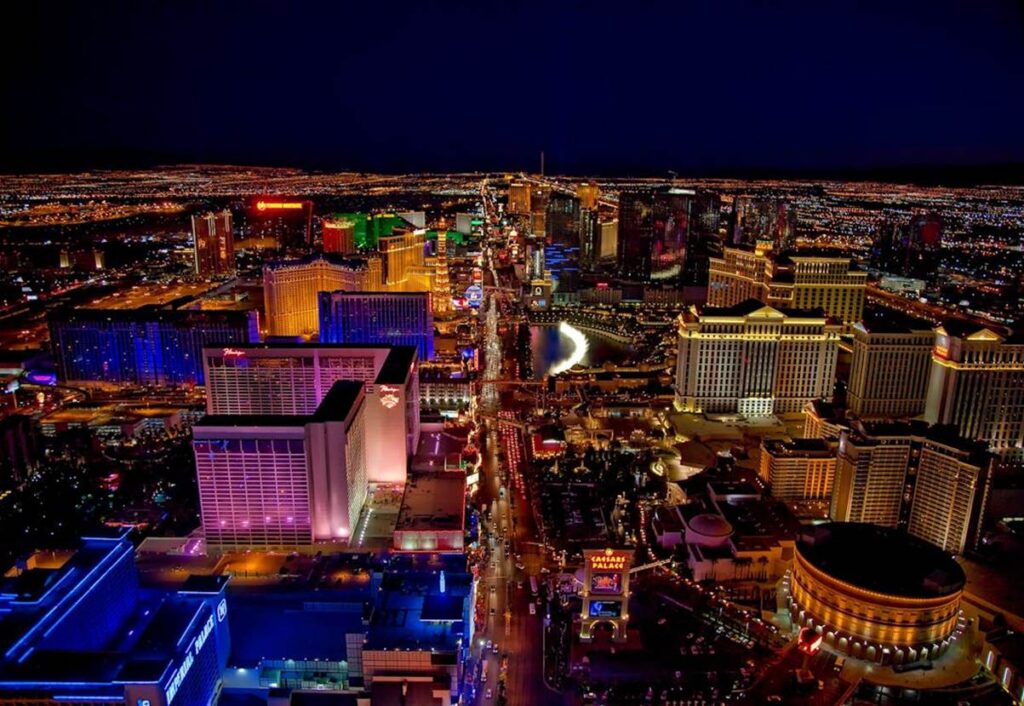
Las Vegas has long been regarded as the capital of casino entertainment in the United States, and its renowned reputation is recognized worldwide. A new analysis has now confirmed this status, officially naming it the top spot for casino experiences in the country. This ranking is not just based on opinion. It stems from a detailed examination of several factors that assess the quality and scope of a city’s gaming offerings. The results show that Las Vegas’s top position is built on a powerful combination of choice, accessibility, and a complete entertainment environment. The city’s ability to offer something for everyone, from the casual visitor to the serious player, is what truly sets it apart from all other destinations.
Sheer Volume of Options

The most apparent reason for Las Vegas’s dominance is the incredible number of choices available to any visitor. The city is home to a massive concentration of casinos. There are giant resorts on the Strip. There are more locally focused properties downtown and beyond. This sheer volume creates a highly competitive environment. Every casino works hard to attract and keep customers. For the visitor, this competition is a huge benefit. It leads to better service, more attractive properties, and constant innovation.
This commitment to a high standard of gaming is not exclusive to the Strip. It also extends to the online experience.
Players seeking the same high-quality experience will find it at BetMGM Casino online, where they’ll be spoiled for choice by a vast selection of games, a true reflection of the energy synonymous with Sin City. Nevada, home to the world-renowned Las Vegas, boasts a staggering 200+ casinos, offering a truly diverse range of games. With that many places to try your hand, and over 138,000 slot machines on the go, not to mention more than 4400 table games to challenge your luck, the pickings are endless. And let’s be clear, no other spot in the country even comes close to these kinds of numbers.
Unmatched Game Variety

The vast number of games in Las Vegas is not just about quantity. It is also about quality and variety. The city’s casinos offer an unmatched selection. This selection caters to every possible taste and budget. You can find thousands of different slot machine titles. There are classic three-reel games. There are also the latest video slots with complex stories and bonus rounds. Las Vegas is often the first place where new and innovative slot machine concepts are introduced to the public.
If you prefer table games, you will find dozens of tables for the classics. It includes all the variations of blackjack, craps, roulette, and baccarat. Apart from the usual titles, Las Vegas casinos also have poker rooms with daily tournaments as well as large bingo halls. With a wide array of sportsbooks that allow you to wager on games globally, the fantastic variety guarantees that there is a betting game for every player. This is true no matter their preference or skill level. If you choose to spend an hour on the penny slots or join a high-stakes poker table, Las Vegas has a seat for you.
An Open and Welcoming Atmosphere
Another factor that contributes to Las Vegas’s top ranking is the accessibility of its casinos. In many places around the world, there are strict entry requirements or fees to gain access to the casino floor. In Las Vegas, there are no such barriers. The casino floors are open to the public. Anyone 21 or older can walk in off the street and start playing. This creates a welcoming and exciting atmosphere.
This open-door policy encourages exploration. Visitors can easily wander from one grand resort to another. They can experience the different themes and ambience of each property without any hassle. This freedom is a big part of the Las Vegas experience. You can spend an afternoon casino hopping. You can enjoy the sights and sounds of each unique place. The standard minimum age of 21 also clearly defines the city as a destination for adult entertainment. This helps shape the overall visitor experience. This combination of openness and an adult-focused environment has proven to be a successful formula for decades.
A Complete Entertainment Package
What truly elevates the Las Vegas casino experience is that the gambling is just one part of a much larger entertainment world. The city’s major casinos are not just buildings with slot machines. They are massive, integrated resorts that offer a complete vacation experience. The experience is about more than just the games themselves.
Within these resorts, visitors can discover a stunning array of additional attractions. Las Vegas is home to one of the best dining scenes in the world. It has a considerable number of restaurants run by celebrity chefs. It is also famous for its live entertainment. There are spectacular Cirque du Soleil productions. There are also long-running residencies with some of the biggest music stars on the planet. The resorts also feature high-end shopping malls. They have incredible nightclubs. They also have luxurious pools and spas. This approach means that a trip to Las Vegas can be a complete entertainment getaway. A visitor can spend their time enjoying all these other amenities. They can see the casino floor as just one more amazing attraction to explore. The city has also become a hub for sports, with professional teams that draw huge crowds and add another layer of excitement to the town.
The Winning Hand for Las Vegas
The recent analysis confirms what millions of visitors already knew. Las Vegas offers a casino experience that is unmatched in the United States. Its top ranking is built on a solid foundation of incredible choice. It boasts a vast number of casinos and an impressive variety of games. The city’s open and accessible atmosphere makes everyone feel welcome. The complete entertainment package offered by its integrated resorts provides an authentic vacation experience. It is this powerful combination of factors that solidifies its status as America’s gaming capital.

- Region-specific user data helps you make informed decisions
- Traffic data reveals consumer value and trust from real people
- User-traffic analysis identifies potential personal finance opportunities
A staggering 6.04 billion people were online by October 2025, which is 73.2% of the world’s entire population. User-traffic data isn’t just an afterthought anymore. It has become vital to understand how services are adopted, which brands consumers trust, and where people spend money online.
Understanding what user-traffic data can teach you about better spending habits can mean the difference between strategic purchases and wasted dollars if you’re focused on personal finance. Traffic trends can highlight concentrated attention and genuine value, whether choosing e-commerce platforms, streaming services, or money management tools.
Region-Specific Data Helps You Make Better Decisions
Many popular sites and online services have substantial US user traffic, even though they’re based in jurisdictions outside the country. Streaming services, cloud software providers, financial apps, and even entertainment providers operate under regulatory conditions from foreign officials. This often allows broader access to services that aren’t easily available in your home country, lower fees using global payment methods for cross-border transactions, and greater user privacy through technologies like blockchain, as one example.
The platforms still provide consumer protections regulated by offshore authorities like those found at PokerScout.com. For instance, the operators running offshore poker games like Razz, Omaha, Texas Hold’em, 7-Card Stud, and even tournaments still have to use random number generators when shuffling cards and other methods to ensure player protection and fairness. Some sites accept crypto payments to improve privacy and security using blockchain technology, which doubles as a provably fair gaming mechanism.
There are actually many offshore gambling regulators that follow strict rules set in different jurisdictions, some including Curaçao, Malta, Estonia, and Gibraltar. Understanding user-traffic data from different regions can open your spending habits and access to new opportunities you can’t enjoy in your home country. However, it can also reveal whether these opportunities are safe for users from the US, as many sites have to conduct regular audits. Others use transparent policies to ensure users understand what to expect, which matters when using sites registered and regulated in other jurisdictions.
Traffic Patterns Predict Consumer Value and Trust
Consumer trust is important when looking for smarter ways to spend. A recent report shows that 90% of executives believe consumers trust their business, while only 30% of consumers actually do. The trust gap can be closed by consumers focusing on the user-traffic data that reveals how many people actually visit a website, how they interact with the products once there, and whether users stick around or abandon carts. Numbers like monthly visitors and the site’s ranking on Google don’t build trust alone.
Engagement metrics paint the full picture, which includes bounce rates, time on the page, and repeat visits. These numbers tell the real story of how many consumers already trust a specific business. For example, personal financial tools with millions of downloads but low engagement metrics reveal that the product doesn’t work or the services aren’t trustworthy. The initial curiosity exists enough to encourage downloads, but users don’t stick around.
Anyone focused on spending cleverly will use this data as intelligence to make informed decisions about what’s useful or popular. Budgeting apps with slower growth but higher churn rates could be hyped due to extra marketing efforts, but the user traffic data reveals how the app fails to convert consumers to repeated and loyal users. It’s also important to note traffic changes after specific technology or service upgrades.
For instance, many businesses are using blockchain to overcome trust breakdowns among consumers. Watch the metrics after the site deploys these solutions to see whether transparency is used comprehensively to regain user trust. Other changes in user traffic data could become apparent after pricing updates, policy renewals, or advanced feature integrations.
Every metric tracked will offer tangible insights about consumer value and trust, which online reviews can’t always promise due to fake reviews. PWC suggests that 100% of industries are using AI today. The marketing sector is one major player using the intelligent tools to track user-traffic data in real-time so that they can more accurately allocate budgets, increase conversions, and forecast future trends. Data is the source of trust today.
Traffic Data Reveals Hidden Opportunities and Better Habits
Analyzing user-traffic data helps people identify hidden spending patterns and gain insights into broader behavioral habits with possible opportunities behind them. Many businesses use time-series forecasting methods to determine how much cash they need to have available for seasonal trends and cyclical patterns. You could use the same methods to forecast possible trends based on changing user traffic patterns and spending habits if you plan to invest in certain products or services.
Smart spending habits include knowing when to invest in ideas, and user-traffic data can reveal when there’s a sudden increase in spending in certain niches, industries, or specific products. E-commerce and financial platforms gather tons of navigational and transactional data that could provide insights. These data points can include how often users return to specific products, which pages lead to the highest transactions, and spending totals for specific items. Consumption patterns are an excellent guideline for investments.
Strategic investment moves often originate from tangible data. For example, Micron’s latest strategy to move from consumer-based to commercial products is based on numbers and data. The company’s revenue grew by 49% between 2024 and 2025 after it focused more on enterprise and AI products. These numbers aligned with the company’s ability to forecast demand changes using various data points, one of which was user-traffic data from enterprise users relying on AI tools.
Another way you could use this information is to guide your spending habits. Financial institutions often use behavioral analysis to determine how users interact with money, their frequency of high-value purchases, and their response to balance notifications. These metrics could highlight ways you could better manage money daily. Beyond investment potential and smarter budgeting, you could even use these insights to identify more affordable travel habits, seasonal deals, and competitive pricing that reduces your expenses.

Willemstad, Curaçao, December 14th, 2025, Chainwire
Whale.io has officially launched the $WHALE NFT collection on Solana, introducing the next phase of the platform’s native token rollout and bringing the community one step closer to the upcoming Token Generation Event (TGE).
The $WHALE NFTs – presented as fully tradable digital cards – represent a new value layer within the Whale ecosystem. Each card holds a fixed amount of $WHALE tokens locked on-chain and backed 1:1, making them redeemable at any time for the underlying tokens. Minting is now live exclusively at mintwhale.io, where users can acquire these asset-backed cards and begin trading immediately on secondary marketplaces such as Magic Eden.
This format transforms $WHALE into a hybrid asset: a collectible card that behaves like a traditional NFT while carrying real, instantly verifiable token value. Cards can be freely transferred, sold, or held, with the assurance that the locked $WHALE can always be unlocked and returned to the Whale.io platform when needed.
Key Benefits of the $WHALE NFT Model
- Liquidation and stronger community – $WHALE NFTs enable holders to convert tokens into tradable crypto assets, supporting liquidity and ongoing ecosystem activity.
- Easier entry for new participants – Anyone can now join the Whale ecosystem by purchasing cards on Magic Eden, bypassing the traditional play-to-earn grind.
- Seamless top-ups – Players with low $WHALE balance can buy additional cards on secondary markets and redeem them instantly for playable tokens to continue enjoying games, battle passes, and rewards.
Because every card is transparently backed by real $WHALE, value remains anchored and fully verifiable on-chain at all times.
Utility Already Live
$WHALE continues to serve as the native currency across Whale Originals titles, including Crock Dentist and Blackjack. Holders use it for gameplay, Battlepass purchases, staking rewards, and exclusive in-platform features – a utility that is available today and will expand significantly after TGE.
Next Steps on the Roadmap
Upcoming features include a Staking mechanism (locking liquid $WHALE into cards) and a dedicated Token Swapping interface for one-click redemption. Whale.io has also reaffirmed its commitment to regular market buybacks followed by permanent token burns to support long-term token health.
Participation Now Open
The $WHALE NFT collection is available for minting exclusively at mintwhale.io. Detailed card tiers, pricing, and redemption instructions are displayed on the site. All on-chain activity remains fully transparent through Whale.io’s established Treasury wallets.
Community members are invited to follow @Whalegames_en on X for real-time mint updates, secondary market insights, and announcements on future roadmap milestones.
About Whale.io
Whale.io is an online casino and sportsbook platform, recognized for its proprietary Whale Originals games and innovative reward systems. With $WHALE at its core, the platform combines provably fair gaming with community-owned economics and transparent tokenomics.
For complete details on the $WHALE NFT collection, users can visit mintwhale.io or whale.io.
Information on the future direction of Whale.io Casino and the Whale Token is available here:
Website: https://mintwhale.io/
Socials: https://linktr.ee/whalesocials_tg
Contact
Whale Spokesperson
Whale.io
[email protected]

Forex trading is one of the most in-demand and fascinating trading options in the world. You might think that it’s rather straightforward because you’re constantly trying to leverage between different currencies to make as much of a profit as possible. However, the forex market is dependent and influenced by many other elements, such as political, social and governmental changes. Every regulation or process change creates an upward or downward movement of a currency. As many people have noticed, these changes seem to be happening at a faster pace, which is especially noticeable in stock, gold and silver. Yet, somehow, these rapid changes have kept the forex market more secure and stable and the liquidity measure is still there. The global forex market is the world’s largest financial market, with recent figures showing an average daily trading volume of around $6.6 trillion to $9.5 trillion. This volume is much larger than other markets, being roughly 30 times larger than the combined U.S. stock and bond markets. Can you imagine something so large and instrumental?
Now, the question that most people ask themselves is how and why the forex market is able to stay liquid, even during times of turbulence around the world. And the answer to that is a lot more varied and intricate than you might think. There are many elements that come together to create the reality of the forex market today. If you’d like to understand this more, then keep reading and you’ll find out more.
Why Forex Liquidity Stays Consistent Even When the World Doesn’t
The forex market operates differently from most financial markets. While stocks rely heavily on specific exchanges, forex is decentralised and runs around the clock across major financial hubs worldwide. That structure alone keeps liquidity flowing because trading never stays stuck in one place.
Liquidity remains strong because forex is built on global currency demand, international trade, cross-border banking, central bank interventions and investment flows from institutions. Those forces don’t disappear when markets become uncertain. In fact, uncertainty often increases currency activity. When investors feel nervous, they shift money into currencies they trust or out of currencies tied to riskier regions. That movement keeps the market alive and, in many cases, even more liquid than usual. Interesting how that works, wouldn’t you say? It can sound pretty confusing, that’s true. Having a trusted trading broker on your side as you’re navigating these markets can be helpful.
While uncertainty might make stock markets jittery, it can push forex activity higher. When large volumes of money move internationally, liquidity naturally strengthens. Just because one commodity looks like it’s going down, doesn’t mean that this is the same with every other commodity. This is something you must keep in mind.
The Sheer Size of Forex Keeps It Liquid
One of the biggest reasons forex liquidity stays solid is simple: scale. The forex market is the largest financial market in the world, with daily trading volumes measured in the trillions. Yes, you heard that correctly. Trillions. Because of this scale, you benefit from tight spreads, faster order execution, less slippage under normal conditions and more opportunities to trade different currency pairs.
When a market is this big, individual events rarely shut down trading activity. News can trigger volatility but it rarely dries up liquidity completely. That’s why forex is often described as one of the most resilient and accessible financial markets, even during global shake-ups.
Institutional Players Help Keep the Market Moving
As much as retail traders influence sentiment, institutions are the real liquidity providers in forex. Banks, hedge funds, multinational corporations, central banks and large investors make up a huge portion of daily trading volume.
Institutional traders hedge currency exposure, trade based on global economic data, react to central bank policy changes, move capital across borders and execute massive orders regularly.
Those activities happen regardless of global uncertainty. A corporation still needs to convert currencies to pay international suppliers. A central bank still needs to intervene during a currency imbalance. A hedge fund still needs to rebalance positions based on interest rate changes. There are many things that these establishments need to do to help the financial market move forward and every time they put their hand in something, this impacts the liquidity of the forex market.
Why Liquidity Matters for You as a Trader
Strong liquidity can make your trading experience feel smoother and more predictable, even when market conditions aren’t calm. You’re able to execute trades quickly and at prices close to what you expect.
Good liquidity helps you enter and exit trades without major delays, which is excellent because delays can be costly. It also reduces unexpected slippage and keeps transaction costs manageable. Plus, you can trade with tighter spreads and manage risk more effectively.
When liquidity is stable, you’re less likely to see extreme price gaps or erratic movement caused by thin trading. It doesn’t eliminate risk but it gives you a more even playing field, especially compared to markets with lower volume.
Liquidity Isn’t the Same as Stability: A Common Misunderstanding
One of the biggest mistakes traders make is assuming that strong liquidity automatically means stable prices. That’s not how it works. Liquidity ensures smooth execution but it doesn’t guarantee predictable price movement.
You can still experience sharp volatility, sudden reversals, rapid breakouts, news-driven spikes and emotional reactions in the market. Forex liquidity helps maintain order but volatility can still shake things up quickly. It’s important to understand that you can have liquid markets and unpredictable movement at the same time.
Why Uncertainty Sometimes Boosts Liquidity Instead of Weakening It
Global uncertainty typically pushes more money into forex, not less. When things feel unstable, traders adjust their positions, investors move into safe-haven currencies and corporations shift capital to protect themselves from currency swings.
During periods of uncertainty, you often see:
- Higher trading volume
- Increased hedging
- Stronger activity around central bank decisions
- Faster price movements
- More interest in major currency pairs
This surge in activity increases liquidity because more orders are entering the market. Even though the atmosphere feels tense, the actual trading conditions can still remain robust.
Safe-Haven Currencies Keep the Market Busy

Safe-haven currencies play a huge role in maintaining liquidity during stressful economic periods. When global sentiment shifts, traders naturally move toward currencies known for stability and resilience.
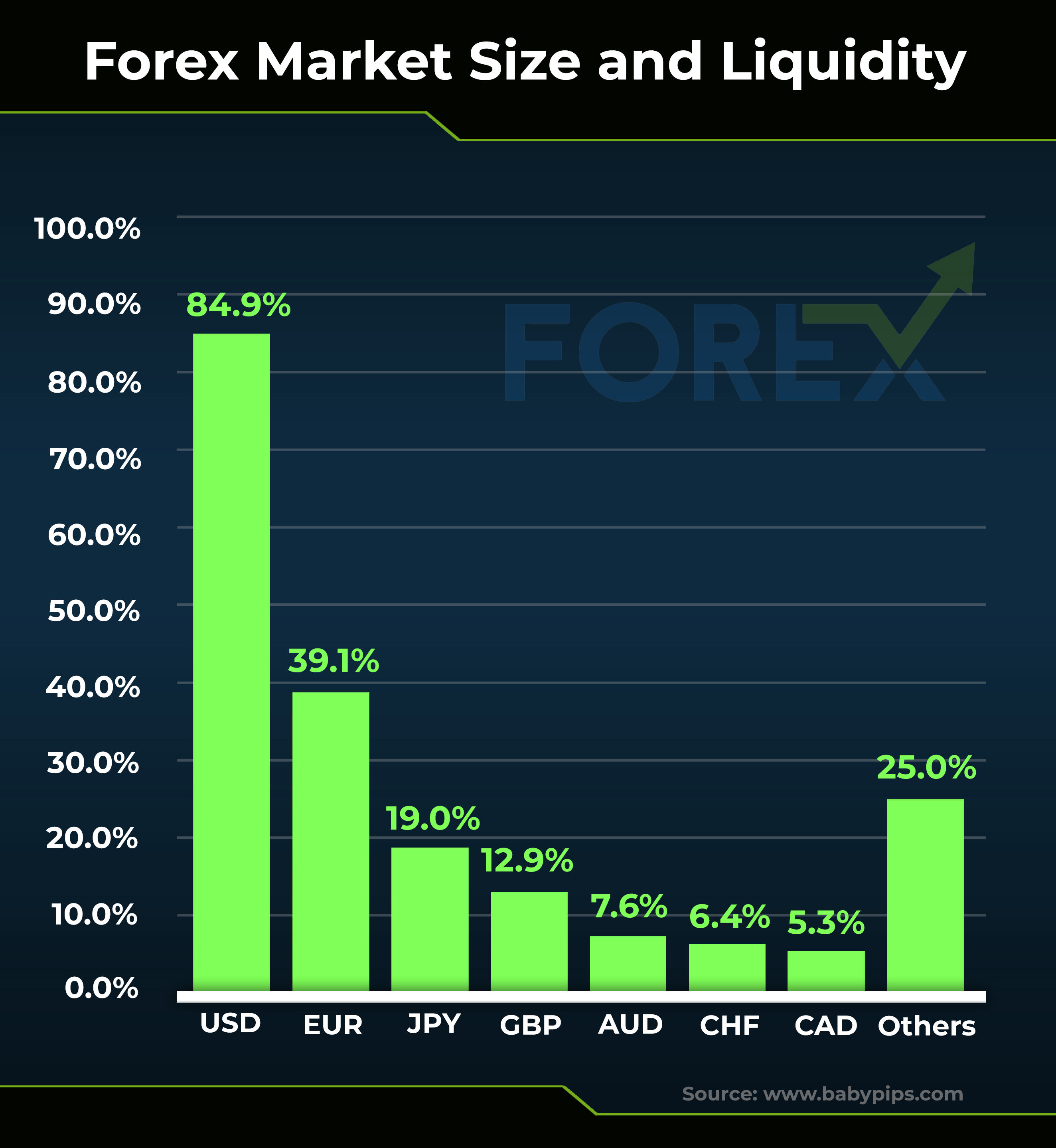
You just need to think about the countries that are seen as ‘financially savvy’ to understand which currencies would match. Think America’s USD, Japan’s JPY and Switzerland’s CHF. These currencies attract increased trading volume when the world becomes unpredictable. In fact, according to the International Monetary Fund (IMF), the U.S. dollar makes up about 62% of the world’s official foreign exchange reserves. According to the 2025 Triennial Survey of turnover in OTC FX markets, the US dollar continued to dominate global FX markets, making up 89.2% of all trades. This was an increase from 88.4% in 2022. The share of the euro fell to 28.9% (from 30.6%) and that of the Japanese yen was stable at 16.8%. The share of sterling declined to 10.2% (from 12.9%). The shares of the Chinese renminbi and the Swiss franc rose to 8.5% and 6.4%, respectively.
That movement adds liquidity to the market, especially in major pairs like USD/JPY and USD/CHF. It is clear to see the currency distribution in the market below:
Forex Keeps Moving Because the World Doesn’t Stop
Currencies aren’t optional parts of the global economy. Every country needs them to function, trade and run its financial system. Because of that, currency exchange never truly pauses.
No matter what’s happening in the world, governments still collect and spend money and businesses still trade internationally. Plus, investors still move capital and banks still process cross-border transactions.
This constant motion feeds directly into the forex market’s liquidity. Even if the world feels unpredictable, daily operations don’t disappear. Money keeps moving and that movement keeps the market alive.
The Role Central Banks Play in Supporting Liquidity
Central banks influence liquidity more than most traders realize. They constantly monitor financial stability and step in when necessary to keep markets functioning. Their actions can include adjusting interest rates, injecting liquidity into the banking system, managing currency reserves and stabilizing exchange rates during extreme volatility.
Even when uncertainty rises, central banks work behind the scenes to ensure currency markets stay orderly.
When Liquidity Can Temporarily Thin Out
Even though forex liquidity is known for its strength, there are still moments when it can tighten temporarily. These situations are rare but worth understanding so you know what to expect.
Liquidity can thin during major holidays, off-hours outside key sessions, unexpected geopolitical emergencies, large-scale economic announcements and periods of extreme volatility. During those moments, you may see slightly wider spreads or more slippage than usual. It doesn’t mean the market is shutting down; it just means trading is momentarily uneven.
How You Can Navigate the Market When Uncertainty Is High
Even though liquidity remains strong during uncertain periods, you still need a thoughtful approach to protect yourself from unnecessary risk. A few simple adjustments can make a big difference:
- Trade during the most active sessions
- Pay attention to economic calendars
- Keep position sizes reasonable
- Use stop-loss orders
- Avoid trading emotionally
- Wait for confirmation before entering trades
You have no control over global uncertainty, but you do have control over how you respond to it.
Liquidity Won’t Disappear But Your Strategy Still Matters
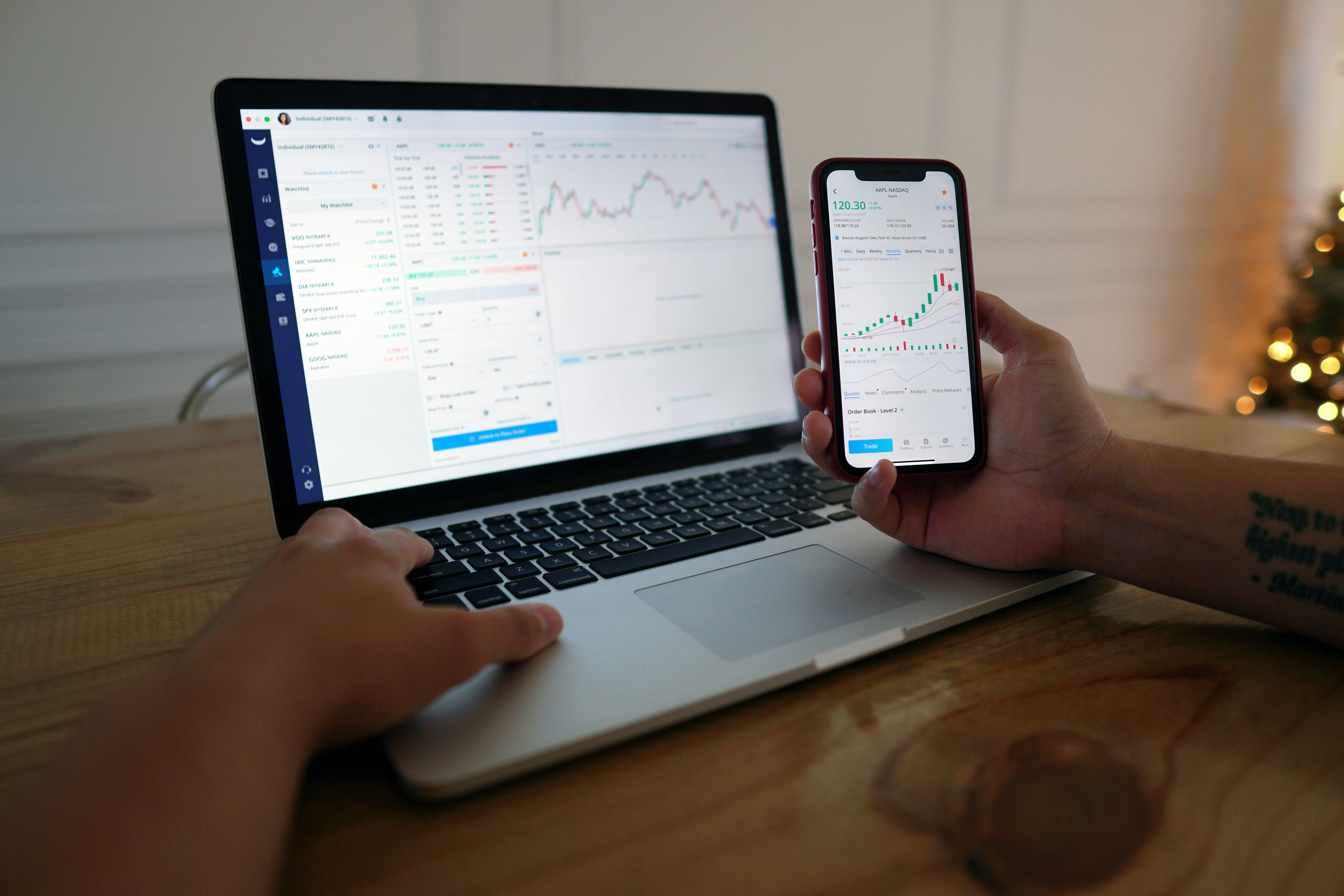
Image source: https://unsplash.com/photos/macbook-pro-on-brown-wooden-table-HASoyURgPMY
The forex market has built a reputation for resilience and it continues to prove that even when the world feels unpredictable, liquidity remains strong. You can count on the market’s scale, its institutional activity and its global nature to keep things moving smoothly.
But strong liquidity doesn’t replace careful planning. It doesn’t eliminate volatility and it doesn’t guarantee success. What it does give you is a more reliable environment to trade in, no matter what’s happening worldwide. But you still need to engage with responsibility, tact and care.
Vilnius, Lithuania, December 12th, 2025, Chainwire
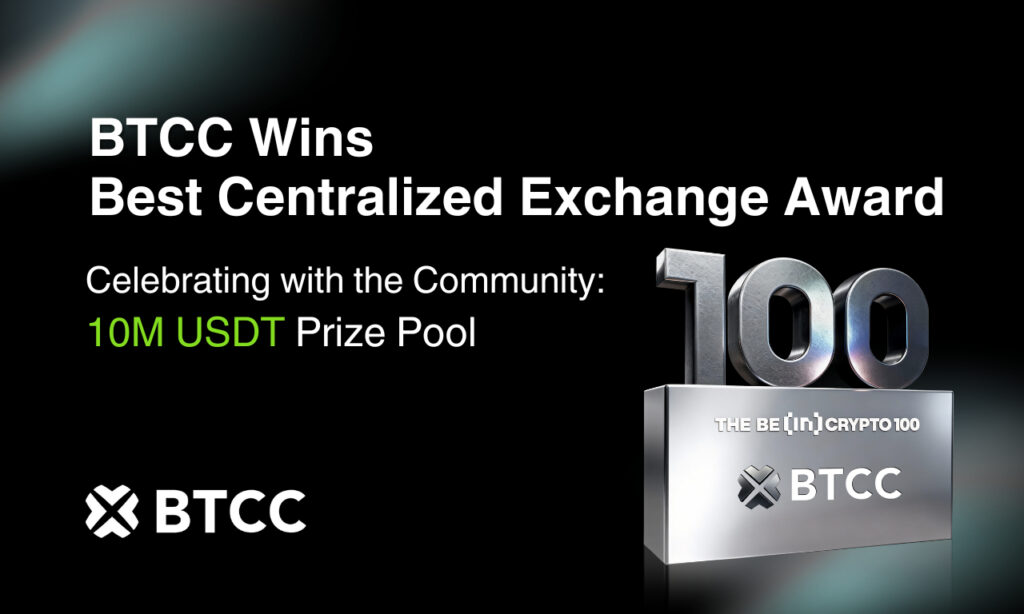
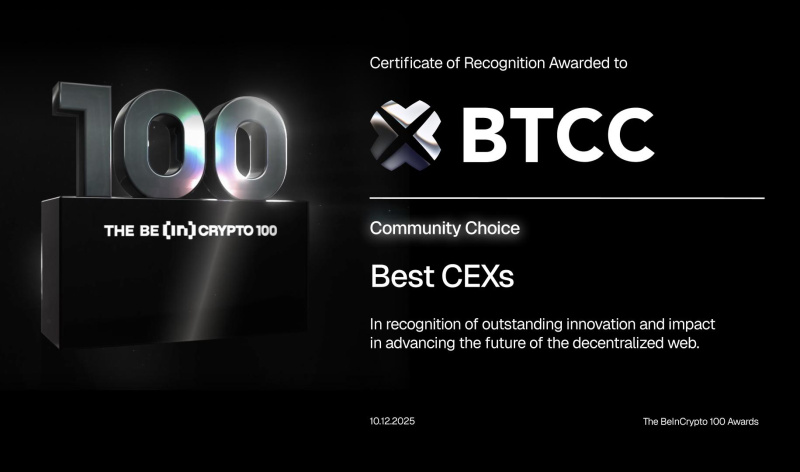
BTCC, the world’s longest-serving cryptocurrency exchange, has been named Best Centralized Exchange in the Community Choice category at The BeInCrypto 100 Awards 2025. The award was announced during a live virtual ceremony on December 10, 2025.
The BeInCrypto 100 Awards is an annual event celebrating the leaders, products, and initiatives shaping the future of Web3, organized by BeInCrypto, a reputable independent news and media platform, in partnership with Binance Square. In the “Best Centralized Exchanges” category, BTCC received the highest number of votes from global cryptocurrency users.
“Winning the community vote for ‘Best Centralized Exchange’ is incredibly meaningful,” said Aaryn Ling, Head of Branding at BTCC. “This award reflects the trust that our 10 million users place in BTCC every day. It validates our 14-year commitment to transparency, security, and putting our community first.”
A Track Record That Speaks for Itself
BTCC’s recognition is supported by strong operational metrics throughout 2025. The platform now offers over 400 futures trading pairs and more than 460 spot trading pairs, providing comprehensive access to the latest and most popular markets for over 10 million global users. In Q3 2025 alone, BTCC achieved a record of $1.15 trillion in both futures and spot trading volume, marking 20% quarter-over-quarter growth.
Underpinning these achievements is BTCC’s 14-year security record. Since its founding in 2011, the exchange has maintained a zero-incident track record with no security breaches, a rare distinction in an industry where trust and security are paramount.
The BeInCrypto award caps a year of industry recognition for BTCC. The exchange earned triple honors from FXEmpire in 2025 as the Lowest Fee Crypto Exchange, Best Fiat-to-Crypto Trading Platform, and Best Crypto Exchange in the USA. BTCC’s growing mainstream presence is further reflected in its partnership with NBA All-Star Jaren Jackson Jr., the 2023 Defensive Player of the Year, as global brand ambassador, connecting the mass public audience with crypto accessibility.
Community Celebration: 10M USDT Flagship Campaign and Giveaway
To mark the occasion, BTCC is launching a trading competition featuring a 10 million USDT prize pool, among the larger offerings in recent exchange-led events. The competition is open to global participants. Additional details will be provided on BTCC’s official X account.
Additionally, BTCC is thanking the community with a special giveaway for their continued support, offering 1,000 USDT to 10 winners. Full details are now available on BTCC’s X account (@BTCCexchange).
Looking ahead to 2026, BTCC plans to expand its spot and futures offerings, introduce additional platform features, and increase engagement with global communities, continuing its development strategy following this year’s activities.
About BTCC
Founded in 2011, BTCC is a leading global cryptocurrency exchange serving over 10 million users across 100+ countries. Partnered with 2023 Defensive Player of the Year and 2x NBA All-Star Jaren Jackson Jr. as global brand ambassador, BTCC delivers secure, accessible crypto trading services with an unmatched user experience.
Official website: https://www.btcc.com/en-US
Contact
Aaryn Ling
[email protected]

Kingstown, St. Vincent and the Grenadines, December 10th, 2025, Chainwire
Bitunix exchange has announced new partnerships with Fireblocks, a global leader in digital asset security, and Elliptic, a top blockchain risk monitoring platform. As part of these collaborations, the world’s fastest-growing crypto exchange will integrate Fireblocks’ institutional-grade custody infrastructure and Elliptic’s advanced compliance tools, a major upgrade that reinforces Bitunix’s long-term commitment to building a secure, transparent, and institution-ready ecosystem.
Fireblocks is globally trusted by banks, asset managers, fintech companies, and top-tier crypto exchanges because of its industry-recognized security standards, strong infrastructure, and MPC technology. This partnership positions Bitunix among the most reputable institutions in the management of digital assets.
Stronger Security for Users’ Funds with Multi-Party Custody
At the core of the partnership with Fireblocks lies the implementation of the Multi-Party Computation (MPC) – based custody to replace traditional single private-key models.
This technology distributes critical material across multiple secure components, reducing the risk of unauthorized access. Fireblocks also introduces:
- Policy-based approval workflows to prevent unauthorized transactions
- Secure transfer infrastructure used by leading financial institutions
- Operational tools that ensure efficient and safe asset management
These improvements bring a much stronger protection system for Bitunix’s users, while at the same time enabling the exchange to meet the needs of institutional and high-net-worth clients even better.

$42.5M Insurance as an Added Layer of Protection for Users
Under this collaboration with Fireblocks, Bitunix now also benefits from a total insurance coverage of $42.5 million, including digital asset crime insurance and additional protections against operational risks. This expanded coverage further strengthens user confidence and adds an extra safeguard against rare but serious incidents.
Elliptic Partnership Boosts Bitunix’s Fight Against Money Laundering and Terrorist Financing
Bitunix exchange is also strengthening its compliance operations through the use of Elliptic KYT (Know Your Transaction), a blockchain monitoring platform widely used by banks, major exchanges, fintech firms, and regulators.
Elliptic KYT allows Bitunix to track on-chain activity in real time and flag high-risk transactions, including funds linked to darknet markets, stolen assets, fraud-related flows, high-risk counterparties, and sanctioned entities.
By integrating this technology, Bitunix enhances its Know Your Customer, Anti-Money Laundering, and Counter-Terrorism Financing standards, reinforcing trust with institutional clients and regulatory partners. Together, Fireblocks and Elliptic form a dual security layer that further elevates Bitunix’s overall safety and compliance framework.
Building a Safer and More Scalable Exchange for the Future
Despite the drop in total losses, only in September 2025, centralized exchanges suffered $182 million in losses, marking a harder hit in Q3 compared to decentralized exchanges, according to reports. Hence, these partnerships represent an important milestone in the Bitunix exchange security roadmap.
The Fireblocks and Elliptic integrations are a major step in Bitunix exchange security and transparency strategy. They provide all users, including retail and institutional, with a security framework that includes secure custody, real-time AML monitoring, and risk controls.
“For this Bitunix security upgrade, we have partnered with several security providers, but the collaboration with Fireblocks and Elliptic certainly reconfirms our top priority: user protection. We want users to be 100% safe when using our exchange,” said Steven Gu, Chief Security Officer, at Bitunix.
Furthermore, these are not the only partnerships of Bitunix in terms of security, since the exchange has already partnered with trusted custodians like Cobo Custody and conducts frequent audits through firms such as Hacken and Salus. Moreover, the exchange maintains an additional $5 million insurance policy with Nemean Services to protect against unexpected incidents.
About Bitunix
Bitunix is a global cryptocurrency derivatives exchange trusted by more than 3 million users in over 100 countries. The company is committed to providing a transparent, compliant, and secure trading environment for all users. Bitunix offers a fast registration process and a user-friendly verification system supported by mandatory KYC to ensure safety and regulatory compliance. With global protection standards such as Proof of Reserves (PoR) and the Bitunix Care Fund, the exchange places strong emphasis on user trust and fund security. Its K-Line Ultra chart system delivers a seamless trading experience for both beginners and advanced traders, while leverage of up to 200x and deep liquidity make Bitunix one of the most dynamic platforms in the market.
X | Telegram | CoinMarketCap | Instagram | Facebook | LinkedIn | Reddit | Medium
Contact
COO
KX Wu
Bitunix
[email protected]

Artificial intelligence is entering a new phase defined not by chatbots but by full stack creative and productivity ecosystems. While many companies are still trying to perfect single purpose apps, Famous Labs is taking a very different approach. It is building an interconnected universe of AI products designed to help anyone create, build and scale faster than ever.
Best known for its platforms Famous.ai and SuperCool Famous Labs is emerging as one of the most fascinating operators in the new wave of what it calls Synthetic Intelligence. This is AI that does not just generate ideas but autonomously produces finished output including apps, videos documents, graphics research and more.
A Multi Product Strategy Built for Modern Creators and Operators
Most AI companies focus on a single tool. Famous Labs is building an ecosystem.
Famous.ai The App Builder Powered by Synthetic Intelligence
Famous.ai helps entrepreneurs, agencies and operators build real functional apps without writing code. Users simply describe what they want and Famous.ai generates a working product complete with interface backend logic workflows and exportable files.
SuperCool Autonomous File Creation Across Every Format
SuperCool functions like a digital production studio on demand. Users generate full documents, pitch decks books Excel models audio files scripts and long form content instantly. It is built for speed, breadth and reliability so ideas turn into finished assets in minutes.
Why This Ecosystem Approach Matters
Most modern creators need more than one tool. A founder building a product needs an app builder, a pitch deck creator, a research engine, a writing tool, a video generator and a marketing suite.
Famous Labs is one of the few companies building all of these under a unified vision so users never need to stitch together disconnected services.
The belief is simple
AI should not give you pieces
AI should give you outcomes
The Rise of Synthetic Intelligence
The Famous Labs team describes its technology as Synthetic Intelligence a step beyond traditional AI. It autonomously produces
- Real apps
- Motion videos
- Long form written content
- Research and analysis
- Presentations
- Financial and business models
- Marketing workflows
- Downloadable creative files
This evolution from AI that helps to AI that builds is reshaping how creators agencies and solo operators work.
Who Is Using It
Famous Labs products appeal to
- Creators launching digital products
- Agencies producing client assets at scale
- Startups building MVPs
- Educators and analysts generating research
- Ecommerce brands needing rapid content
- Operators seeking automation without engineering teams
The ecosystem creates a unique advantage. Users can move from idea to creation to launch without switching platforms.
The Bigger Picture
We are entering a world where creation is no longer limited by technical skill. The next era of digital entrepreneurship will belong to people who can turn ideas into real outputs quickly.
Famous Labs is positioning itself as the operating system for that world. Its focus is not hype but usability speed and empowering the millions of people ready to build if the tools finally meet them where they are.
Where to Learn More
Famous.ai
https://famous.ai
SuperCool
https://supercool.com
Microcaps do not move like normal stocks when their floats shrink to the size of a matchstick. They behave like pressure chambers. Prices do not glide. They lurch. They jump. They collapse and rebound with the velocity of a compressed spring. When SMX (NASDAQ: SMX) surged toward $490, it entered a zone where liquidity disappeared and every marginal order carried exaggerated influence. A few thousand shares can move a stock 10%. A small sell block can create a waterfall. This environment is not built for smooth transitions or orderly price discovery.
Retail traders sometimes assume these moves must mean something sinister. They imagine a coordinated short attack. They picture remote desks hammering the bid, manufacturing synthetic supply, and driving the stock to ruin. That theory collapses when you consider the structure of SMX. The float is tiny. The financing is clean. There are no toxic instruments left that reward downward pressure. The selling pressure today did not originate in a dark corner. It originated in the mechanics of a low float experiencing a dramatic reset.
Once the stock rocket soared through triple digits, the market reached a point where market makers had no choice but to step in. Their job is to keep the market functional. When order flow overwhelms the book, they short intraday to fill liquidity gaps. These shorts are temporary. They are not synthetic permanent supply. They are a regulatory function that keeps the stock from collapsing instantly when buyers disappear. This is the natural response to an overheated market, not a coordinated attack.
Why High Volume Does Not Mean New Shares
One million shares traded, and traders immediately asked where they came from. They imagined a secret issuance or stealth dilution. In a low float environment, that question has a simple answer. Traders recycled the same inventory over and over. Market makers filled orders with borrowed or temporary supply. Hedge desks offset exposure. Every share may trade ten, twenty, or fifty times in a single session. Reported volume does not mean new shares exist. It means the same shares moved back and forth in rapid succession.
This type of volume spike appears dramatic because investors often misunderstand what “volume” truly measures. It counts transactions, not unique shares. If one trader sells one thousand shares to another trader, then that trader sells the same one thousand shares to a third party, the tape prints two thousand in volume. Multiply that by hundreds of participants, and the total grows exponentially. Even though the outstanding share count remains fixed, the total prints climb into seven figures.
There was no dilution today. There was no issuance. There was no equity line draw. There was nothing that expanded supply. The entire event was the natural result of a small float colliding with a liquidity reset. This is why the price drop does not signal structural damage. It signals temporary imbalances clearing themselves out through normal market mechanics. And it may also present a tremendous opportunity for reentry.
Temporary Shorts Must Eventually Be Bought Back
Market makers do not get to stay short indefinitely. Anything created intraday through liquidity provision must be flattened. When the chaos ends, the unwind begins. This is not optional. This is required. Flattening means buying back shares. Buying back shares means upward pressure. This is why low float dumps often see sharp stabilization or partial rebounds once the imbalance clears. The selling phase is temporary. The resolution phase is structural.
This is why retail traders should not mistake the first leg of a drop for its final direction. The first leg is created by order flow imbalance. The second leg is created by the unwind of the very positions that caused the drop. When downward momentum dries up, the market’s function shifts from filling sell orders to clearing short exposure. That clearance creates its own demand cycle, often stronger than expected.
The flattening process will not necessarily return the stock to $300 or higher immediately. What it will do is remove the artificial weight caused by temporary shorts. Once that clears, price discovery returns. A stock like this rarely stays pinned at its lowest print because nothing permanent caused the drop. No new shares came to market. No toxic conversion was triggered. No long-term structure changed. What dropped the stock is not the same force that keeps it down.
Retail Is Still Intact
Retail holders often panic during violent moves because they assume they have been diluted or flooded with synthetic supply. In this case, neither is true. Nothing changed in the underlying share structure. The financing terms did not shift. The ownership cap remains intact. The equity line remains optional. The notes remain non-toxic. No mechanism exists here to print unlimited shares or reset conversion levels lower. Retail is not sitting in front of a dilution steamroller. Retail is sitting inside a volatility wave.
The price movement from $490 to its current $125 looks dramatic, but the float itself caused the magnitude, not a hidden opponent. Stocks with limited supply behave this way when momentum arbitrages come unwound. Retail traders who understand float mechanics recognize this as a temporary structural event, not a shift in long-term value. That distinction matters because it changes how rational holders interpret the aftermath.
When the dust settles, the stock will find a new equilibrium. That equilibrium may be well above the low because the downward force was not organic. It was mechanical. The unwind that follows is upward by design. Once market makers complete their flattening and liquidity returns to normal, the stock begins trading on fundamentals and sentiment again. Retail has every reason to remain confident because nothing about today has altered the structure that underpins value.
Volatility Is Not Treachery
The most important message for any trader trying to decode today’s tape is simple. Volatility is not treachery. Microfloats do not follow the etiquette of large caps. They amplify both directions. What happened yesterday and today was, and is, the system doing exactly what it always does when a stock with almost no float spikes, gets ahead of its own liquidity, and snaps back to a manageable range.
There is no conspiracy here. No unseen dilution. No malicious short regime. This was liquidity, not sabotage. It was unwinding, not poisoning. It was structural, not sinister. Traders who understand this dynamic see the opportunity beneath the noise. When the imbalance clears, the upward path reopens.