


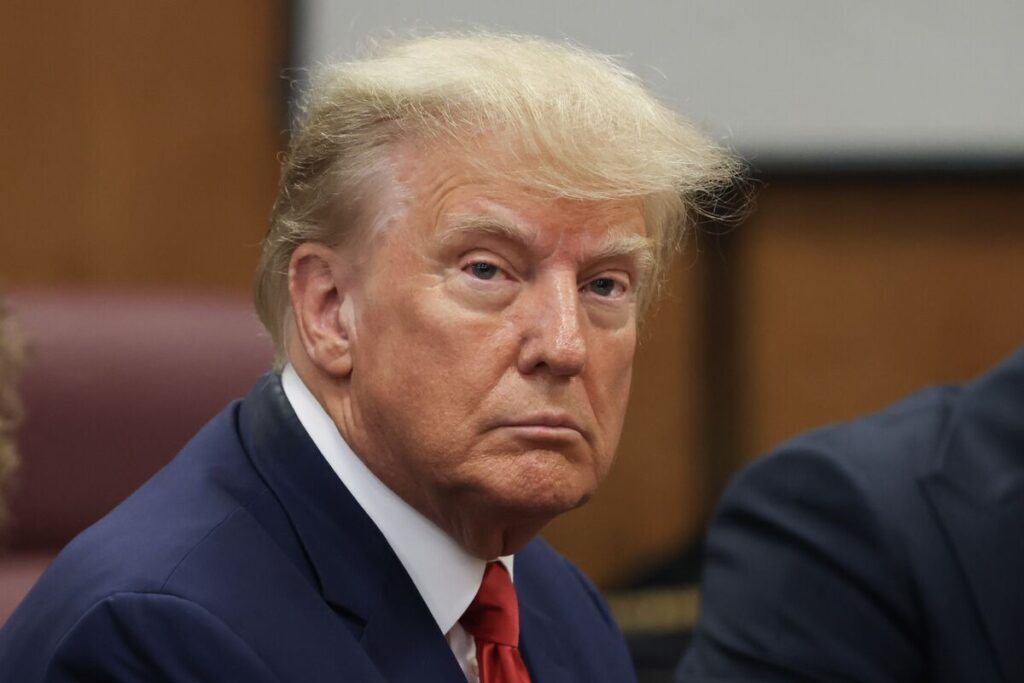
Former President Donald Trump is once again in the political spotlight—this time for blending politics with crypto in a way that has raised eyebrows, even among members of his own Republican Party. A recent announcement offering exclusive access to a White House tour and dinner for top holders of his TRUMP memecoin has sparked ethical concerns from both sides of the aisle.
GOP Senators Criticize Trump’s Crypto Incentives
Republican Senators Cynthia Lummis and Lisa Murkowski have voiced concern over the implications of Trump’s crypto-driven incentives. According to a report from CNBC on May 2, Lummis said that the idea of the president offering White House access to token holders “gives [her] pause.” Murkowski echoed those concerns, stating plainly, “I don’t think it would be appropriate for me to charge people to come into the Capitol and take a tour.”
The criticism stems from Trump’s April 23 announcement that top holders of his TRUMP memecoin would be eligible to apply for a White House dinner and tour—a move many interpreted as monetizing presidential access.
Legislative Support Despite Reservations
Despite her reservations about Trump’s memecoin strategy, Senator Lummis also took to social media on May 2 to praise the former president’s support for crypto legislation. She posted a video on X in which she said she was “particularly pleased” with Trump’s backing of the BITCOIN Act—short for Boosting Innovation, Technology, and Competitiveness through Optimized Investment Nationwide. The act would formalize a strategic national reserve of Bitcoin in the United States, aligning with Trump’s recent pro-crypto rhetoric.
This duality illustrates the complicated position many lawmakers face: balancing concern over ethical optics with policy alignment on digital assets.
Ongoing Ethics Concerns and Accusations
The TRUMP token, launched on January 17, has drawn significant criticism from both lawmakers and the crypto community. Critics argue that it creates potential conflicts of interest and could open the door for foreign influence in U.S. politics by enabling anonymous crypto transfers that benefit Trump directly.
“Trump once claimed he is so rich he cannot be bought,” said Craig Holman, an ethics specialist with Public Citizen. “But his obsession with money means he apparently can be bought for a meme.”
Holman’s remark underscores the perception that the memecoin scheme may be undermining the very principles Trump once touted.
Impeachment Demands Resurface
The controversy escalated when Democratic Senator Jon Ossoff called for Trump’s impeachment during a town hall meeting on April 25. Ossoff criticized the TRUMP coin dinner offer as a form of “selling access for what are effectively payments directly to him,” framing the move as a blatant conflict of interest. Though Trump was impeached twice during his presidency and acquitted both times, the memecoin saga has reignited impeachment talk—this time from the perspective of financial impropriety.
Who Will Dine With Trump?
With the planned dinner set for May 22, speculation has swirled around who might actually attend. The TRUMP coin leaderboard lists top wallet holders, though only usernames are visible. This has led to rumors that high-profile figures like Tron founder Justin Sun or Tesla CEO Elon Musk could be among the invitees.
As of May 2, neither individual nor their companies had confirmed any involvement, leaving the dinner’s guest list shrouded in uncertainty.
Ethical and Political Ramifications Continue to Unfold
As Trump continues to build his crypto presence, his memecoin initiative stands at the intersection of innovation and political controversy. While some view it as a clever move to rally support and funding from a tech-savvy base, others see it as a dangerous precedent that commercializes access to political power.
Whether this controversy fades or grows into a larger ethical scandal remains to be seen—but the pushback from both Democrats and Republicans suggests that this is more than just a digital gimmick. It’s a political flashpoint in the ongoing debate over crypto’s role in government and campaign finance.

The Blockchain Group (TBG), a publicly traded Bitcoin treasury company, has revealed plans to amass as much as 260,000 Bitcoin over the next decade—a move that could see it hold approximately 1% of the total Bitcoin supply by 2034.
A Long-Term Bitcoin Accumulation Strategy
Outlined in its latest financial disclosure, TBG’s strategy focuses on an incremental acquisition approach. The company aims to increase its current holdings of 620 BTC to between 1,000 and 3,000 BTC by the end of this year. It has set an ambitious mid-term goal of owning 100,000 BTC by 2032 and hopes to reach between 170,000 and 260,000 BTC by 2034.
“If Bitcoin reaches €1-2 million per coin by 2033-2035, holding 210,000 BTC could represent between €210 billion and €420 billion in net asset value,” the report states.
This long-term vision is underpinned by a projection that Bitcoin’s value will appreciate substantially in the coming years. To measure progress, the company is tracking its proprietary “BTC Yield” metric, which saw a dramatic 709% increase in Q1 2025. During this period, its Bitcoin-per-share figure jumped from 41 to 332 satoshis.
Strategic Backing and Funding Pipeline
The firm, which trades under the ticker ALTBG on Euronext Growth Paris, underwent a strategic pivot in November 2024 to become a full-fledged Bitcoin Treasury Company. Since then, it has boosted its Bitcoin reserves significantly—from just 15 BTC in December 2024 to over 620 BTC by April 2025. The increase was achieved via equity placements and Bitcoin-denominated convertible bonds.
TBG’s strategy has attracted support from well-known names in the crypto investment space, including Fulgur Ventures, UTXO Management, and TOBAM. Prominent cryptographer and Blockstream CEO Adam Back has also joined as a strategic advisor.
Despite acknowledging the risks associated with the plan, the company maintains a clear goal: “accumulate as much BTC as possible, as fast as possible, in the most accretive way possible.”
To fund this effort, TBG has projected a capital-raising potential ranging from €150 million to €100 billion over eight years, depending on market conditions and investor appetite. If the roadmap unfolds as planned, TBG could soon become Europe’s top corporate holder of Bitcoin.
Share Price Soars in Six Months
Since adopting its Bitcoin-focused model, TBG’s stock performance has mirrored other successful Bitcoin treasury firms. Its share price surged by 120% within the first month, 265% by the third month, and 474% after six months. This trend draws strong parallels to the early growth patterns of companies like Strategy and Metaplanet, both of which committed to the Bitcoin treasury model before TBG.
“Bitcoin treasury companies are the fastest-growing companies in Europe,” TBG stated.
Currently, Strategy remains the leading publicly listed corporate Bitcoin holder with 553,555 BTC—around 2.6% of the global circulating supply.

Ripple Labs recently made an ambitious move to acquire Circle Internet Financial, the company behind the widely-used USDC stablecoin. According to sources familiar with the negotiations, Ripple offered between $4 billion and $5 billion, but Circle turned down the proposal, reportedly viewing it as undervalued.
Crypto M&A Activity Heats Up
This attempted acquisition comes during a surge in crypto-related mergers, acquisitions, and IPOs. With digital assets experiencing renewed momentum and investor enthusiasm, several major players are preparing to go public. Firms such as Kraken, BitGo, Gemini, and Bullish are expected to seek IPOs in 2025, encouraged by the current pro-crypto political climate under the Trump administration.
Circle itself has shown public market ambitions. Earlier this month, it filed for an initial public offering (IPO) with the U.S. Securities and Exchange Commission, aiming for a listing on the New York Stock Exchange under the ticker symbol ‘CRCL’. However, just days later, reports suggested that Circle was considering delaying the IPO due to economic uncertainty stemming from shifting U.S. trade policies. Similar caution has been seen with companies like Klarna and StubHub, which are also weighing the risks of an IPO delay.
Ripple’s Strategic Playbook
Ripple’s interest in Circle aligns with its broader acquisition strategy. Notably, Ripple recently agreed to acquire Hidden Road, a prime brokerage firm, for $1.25 billion. This acquisition underscores Ripple’s desire to expand its ecosystem through strategic purchases rather than public fundraising.
Monica Long, Ripple’s president, made it clear that Ripple is not currently considering an IPO. In an interview with CNBC, she emphasized the company’s strong financial position: “We have billions in cash reserves. We don’t need to raise capital or increase market exposure by going public.” She added, “Companies usually IPO to raise funds or elevate their brand. We’re not in need of either right now.”
The Stablecoin Race: Ripple vs. Circle
Ripple has also entered the stablecoin market with RLUSD, signaling its intent to compete with Circle’s dominant USDC. However, it has a long road ahead. As of May 1, RLUSD had a market cap of $317 million, dwarfed by USDC’s $62 billion valuation, according to CoinGecko.
Despite the setback with Circle, Ripple may still pursue a revised offer. The company’s long-term strategy seems focused on acquisitions and internal growth rather than going public, especially after resolving its long-standing legal battle with the SEC.

In a landmark move that could set a national precedent, Arizona lawmakers have passed two innovative bills designed to integrate Bitcoin and other digital assets into the state’s financial infrastructure. If signed into law, these measures would make Arizona the first U.S. state to establish a formal Bitcoin reserve.
Two Key Bills Receive Legislative Approval
The Arizona House of Representatives passed Senate Bill 1025 and Senate Bill 1373, both of which are now on Governor Katie Hobbs’ desk awaiting final approval. SB 1025 enables the state to allocate up to 10% of its treasury and pension assets into digital assets, including Bitcoin. Meanwhile, SB 1373 lays the foundation for a Digital Assets Strategic Reserve Fund, designed to hold and manage these crypto assets for future use.
Together, the bills represent a strategic pivot toward blockchain-based asset management, aligning Arizona with other crypto-forward states such as Texas, Florida, and New Hampshire.
Funded by Seized Crypto and Future Appropriations
The legislation authorizes the use of seized digital assets as well as future budget appropriations to fund the reserve. These assets will be managed under strict audit protocols, featuring on-chain transparency and risk controls to ensure responsible stewardship.
Supporters argue that integrating Bitcoin into Arizona’s financial strategy could offer protection against inflation and traditional market volatility. The effort marks a bold step into crypto adoption at the state level—one that could ripple across the country if successful.
Bitcoin Prices Surge Amid Legislative Buzz
Shortly after the bills passed, Bitcoin’s price surged to nearly $95,000, a 25% increase from early-April lows. The price jump appears to be driven by renewed institutional interest and speculation over state-level crypto integration.
Crypto analysts view Arizona’s move as a confidence boost for broader adoption, potentially attracting similar initiatives elsewhere. If implemented, the state-backed reserve could serve as a blueprint for how governments can securely incorporate decentralized finance into their public asset strategies.
Governor Hobbs’ Decision Looms
Governor Hobbs has not yet taken a public position on the bills. Previously, she had threatened to veto all legislation over unresolved disability funding disputes. However, that blockade was lifted following a bipartisan deal reached on April 24.
Her final decision could determine whether Arizona takes the lead in Bitcoin adoption or faces a legislative override attempt to push the plan forward. However, it should be noted that she has vetoed dozens of Republican-sponsored bills, including legislation related to crypto and digital assets, so there is a high chance these bills will also be vetoed by Hobbs.

Layer-1 blockchain Supra has announced the public testnet debut of two key innovations it believes are critical to fulfill its ambitions of becoming the leading execution hub for cross-chain decentralized finance.
They include AutoFi, a system-level automation engine that’s designed to execute DeFi transactions instantly, without delays, and SupraNova, an interoperability protocol that facilitates trustless communication between L1 networks without relying on risky blockchain bridges.
First announced last month, AutoFi is a novel solution that aims to address some of the biggest challenges in DeFi, such as transaction slippage, front-running attacks by validators and execution delays. The big innovation here is its system-level automation, which makes it possible for smart contracts to execute with zero-block delays. In other words, transactions can be completed instantly, within the same block, the moment the contract’s conditions have been met.
Built natively into the Supra stack, AutoFi represents a significant advance for DeFi. It will allow users to execute sophisticated trading strategies with laser-like precision, ensuring they can capitalize on market opportunities with unprecedented accuracy.
It’s the latest in a string of exciting innovations that set Supra apart from other blockchains. Supra is also the first L1 to feature integrated oracle price feeds and verifiable on-chain randomness, while it’s powered by a Moonshot consensus mechanism that supports up to 500,000 transactions per second with sub-second latency, making it one of the fastest networks in the business.
Streamlined transactions and sustainable economics
Supra believes AutoFi is a game-changer for three reasons. The obvious benefit is increased fairness, as AutoFi eliminates the opportunity for others to manipulate transactions. More broadly speaking, it will also help to enable a new era of artificial intelligence-powered agents that can execute advanced DeFi strategies on behalf of users.
The third major benefit is how AutoFi will help to boost Supra’s blockchain economics, redistributing revenue it generates across its ecosystem in a way that incentivizes growth. Supra’s team explained that 25% of transaction fees will go to the DeFi dApps they originate from, while another 25% is allocated to the node operators for maintaining the network. The other 50% will be redirected to Supra’s treasury, ensuring it will always have funds available to provide liquidity to the ecosystem and support other protocols building on its network.
AutoFi derives its revenue from automation task fees, which are recurring fees charged to users who register automated DeFi actions. In addition, the system features a competitive bidding mechanism, where users can bid for the rights to execute high-value actions such as liquidations.
Supra co-founder and Chief Business Officer Jon Jones likens the system to Google AdSense.
“Instead of just charging for blockspace, we’re monetizing execution priority in real time, opening up entirely new, sustainable revenue models,” he pointed out.
The result will be a self-sustaining and anti-inflationary economic loop, and Supra is so confident in the model that it believes it will be able to wean itself off block rewards within just two years.
Trustless L1-to-L1 Communications
With these capabilities in place, Supra is now turning its attention to cross-chain interoperability. SupraNova will launch its testnet on April 29, and is said to be the first truly bridgeless protocol for cross-chain communications, It eliminates the bridge by recomputing external chains’ consensus mechanisms natively and directly on its L1 network.
When a user attempts a cross-chain transaction on a supported chain, it generates a cryptographic proof of that event and submits it to Supra. SupraNova will then verify this transaction by recomputing the source blockchain’s consensus to ensure its validity, without any need for external validators, relays or multi-sigs. In this way, it ensures full preservation of the source chain’s consensus and the security guarantees it provides.
Surpa Chief Executive Joshua Tobkin said SupraNova allows blockchains to communicate with one another without any of the risks posed by bridges, which have lost billions of dollars over the years due to exploits. “It doesn’t rely on external multi-sigs or wrappers, removing the biggest vulnerabilities in interoperability,” he said.
For now, the public testnet of SurpaNova only supports Ethereum transactions, but will soon expand to include EVM-compatible proof-of-stake networks. It will then move to embrace MoveVM-based networks and ultimately, numerous other L1s and L2s.

Strategy, the largest corporate holder of Bitcoin, has expanded its cryptocurrency portfolio once again. On Monday, the company revealed it had acquired an additional 15,355 Bitcoin between April 21 and April 27, investing approximately $1.4 billion. The average purchase price was $92,737 per Bitcoin.
The move was made possible through proceeds raised from stock sales. According to a new SEC filing, Strategy sold 4.02 million shares of its Class A common stock (MSTR) and 435,069 shares of its 8.00% Series A preferred stock (STRK), generating the necessary funds.
Growing Holdings and Soaring Value
This latest acquisition brings Strategy’s total Bitcoin holdings to a staggering 553,555 BTC, currently valued around $52.7 billion. Bitcoin’s price surge to roughly $95,300 has significantly boosted the company’s portfolio value, turning a $37.9 billion investment — purchased at an average of $68,459 per Bitcoin — into nearly $15 billion in unrealized gains.
Strategy’s aggressive buying spree shows no signs of slowing. The recent purchase follows a similar move last week when the company announced the acquisition of 6,556 Bitcoin.
Market Response and Future Outlook
Market watchers anticipated this move following a post by Michael Saylor on Sunday, in which he highlighted Strategy’s Bitcoin portfolio tracker — often a precursor to major announcements.
Following the news, Strategy’s stock (MSTR) rose 1.6% in pre-market trading on Monday, building on a 5% gain from the previous Friday. With Bitcoin prices maintaining strength, Strategy’s bold bet on the cryptocurrency appears to be paying off handsomely.
Healthcare technology firm Semler Scientific has further deepened its Bitcoin investment, acquiring approximately $10 million worth of the digital asset since February 14, according to a statement released on April 25.
The company confirmed the purchase of 111 Bitcoin at an average price of around $90,000 per coin. Overall, Semler now holds more than 3,300 Bitcoin, valuing its total crypto treasury at about $300 million.
Measuring Bitcoin Yield Performance
Semler highlighted that its Bitcoin acquisitions have contributed to a Bitcoin yield of 23.5% for shareholders so far this year. The Bitcoin yield metric compares the company’s Bitcoin holdings to its number of outstanding shares, helping to demonstrate how Bitcoin exposure per share has grown.
“Semler Scientific uses BTC Yield as a [key performance indicator] to help assess the performance of its strategy of acquiring bitcoin in a manner Semler Scientific believes is accretive to stockholders,” the company explained.
Since initiating this strategy in February, Semler has been aggressively building its Bitcoin position.
Financing the Bitcoin Strategy
The company stated it purchased its Bitcoin treasury for an average price close to $89,000 per coin. With Bitcoin currently trading at around $95,000, Semler’s investment has seen early gains.
To support its Bitcoin acquisitions, Semler has financed the purchases by issuing roughly $125 million in new stock. Additionally, in January, the firm announced plans to raise another $75 million through a private offering of convertible senior notes.
Semler Scientific primarily operates in the healthcare sector, developing diagnostic products that help detect chronic diseases.
Corporate Bitcoin Holdings on the Rise
Semler’s move follows a broader trend among corporations accumulating Bitcoin for their treasuries. Data shows public companies collectively hold approximately $71 billion worth of Bitcoin as of April 25.
Leading the pack is Michael Saylor’s Strategy (formerly MicroStrategy), which boasts a treasury valued at over $50 billion. During the week of April 14 alone, Strategy acquired an additional 6,556 Bitcoin at an average price of $84,785 per coin.
Despite corporations building significant Bitcoin reserves, they still trail behind Bitcoin holdings managed by exchange-traded funds (ETFs), which control about $110 billion in Bitcoin.
Semler’s aggressive Bitcoin strategy mirrors the growing institutional appetite for digital assets, signaling a continuing shift in corporate finance strategies.

Bitwise Asset Management is making waves in the crypto investment space once again with its registration of the Bitwise NEAR ETF in Delaware. This move could pave the way for the first U.S.-listed exchange-traded fund (ETF) tied to NEAR, the native token of the NEAR Protocol.
A Strategic Expansion into Altcoins
The newly registered trust marks Bitwise’s ongoing effort to diversify beyond Bitcoin and Ethereum. If approved, this ETF would grant institutional investors streamlined access to NEAR through a regulated product. This eliminates the hassle of managing private keys, wallets, and complex custody arrangements.
Unlike private placement vehicles, ETFs provide real-time price transparency and are easily accessible via public exchanges. The fund would track NEAR’s spot price and disclose its holdings daily, helping investors better manage risk and portfolio exposure.
Previous NEAR Investment Products
Bitwise’s push comes amid rising interest in altcoin ETFs. Competitors such as 21Shares and Grayscale have already launched NEAR-related products, though not in the ETF format. 21Shares offers a staking ETP, while Grayscale’s NEAR Trust targets accredited investors via private placement.
Bitwise’s offering, however, would be the first of its kind on a U.S. exchange, opening the door for broader institutional engagement with NEAR.
Growing Crypto Product Portfolio
Bitwise has become a heavyweight in the digital asset investment landscape. As of October 2024, the firm managed over $5 billion in assets, a fourfold increase within the year. Its product suite spans crypto index funds, spot ETPs, separately managed accounts, and more.
One of its most successful launches, the spot Bitcoin ETF (BITB), debuted in January 2024 and has already amassed $3.6 billion in assets. This fund is now considered one of the top-performing Bitcoin ETFs in the market.
Looking ahead, Bitwise plans to expand its ETF offerings to include other high-profile crypto assets like XRP, Dogecoin, and Solana.
Regulatory Momentum Under Trump-Era Policies
Bitwise’s latest move is also seen as part of a larger trend driven by a more crypto-friendly political climate. The Trump administration’s return to power has fostered optimism in the industry, with many anticipating quicker approvals for innovative financial products.
Earlier this week, Trump Media and Crypto.com announced plans to launch “America-first ETFs,” including funds tied to Cronos. These announcements reflect growing confidence that the new SEC leadership will take a more favorable stance on digital assets.
All Eyes on the SEC
Ultimately, the fate of the Bitwise NEAR ETF rests with the U.S. Securities and Exchange Commission. Newly appointed SEC Chairman Paul Atkins is expected to oversee the review of numerous pending crypto fund applications in the coming months.
If approved, Bitwise’s NEAR ETF could open a new chapter in institutional crypto investing—signaling that the altcoin era is gaining mainstream financial traction.

Trump Media and Technology Group (TMTG), the parent company behind the conservative social platform Truth Social, is diving headfirst into the world of finance and digital assets. In a major development, the company has signed agreements with Crypto.com and Yorkville America Digital to introduce a suite of exchange-traded products—including ETFs linked to Bitcoin and the Cronos token.
Expanding into Fintech with Truth.Fi
The move marks a strategic expansion for TMTG, which earlier this year launched its fintech division, Truth.Fi. The new entity aims to invest up to $250 million in ETFs and separately managed accounts (SMAs), targeting sectors such as digital assets and core American industries like energy.
“This agreement is a major step forward in diversifying TMTG into financial services and digital assets,” said CEO and Chairman Devin Nunes. He added that the company’s goal is to create investment products “for investors who believe both the American economy and digital assets are poised for tremendous growth.”
Global Ambitions and Regulatory Pathways
The ETFs, once they receive the necessary regulatory approvals, are set to roll out later this year across North America, Europe, and Asia via existing brokerages and platforms. Foris Capital US LLC, Crypto.com’s registered broker-dealer, will handle distribution.
These developments come after Trump Media revealed a non-binding agreement with Crypto.com in March. In addition to ETFs, the company plans to introduce Truth.Fi-branded SMAs, although further details are still under wraps.
Crypto.com’s Role in Bridging TradFi and Crypto
Crypto.com’s involvement is key to the project’s execution and credibility. CEO Kris Marszalek called the partnership “a testament” to the platform’s ability to connect traditional finance with the crypto world.
“It’s a win for Trump Media, Crypto.com, CRO, and Yorkville America Digital,” Marszalek stated, signaling confidence in the upcoming product lineup and its global distribution potential.
Troy Rillo, CEO of Yorkville America Digital, added, “Finalizing our agreement with Trump Media and Crypto.com for our ETF launch is a significant milestone as we work to bring to market new products that align with the America-First focus of our firm.”
Future Roadmap: Cronos ETF and Stablecoin
Looking ahead, Crypto.com has ambitious plans for the remainder of 2025. A spot ETF for Cronos (CRO) is scheduled for application submission in Q4 2025. In parallel, the company is also preparing to launch a stablecoin by Q3. While full details are still unknown, the stablecoin is expected to improve cross-border payments, DeFi usage, and on-platform transactions.
Additionally, brokerage giant Charles Schwab has been appointed custodian for the $250 million fund set aside by Trump Media, further reinforcing institutional backing behind the effort.
With this partnership, Trump Media is positioning itself at the intersection of conservative finance and crypto innovation—an area likely to attract both political and investor interest in equal measure.
Gold and Bitcoin surged in early Asian markets after Donald Trump posted a cryptic but impactful message on social media, reinforcing the symbolic link between wealth and power. This latest boost for the two assets came amid broader economic jitters and renewed global uncertainty.
Trump’s post on Truth Social read:
“THE GOLDEN RULE OF NEGOTIATING AND SUCCESS: HE WHO HAS THE GOLD MAKES THE RULES.”
This message, which alludes to gold as a tool of influence, triggered immediate market reactions. Gold soared to a record high of $3,385, climbing nearly 2% in just 24 hours. Bitcoin, following close behind, jumped roughly 3% to reach $87,500, adding to a 4.5% gain over the previous week.
Analysts Point to Broader Global Concerns
While Trump’s comment added a flashpoint, market analysts suggest the underlying momentum for both assets stems from escalating US-China tensions and fears surrounding the strength of the US economy. These concerns appear to be fueling investor interest in assets traditionally seen as safe havens.
The Kobeissi Letter offered a broader interpretation of the situation:
“Gold has hit its 55th all-time high in 12 months, and Bitcoin is officially joining the run, now above $87,000. The narrative in both Gold and Bitcoin is aligning for the first time in years: Gold and Bitcoin are telling us that a weaker US Dollar and more uncertainty are on the way.”
These synchronized movements suggest growing skepticism about the US dollar’s stability, potentially signaling a broader economic shift.
Dollar Woes Amplify the Trend
Monday trading saw the US dollar index plummet to a three-year low, compounding the sense of uncertainty. The decline followed remarks from National Economic Council Director Kevin Hassett, who revealed that President Trump is still exploring options to remove Fed Chair Jerome Powell.
This revelation rattled markets, sparking fears that Trump may seek increased control over the Federal Reserve. Traders responded swiftly, selling off the dollar as confidence in monetary policy independence took a hit.
Bitcoin Defies Its Typical Patterns
Interestingly, Bitcoin’s climb during this dollar slump represents a notable deviation from past behavior. Typically, a weakening dollar sees Bitcoin decline or remain stagnant, given that both are viewed as alternative stores of value.
However, this time, Bitcoin surged, with some analysts calling it a potential “regime shift.” The move suggests that Bitcoin may be evolving beyond its classification as just another risky asset, hinting at a maturing role in financial markets.
Still, some remain cautious. While this divergence could indicate a new chapter for Bitcoin, analysts are not ready to conclude that the cryptocurrency has decoupled completely from other risk-sensitive investments.
Gold vs. Tech: Bitcoin’s True Alignment
Despite its reputation as “digital gold,” Bitcoin has historically been more closely correlated with tech stocks than with precious metals. According to Franklin Templeton Digital Assets, the correlation coefficient between Bitcoin and gold has rarely topped 0.3, indicating weak alignment.
In contrast, Bitcoin’s connection with the tech sector has been far more robust. Over the past three years, its correlation with tech equities has reached as high as 0.7—suggesting that market movements in Bitcoin often mirror those in technology stocks.
As uncertainty builds and safe-haven narratives evolve, investors appear to be re-evaluating where Bitcoin fits in the larger financial ecosystem.