


BlackRock reported a remarkable surge in digital asset investments during the first quarter of 2025, with $3 billion in net inflows into its digital products. This contributed to the company’s overall $84 billion in total net inflows for the quarter, as revealed in its Q1 earnings report.
ETFs Propel Inflows Amidst Mixed Performance
The firm’s iShares ETF platform continued to be a powerhouse, generating $107 billion in net inflows. However, this figure was offset by significant withdrawals elsewhere, notably a $45.5 billion outflow from institutional index funds. As a result, total net inflows landed lower than ETF performance alone would suggest.
Digital Assets Experience Explosive Growth
BlackRock’s digital asset holdings have skyrocketed over the past year. At the end of Q1 2025, the firm managed more than $50 billion in digital assets—an increase of 187% compared to $17.5 billion the previous year. This growth far outpaced that of other asset classes such as equities, which rose by just 8% year-on-year to $5.7 trillion.
Despite the massive inflows, the digital asset segment experienced some turbulence. The broader crypto market’s volatility led to a $8 billion drop in asset value during the quarter, underlining the inherent risks in the sector.
Modest Slice of a Massive Portfolio
Digital assets still account for a small fraction—just 1%—of BlackRock’s massive $11.6 trillion assets under management (AUM) as of March 31. The $3 billion in net inflows into digital offerings represented only 2.8% of total ETF inflows, highlighting the segment’s niche status.
For context, private market investments saw more than triple the inflows, pulling in $9.3 billion in Q1 alone.
Revenues Remain Minor Despite Growth
Revenue from digital asset-related advisory and administration fees reached $34 million in Q1, which was less than 1% of BlackRock’s $4.1 billion in long-term revenue. While the earnings align with the segment’s AUM share, they also reflect the low-fee structure typical of crypto investment vehicles.
A prime example is the iShares Bitcoin Trust (IBIT), BlackRock’s flagship Bitcoin ETF launched in early 2024. It charges a competitive 0.25% fee after waivers, significantly lower than many traditional financial products.
Market Challenges Persist
The broader environment for digital assets remains uncertain. U.S.-listed spot Bitcoin ETFs have now recorded six consecutive days of net outflows, with $149 million withdrawn in the latest session. Fidelity’s FBTC and Grayscale’s GBTC led the retreat.
Investors appear to be shifting toward safer havens such as gold and cash, driven by rising tensions in U.S.-China trade relations and ongoing policy volatility in Washington.

World Liberty Financial (WLFI) has taken another step in expanding its digital asset portfolio, transferring $775,000 in USDC from its main wallet to a secondary one used for altcoin purchases. The movement was reported by Arkham Intelligence and follows a series of strategic crypto acquisitions by the project.
Recent Acquisitions Signal Aggressive Growth Strategy
WLFI has been actively investing in various cryptocurrencies. On March 23, the firm acquired more than 3.54 million Mantle (MNT) tokens, adding to an earlier purchase worth $4 million in MNT and Avalanche (AVAX). These acquisitions highlight the organization’s ongoing strategy to diversify its crypto holdings.
Beyond MNT and AVAX, WLFI’s portfolio features a range of other digital assets. These include major tokens such as Ethereum (ETH), Wrapped Bitcoin (WBTC), and Tron (TRX), as well as other prominent assets like Chainlink (LINK), Aave (AAVE), Ethena (ENA), MOVE, Ondo (ONDO), and Sei (SEI). The breadth of its investments reflects a clear intention to maintain exposure across multiple sectors of the crypto ecosystem.
Partnership with Sui Blockchain Enhances Ecosystem Goals
In a bid to boost its ecosystem development, WLFI has announced a strategic collaboration with the Sui blockchain. This partnership will involve the integration of Sui’s blockchain technology into WLFI’s broader infrastructure, with a particular focus on decentralized finance (DeFi) applications.
As part of this partnership, WLFI intends to incorporate Sui tokens into its “Macro Strategy” reserve. The move signals confidence in Sui’s long-term value and potential, as well as WLFI’s desire to align with emerging layer-1 blockchain solutions.
Introduction of USD1 Stablecoin for Institutions
One of the most significant upcoming developments for WLFI is the launch of its institutional-grade stablecoin, USD1. Aimed at serving sovereign investors and large institutions, USD1 will be pegged one-to-one with the US dollar and backed by a mix of US government treasuries, dollar deposits, and other cash-equivalent reserves.
WLFI has already conducted internal test transfers using the new stablecoin, laying the groundwork for its wider deployment. The initial launch will take place on Ethereum and Binance Smart Chain, with BitGo acting as the custodian. An independent third-party accounting firm is also expected to audit USD1 to ensure transparency and trust.
A Trump-Endorsed Project With Big Ambitions
WLFI has the backing of former President Donald Trump, adding a political edge to its public profile. With a growing portfolio, a high-profile partnership, and the forthcoming release of a regulated stablecoin, WLFI appears to be positioning itself as a major player in the evolving crypto-financial landscape.
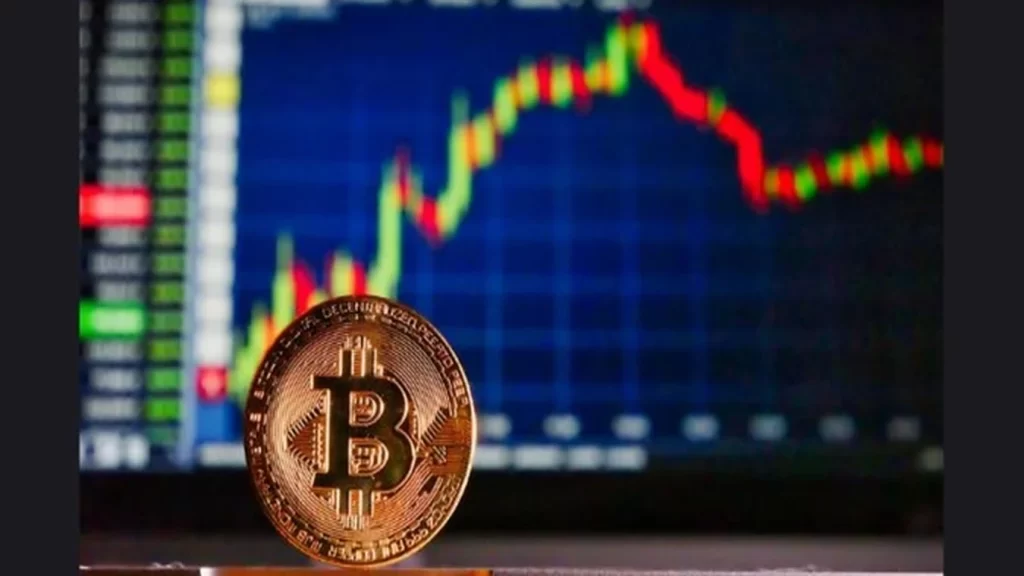
Bitcoin experienced a sharp surge today, jumping 8% to reach $82,000, following a dramatic policy shift from former President Donald Trump regarding international tariffs. The news set off a wave of bullish sentiment across global financial markets, lifting both equities and cryptocurrencies.
A Bold Trade Move From Trump
Trump’s message, posted on his social media platform Truth Social, revealed a two-pronged approach to trade tariffs. While announcing a pause on tariffs for most countries, Trump simultaneously hit China with a major increase in import duties.
“Based on the lack of respect that China has shown to the world’s markets,” Trump stated, “I am hereby raising the tariff charged to China by the United States of America to 125%, effective immediately.” Alongside this aggressive move, he introduced a 90-day tariff reprieve for all other nations, during which a reduced 10% reciprocal tariff would be enforced.
Financial Markets Respond With a Rally
The announcement acted as a powerful catalyst across financial markets. U.S. stocks experienced a dramatic upswing, reflecting investor optimism about the potential easing of global trade tensions—excluding China. The S&P 500 saw a 9% jump, and the tech-heavy Nasdaq surged by 10%.
Among individual stocks, Tesla led the charge with a 14% gain. Nvidia followed with a 12% increase, while Apple rose by 11%. Other major players like Microsoft, Meta, and Amazon all enjoyed 8% gains, with Google climbing 6%.
White House Voices Back Trump’s Plan
Howard Lutnick, the U.S. Secretary of Commerce, confirmed he was present when the statement was drafted. Sharing his thoughts on X, Lutnick noted, “Scott Bessent and I sat with the President while he wrote one of the most extraordinary Truth posts of his Presidency. The world is ready to work with President Trump to fix global trade, and China has chosen the opposite direction.”
Meanwhile, Treasury Secretary Scott Bessent took a firm tone in a White House press briefing. He cautioned other nations against retaliating and encouraged them to engage in constructive dialogue with the U.S. “Any country willing to negotiate with the United States will be heard and potentially rewarded,” he said.
Strategic Play or Political Theater?
This latest development appears to be a calculated political and economic move, designed to isolate China while warming ties with the rest of the world. The timing and tone of the announcement seem engineered to both appeal to Trump’s base and provoke a global reorientation of trade policies.
Markets are clearly betting on this gamble paying off. With major indices and digital assets rallying in response, investors appear confident that Trump’s aggressive move won’t spark an all-out trade war—at least not with anyone except China.

Bitcoin plunged below the $77,000 mark today after a bold new trade move by US President Donald Trump rattled global financial markets. The sudden announcement of a steep 104% tariff on Chinese imports has deepened fears of economic instability and caused widespread volatility across assets.
Markets React With Whiplash Volatility
Trump’s tariff declaration triggered a rollercoaster day for Wall Street. Initially, investors cheered, and markets surged—both the S&P 500 and Nasdaq recorded impressive intraday gains of approximately 4%. But that optimism didn’t last. By the end of the day, those gains were almost entirely wiped out.
Bitcoin mirrored the stock market’s mood swings. The cryptocurrency briefly climbed above the $80,000 threshold in the immediate aftermath of the news but soon sank below $77,000 as the full impact of the trade escalation began to sink in.
International Outreach Sparks Fleeting Optimism
In the days leading up to the tariff announcement, Trump reached out to US allies including South Korea and Japan. His administration claimed nearly 70 nations had expressed interest in new trade agreements. Trump called the diplomatic efforts a “beautiful and efficient” process.
Despite these talks, the US government confirmed the aggressive 104% tariff plan would move forward. The tariffs will officially take effect at 12:00 AM on April 9, cementing what could be a long and painful chapter in US-China trade relations.
China Vows Resistance and Escalation
China wasted no time issuing a fiery response. In a strongly worded statement, Chinese officials said they would “fight to the end” and denounced Trump’s plan as “US blackmail.” The chances of a negotiated settlement appear slim, with both countries digging in their heels.
Economic Concerns Deepen
The return of trade tensions has reignited fears of a looming US economic slowdown. Goldman Sachs recently raised the odds of a US recession to 45%, citing increased uncertainty and tightening financial conditions. JPMorgan also weighed in, predicting that the Federal Reserve will begin cutting interest rates starting June 2025. They anticipate a rate cut at each meeting through January, eventually bringing the policy rate’s upper bound to 3%.
Investment Shifts Reflect Caution
At a recent financial forum covered by Bloomberg, Loomis Sayles portfolio manager David Rolley described tariffs as “the only tax they can hike.” Meanwhile, fellow strategist Pramila Agrawal estimated the recession probability at 60%. Andrea Dicenso, another analyst from the same firm, said investors were already redirecting funds toward European and Latin American markets, which she characterized as safer and more stable than the US at this point.
As the April 9 tariff implementation date looms, traders, businesses, and investors are bracing for further market shocks and global ripple effects.
Federal agencies have been ordered to disclose their Bitcoin and digital asset holdings by Monday, following a recent executive move by President Trump aimed at creating a Strategic Bitcoin Reserve and a digital asset management infrastructure.
Trump’s Executive Order Ushers in a New Crypto Era for the U.S. Government
The requirement stems from an executive order signed by President Trump on March 6, which was detailed in a formal presidential document dated March 11. This mandate gives all federal departments 30 days to report their crypto asset holdings directly to Treasury Secretary Scott Bessent. A White House official confirmed the report deadline with journalist Eleanor Terrett.
This move marks a significant step in formalizing the U.S. government’s involvement in digital assets, but it remains unclear whether these disclosures will be made public. The executive order does not compel transparency to the general public, leaving the scope of future revelations uncertain.
Two New Government Offices to Manage Crypto Assets
As part of the order, the Treasury Department will manage two newly created offices that focus on digital assets. The Strategic Bitcoin Reserve, referred to by insiders as a “digital Fort Knox,” will store Bitcoin seized through criminal or civil forfeitures. This reserve is designed for long-term holding and is not intended to be actively traded or liquidated.
A second arm, the Digital Asset Stockpile, will operate similarly by acquiring assets through forfeitures. However, the Treasury is allowed to manage and liquidate these assets more flexibly. This active management differentiates it from the more conservative Bitcoin reserve.
President Trump has also previously mentioned Ethereum, XRP, Solana, and Cardano in the context of this stockpile. According to White House crypto tsar David Sacks and top advisor Bo Hines, these mentions reflect Trump’s awareness of their significance due to their market caps, rather than any indication of planned acquisitions.
Current Holdings: Bitcoin and Beyond
According to blockchain analytics platform Arkham Intelligence, the U.S. government currently holds 198,012 BTC in a single wallet—an amount worth over $15 billion. Alongside this large Bitcoin holding, the government also possesses other digital assets including ETH, WBTC, BNB, and TRX. The estimated value of these altcoin holdings stands at around $380 million.
David Sacks shared additional historical context, revealing that the government has previously held approximately 400,000 Bitcoin acquired over the last ten years through various forfeitures. Of that amount, around 195,000 BTC were sold, yielding about $366 million in proceeds.
Bitcoin’s Price Faces Pressure Amid Economic Concerns
Since the formation of the Strategic Bitcoin Reserve, Bitcoin’s price has seen a sharp decline. After reaching a high of over $94,000, the flagship cryptocurrency has dropped by roughly 17%, currently sitting at $77,800 according to CoinGecko. This downturn aligns with growing investor anxiety around recession risks and ongoing trade war developments.
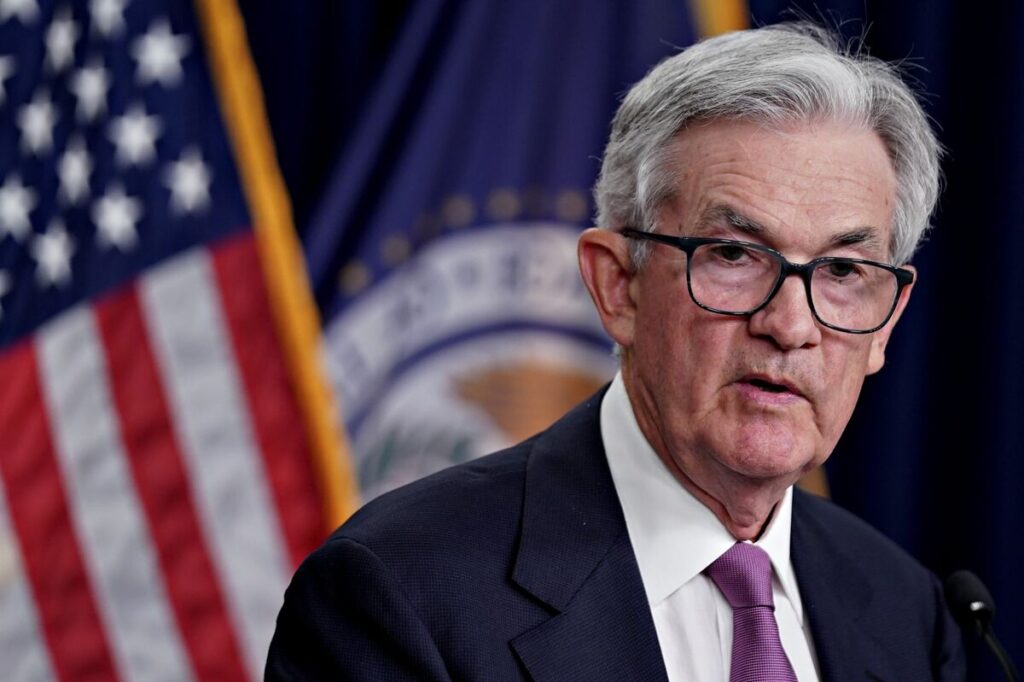
Federal Reserve Chair Jerome Powell has expressed growing concern over the economic impact of newly announced tariffs introduced by former President Donald Trump. Speaking at the Society for Advancing Business Editing and Writing’s annual conference, Powell highlighted that the scale of these tariffs exceeded expectations and could significantly complicate the Federal Reserve’s path forward.
Tariffs Expected to Hit Inflation and Growth
In his prepared remarks, Powell didn’t mince words about the consequences of the new trade measures. “While uncertainty remains elevated, it is now becoming clear that the tariff increases will be significantly larger than expected. The same is likely to be true of the economic effects, which will include higher inflation and slower growth,” he stated.
The Trump administration’s new policy includes a blanket 10% tariff on all foreign imports. Countries with large trade surpluses with the U.S. will face even steeper levies, which economists warn could raise the effective tariff rate above 25%. This shift is expected to weigh on economic expansion and put upward pressure on prices across a range of goods.
Fed Holds Steady Amid Economic Uncertainty
Despite the potentially disruptive effects of the new tariffs, Powell made clear that the central bank is not planning any hasty policy moves. Instead, the Fed intends to remain patient and await further data. “We are well positioned to wait for greater clarity before considering any adjustments to our policy stance,” Powell said. “It is too soon to say what will be the appropriate path for monetary policy.”
The central bank’s cautious stance is influenced by several uncertainties, including the specific details of the tariffs, how long they will remain in effect, and the likelihood of retaliatory measures from trade partners. Powell emphasized that these variables will be closely watched before any decisions are made.
Current Economic Outlook: Stable but Challenged
Powell acknowledged that the U.S. economy is currently in “a good place,” with healthy growth, a solid labor market, and inflation running above the Fed’s 2% target. However, he warned that this stability could be threatened if the tariff hikes filter into prices over the coming months. “Higher tariffs will be working their way through our economy and are likely to raise inflation in coming quarters,” he said.
Recent economic data suggests inflation is already proving stubborn. The core Personal Consumption Expenditures (PCE) price index—widely regarded as the Fed’s preferred inflation gauge—climbed 2.8% year-over-year in February. This further complicates the inflation fight, especially if tariffs worsen price pressures.
Inflation Expectations Remain Anchored—for Now
Despite these risks, Powell tried to strike a balanced tone. He pointed out that while progress toward the 2% inflation goal has slowed, inflation expectations remain “well anchored.” He emphasized that the central bank would work to ensure that tariff-driven price increases do not turn into long-term inflation problems.
The Fed’s ability to manage these emerging threats will depend on its flexibility and patience. Powell’s speech underlined that the central bank is not rushing into policy changes but remains watchful and ready to adapt as conditions evolve.
Bitcoin is gaining renewed prominence as a financial safe haven, holding its ground while traditional equities face their largest collapse in history. Following President Trump’s announcement of sweeping import tariffs, U.S. markets saw a record-breaking $5 trillion wipeout.
Massive Stock Market Turmoil
The S&P 500 experienced an unprecedented two-day loss of $5.4 trillion, exceeding the $3.3 trillion plunge during March 2020’s COVID-induced selloff. Trump’s April 2 announcement aimed to curb a $1.2 trillion trade deficit by targeting foreign imports—a move that spooked investors and sent stocks tumbling.
Bitcoin’s Maturity Shines Through
In stark contrast to traditional markets, Bitcoin’s reaction was muted. The cryptocurrency dipped just 3.7%, briefly touching $82,000 before climbing to $83,600. This relative calm signals that Bitcoin may be maturing into a more stable macro asset, according to Marcin Kazmierczak, COO of RedStone.
“What we’re potentially witnessing is an evolution in Bitcoin’s market positioning,” Kazmierczak noted, pointing to a possible shift in investor sentiment away from risk asset behavior.
Decoupling From Traditional Assets
Bitcoin’s structural resilience amid high volatility drew praise from analysts. Iliya Kalchev of Nexo commented, “BTC shows its worth, staying above its $82,000 key support level… structural demand remains intact.”
James Wo, CEO of DFG, acknowledged that while Bitcoin ETFs have increased institutional exposure and macro sensitivity, the current market dynamics may elevate Bitcoin’s “digital gold” status.
“If Bitcoin remains resilient, its decentralized nature and hard-capped supply could reinforce its role as a reliable store of value,” Wo said.
Bullish Outlook for 2025
Looking ahead, optimism continues to build. Jamie Coutts, chief crypto analyst at Real Vision, forecasts Bitcoin could climb above $132,000 by the end of 2025. He attributes this projection to increasing money supply levels that historically correlate with higher BTC prices.
With traditional markets faltering and governments likely to respond with more money printing, Bitcoin’s fixed-supply advantage could become even more appealing to investors seeking a hedge against monetary debasement.
Grayscale has taken another step toward offering a spot Solana exchange-traded fund (ETF), filing a Form S-1 registration statement with the U.S. Securities and Exchange Commission (SEC). The move comes after NYSE Arca submitted a related proposal to convert the Grayscale Solana Trust into a publicly traded ETF.
New Filing to Pave the Way for Public Listing
The Form S-1, dated April 4, reveals Grayscale’s intent to list the ETF on the NYSE Arca exchange. Initially named the Grayscale Solana Trust (SOL), the product would be renamed Grayscale Solana Trust ETF once approved. This filing is a critical step in complying with the Securities Act and allows the firm to offer and trade shares of the ETF on a public market.
This submission follows NYSE Arca’s earlier 19b-4 application filed with the SEC. That proposal, acknowledged by the regulator in February, seeks to convert the existing Grayscale Solana Trust into a full-fledged exchange-traded product. Approval of both the S-1 and 19b-4 filings is required before the ETF can begin trading.
Details of the Proposed ETF Structure
The fund is designed to track the market price of Solana (SOL) using the CoinDesk Solana Price Index (SLX). Unlike futures-based ETFs, this would be a spot product, meaning it would hold actual SOL tokens.
Grayscale has tapped Coinbase as the ETF’s prime broker and custodian, while Bank of New York Mellon is set to serve as transfer agent and administrator. These roles are essential for managing the issuance, redemption, and transfer of ETF shares.
Initially, share creation and redemption will only occur through cash orders. This means authorized participants will need to buy or sell SOL via third-party liquidity providers to fund or redeem their shares. The filing also leaves room for in-kind transactions, which could be implemented later with the SEC’s blessing.
No Staking or Airdrop Participation
Notably, the trust will not engage in Solana staking, nor will it distribute any SOL received through forks or airdrops. This conservative approach may help the ETF avoid additional regulatory complications.
Grayscale has confirmed it will charge a management fee for the fund, which will be paid in SOL. However, the specific fee rate has not yet been disclosed. The fee will be calculated annually based on the ETF’s net asset value.
Solana’s Market Standing
As of April 3, Solana’s total market capitalization stood at $59 billion, making it the seventh-largest digital asset by market cap. Approximately 514 million SOL coins are currently in circulation, with $4.7 billion in 24-hour trading volume, according to CoinGecko data.
The move to launch a spot Solana ETF represents another push by Grayscale to expand its crypto ETF lineup, following a broader industry trend of increasing investor access to digital assets through traditional financial markets.

April 3, 2025 – The Sportsbet.io ambassador family is once again welcoming new additions, with two exciting names bringing their unique energy to the ‘Join the Crypto Experience’ movement.
First up is Kanebi Ndekwu, a trailblazing media entrepreneur and co-founder of Tunnel TV, the renowned YouTube channel known for its deep analysis and passionate commentary. Kanebi will now be sharing the benefits of crypto betting with his loyal community.
Also joining Team Sportsbet.io is Moroccan sports influencer Najafi Hamza, known for his uncanny resemblance to the Italian goalkeeper Gianluigi Donnarumma. With over 70,000 Instagram followers, Najifi’s football content is already a hit across North Africa. Now, he’ll be channeling that same creativity and energy as part of the Sportsbet.io team.
These latest signings are yet another step forward for Sportsbet.io’s ‘Join the Crypto Experience’ ambassador program, which continues to attract diverse and talented creators from around the globe.
The initiative is all about bringing natural-born networkers and influencers together, the sort of people who live and breathe sports culture, and can share the benefits of crypto betting in their own authentic way.
Sportsbet.io’s ‘Join the Crypto Experience’ ambassador program continues to grow at pace, expanding into sports, entertainment, and beyond. High-profile names like legendary cricketer Brett Lee and Nigerian football icon Nwankwo Kanu are among those who’ve already joined the movement.
If you think you have what it takes to join the team, please visit: https://jointhecryptoexperience.io/.
About Sportsbet.io
Founded in 2016 as part of Yolo Group, Sportsbet.io is the leading crypto sportsbook. Sportsbet.io has redefined the online betting space by combining cutting-edge technology, with cryptocurrency expertise and a passion for offering its players with the ultimate fun, fast and fair gaming experience.
Official Regional Partner of LALIGA, Official Betting Partner of English football team, Hull City and a Club Partner of Premier League team Newcastle United, Sportsbet.io provides an expansive range of betting action across all major sports and eSports, offering players more than 1M pre-match events per year and comprehensive in-play content.
As the first crypto sportsbook to introduce a cash out function, Sportsbet.io is recognised as a leader in both online sports betting and within the crypto community.
In December 2023, a lucky Sportsbet.io won the biggest ever online slots jackpot while playing on the site, turning a $50 spin into a prize of more than $42 million.
Sportsbet.io prides itself on its secure and trustworthy betting service, with withdrawal times of less than 90 seconds, among the fastest in the industry.
For more information about Sportsbet.io, please visit https://sportsbet.io.

VanEck, a major American investment management firm, has initiated steps toward launching a Binance Coin (BNB) exchange-traded fund (ETF) in the U.S. The firm recently filed to establish a trust entity in Delaware, a critical preparatory move before submitting an official application to the U.S. Securities and Exchange Commission (SEC).
The filing represents a significant milestone, marking the first attempt to introduce a BNB ETF in the U.S. market. Currently, investment products related to BNB, such as the 21Shares Binance BNB ETP, exist, but they are not classified as U.S.-based ETFs.
VanEck’s Expanding Crypto ETF Portfolio
According to public records on the Delaware state website, VanEck registered the new entity, called the VanEck BNB ETF, on March 31 under filing number 10148820. The firm, which manages approximately $115 billion in client assets globally, is making another strong push into the cryptocurrency ETF sector.
With this filing, BNB becomes the fifth cryptocurrency for which VanEck has initiated an ETF registration in Delaware. The company previously registered ETFs for Bitcoin, Ethereum, Solana, and Avalanche. Notably, VanEck successfully launched spot Bitcoin and Ethereum ETFs in 2023 after obtaining regulatory approval from the SEC.
BNB’s Market Position and ETF Prospects
A BNB ETF would be designed to track the price of Binance Coin, currently the fifth-largest cryptocurrency by market capitalization. As of the latest data, BNB was trading at approximately $608, with minimal price fluctuations over the past 24 hours, according to CoinGecko.
VanEck has been proactive in expanding its crypto ETF offerings. In June 2024, it became the first firm to file for a Solana ETF in the U.S. Following this move, VanEck and other asset managers, including 21Shares, submitted additional regulatory filings, such as the 19b-4 form, to progress through the approval process.
The Path Ahead for VanEck’s BNB ETF
VanEck’s ambitions in the crypto ETF market continue to grow. Just last month, the firm applied for SEC approval to launch the first-ever Avalanche (AVAX) ETF. These moves build on its reputation as a pioneer in the crypto ETF space, having been the first provider to file for a futures Bitcoin ETF back in 2017.
The success of VanEck’s BNB ETF will largely depend on regulatory approval and investor demand. Given the increasing institutional interest in cryptocurrency investment products, the potential introduction of a BNB ETF could further enhance the adoption of Binance Coin in the mainstream financial market.