


One year after Bitcoin’s 2024 halving event, market observers are applauding BTC’s strength in the face of economic headwinds. The halving, which reduced block rewards from 6.25 BTC to 3.125 BTC, appears to have triggered not only scarcity-driven optimism but also speculation around a faster market cycle.
Bitcoin Holds Strong Despite Global Tensions
Since the May 2024 halving, Bitcoin has surged over 33%, even as fears surrounding a global trade war between the U.S. and China have escalated.
“So, even though Bitcoin’s showing resilience, I think the mix of past experiences, economic uncertainty, and this selling pressure is keeping investors on the sidelines, waiting for a stronger green light before they jump in,” said Enmanuel Cardozo, market analyst at Brickken.
Cardozo believes institutional players could influence the timing of this cycle. “For the 2024 halving in May, that puts the bottom around Q3 this year and a peak mid-2026, but I think we might see things move a bit sooner because the market’s more mature now with more liquidity.”
Monetary Policy Could Shape BTC’s Next Leg Up
Cardozo also pointed to potential monetary policy moves as a catalyst. A U.S. Federal Reserve rate cut, possibly in May or June, could inject additional liquidity into markets and help push Bitcoin higher.
The halving mechanism itself is a built-in feature of Bitcoin’s monetary policy, designed to reduce supply and maintain scarcity. This supply shock, when paired with heightened demand, has historically preceded bull runs.
Institutional Demand and ETFs Alter the Playing Field
Another analyst, Vugar Usi Zade of Bitget, suggested the market cycle might be accelerating due to institutional adoption and ETF activity.
“With growing scarcity triggered by the halving, Bitcoin will likely retest its all-time high if it breaches the $90,000 mark in the coming weeks,” he explained. “While the halving offers a good basis for growth based on demand and scarcity, the timeline for impact on price can vary over time.”
Zade emphasized that Bitcoin’s growth remains closely tied to broader financial markets and investor sentiment.
New All-Time High Came Quicker Than Previous Cycles
Recent price action supports the idea of a compressed cycle. According to data from trader Jelle, Bitcoin reached a new all-time high above $109,000 on January 20—just 273 days after the 2024 halving.
That’s a significant acceleration compared to previous cycles: the 2021 halving took 546 days to peak, and the 2017 cycle needed 518 days.
As the ecosystem matures with institutional players, ETFs, and evolving market dynamics, many analysts believe Bitcoin may no longer follow its traditional four-year pattern. Instead, the cryptocurrency could be entering a new era of accelerated, liquidity-driven growth.
Bitcoin’s price may be heading for new highs in the coming months, according to recent research by economist Timothy Peterson. His analysis suggests that Bitcoin could reach as high as $138,000 within 90 days — provided current macroeconomic trends hold.
Statistical Edge for Bitcoin Bulls
Peterson’s latest forecast is rooted in a data-driven look at the U.S. High Yield Index Effective Yield, which is currently above 8%. Based on historical data, this level of yield has coincided with positive Bitcoin performance more often than not.
“This has happened 38 times since 2010 (monthly data),” he explained. “3 months later: Bitcoin was up 71% of the time. The median gain was +31%. If it went lower, the worst loss was -16%.”
With these odds favoring the bulls, Peterson outlined a potential BTC price range between $75,000 and $138,000 over the next three months.
Strong Floor, Bullish Ceiling
Peterson’s models, including his proprietary “Lowest Price Forward” tool, continue to suggest solid support for Bitcoin even in the face of market volatility. Earlier this year, he gave 95% odds that Bitcoin would not fall below $69,000 in March.
For Bitcoin to hit the upper end of his new forecast, it would require a 62% rally from current levels. While ambitious, the projection is not out of reach if the macroeconomic environment remains favorable.
Unusual Correlation With the U.S. Dollar
In a notable shift, Bitcoin has shown a rare positive correlation with the U.S. Dollar Index (DXY), diverging from its historical pattern. Peterson attributes this anomaly to shared responses to broader economic stressors.
“This level of BTC-USD correlation is unprecedented. The relationship is not causal, but reflective of underlying conditions affecting both,” he said.
He further explained that in 2024, Bitcoin and the dollar began reacting similarly to factors like tightening liquidity, elevated real interest rates, and global risk aversion. However, he believes this alignment is temporary.
“BTC will decouple and rise when real yields drop + liquidity returns,” Peterson predicted.
Dollar Weakness Could Fuel the Next Rally
Recent data shows the DXY holding below the critical 100 threshold — one of its weakest points in the last three years. This decline in dollar strength may offer Bitcoin a tailwind, mirroring conditions during the early 2023 bull run.
While macroeconomic uncertainty continues, analysts like Peterson remain optimistic that Bitcoin could capitalize on the current environment, potentially ushering in a new phase of growth.

Coinbase’s layer 2 blockchain, Base, found itself at the center of controversy after a post on its social media account was transformed into a tradeable token using Zora. What started as a seemingly light-hearted experiment quickly evolved into a volatile market event.
Token Minted from a Tweet Sparks Frenzy
The drama began when Base’s official X account shared a post reading “Base is for everyone,” followed by a second post linking to Zora and saying “coined it.” That post indicated the message had been minted as an ERC-20 token on the platform.
Despite Zora’s disclaimer that the token wasn’t official, speculation exploded. The market cap shot up to $17 million before collapsing by roughly 94% to around $1 million, based on data from DEXScreener.
Market Whiplash and Wallet Concentration Raise Eyebrows
On-chain analyst Hantao Yuan highlighted that nearly half of the token’s supply was held by just three wallets. One of them alone controlled 25.6%. Yuan also noted that volume bots played a major role in the price swings. Over 2,500 wallets were affected, with many users feeling misled.
In a statement issued after the chaos, the Base team described the incident as a content tokenization experiment. Although they received 10 million of the tokens, they assured the community they wouldn’t sell them.
Mixed Reactions Across the Crypto Space
While some users expressed confusion and frustration, others mocked the situation. Alon, co-founder of Pump.fun, weighed in by saying this kind of tokenization might become standard practice in the future, but for now, it shows a disconnect with today’s expectations.
He added, “Tokenizing everything is a great idea, but with that power comes responsibility.”
Value Rebounds but Concerns Remain
In a surprising twist, the token rebounded strongly after its initial drop, reaching a valuation of approximately $23 million before settling around $18 million. Trading volume exceeded $30 million in just 12 hours. Zora’s data shows the creator earnings for Base reached about $70,000.
Despite the backlash, Base’s creator Jesse Pollak doubled down on promoting on-chain content. He called on brands to embrace tokenization through platforms like Zora. Pollak framed it as a “new form of marketing” offering greater engagement and monetization potential.
This comes on the heels of Coinbase reviving its plans to tokenize its $COIN stock, aiming to bring blockchain-based securities into the U.S. financial landscape.
A senior Russian Finance Ministry official has called for the development of local stablecoins in the wake of U.S. and European action targeting digital wallets tied to Russian interests. Osman Kabaloev, deputy director of the ministry’s financial policy department, made the remarks after wallets holding Tether’s USDT were blocked last month.
Push for Non-USD Stablecoins Grows
The sanctions have forced Russian officials to consider creating stablecoins similar in function to USDT but pegged to currencies other than the U.S. dollar. The motivation stems from the disruption caused by the freezing of Russian-linked digital assets and increasing difficulty in accessing Western financial systems.
Garantex Sanctions Trigger Crypto Clampdown
In February, the European Union sanctioned Garantex, a major Russian crypto exchange, citing its associations with blacklisted financial institutions such as Sberbank, T-Bank, and Alfa-Bank. The EU accused the platform of helping these banks evade restrictions.
Following the EU action, Tether blocked Garantex-linked wallets that held over 2.5 billion rubles (approximately $30 million). This move forced the exchange to halt operations temporarily, suspending crypto withdrawals and leading to broader implications for Russia’s crypto landscape.
The platform’s infrastructure was subsequently seized by U.S. and European authorities, escalating enforcement efforts. The U.S. Department of Justice later unsealed indictments against several key Garantex figures, alleging the platform processed $96 billion in illicit transactions linked to cybercrime and money laundering.
Crypto Payments in International Trade
Despite official resistance to crypto for domestic use, Russia has been experimenting with its application in cross-border payments. Bank of Russia Governor Elvira Nabiullina reiterated her opposition to crypto for internal transactions but confirmed international crypto payments were being tested.
These tests come at a time when Russia is searching for alternative methods to bypass Western sanctions. In March, reports surfaced that the country had utilized cryptocurrencies, including Bitcoin and USDT, for oil trades with China and India.
Stablecoins and Digital Ruble in Focus
Moscow has been exploring a variety of financial workarounds since the onset of sanctions, including launching its own central bank digital currency (CBDC), the digital ruble. Alongside this, there is growing interest in non-dollar stablecoins to provide payment flexibility and geopolitical resilience.
While these strategies are seen as innovative ways to circumvent restrictions, progress has been slow. The adoption of a digital ruble remains in its infancy, and stablecoin projects are still conceptual, highlighting the significant hurdles ahead for Russia’s financial evolution in a sanction-heavy environment.
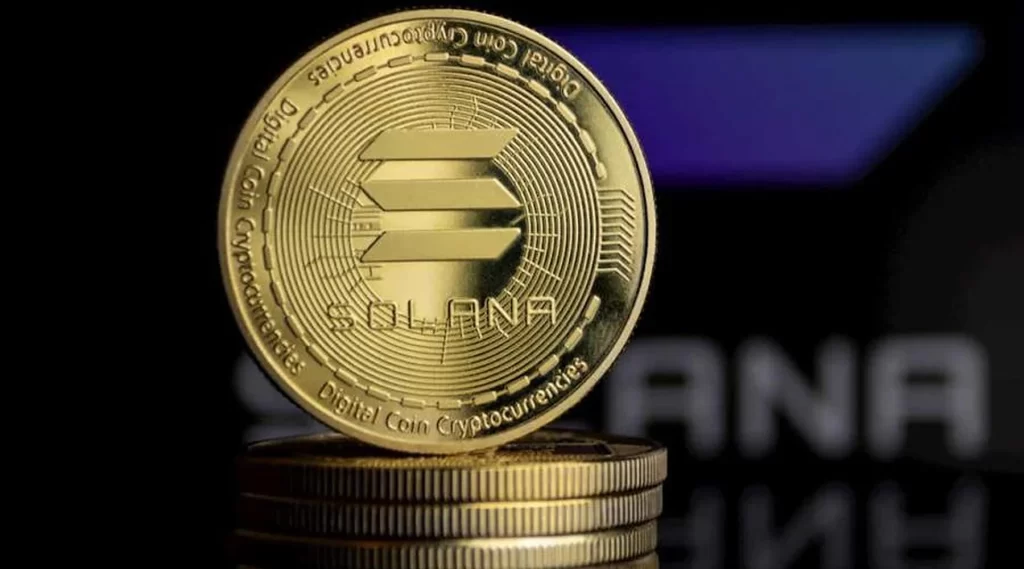
Janover, a software firm, has made headlines again with another bold move in the crypto space. The company recently disclosed the purchase of 80,567 Solana (SOL) tokens worth approximately $10.5 million. This marks Janover’s third major SOL acquisition as part of its growing digital treasury initiative.
Massive Price Surge Fuels Strategic Investment
The announcement followed a significant stock rally, with Janover shares hitting an all-time high of nearly $66. Although share prices slightly dipped in early trading the next day, the company has still enjoyed a staggering 1,200% surge this year.
With this new buy, Janover’s total Solana holdings now stand at around 163,651 tokens—currently valued at approximately $21 million. The purchase was financed through a recent $42 million capital raise.
Staking and Validator Plans in Motion
Janover doesn’t plan to let its crypto assets sit idle. The firm intends to stake the newly acquired SOL, a move that will generate passive income and strengthen the Solana network. It also aims to operate one or more validators to enhance its participation in network security and receive staking rewards.
The staking revenues will be reinvested into acquiring even more Solana, in line with the company’s long-term accumulation strategy.
“Speed and clarity of execution are central to our model,” said Parker White, COO and CIO at Janover. “We plan to continue building our SOL position as we scale our strategy — and we believe today’s market conditions offered a compelling opportunity to take our first step.”
Leadership Shift and Rebranding Ahead
These developments come in the wake of a major leadership shake-up, as a group of former Kraken executives acquired majority control of Janover. The company is now focused on bridging the gap between traditional finance and decentralized systems.
Earlier this month, the board approved a new treasury strategy focused on long-term crypto holdings. The plan starts with Solana but could potentially expand to other digital assets over time.
Janover is also preparing to rebrand itself as DeFi Development Corporation and plans to change its stock ticker symbol to reflect this new direction.
Growing Trend Among Corporates
Janover’s aggressive crypto positioning echoes a broader trend among companies diversifying into digital assets. Worksport, for example, announced last year that it had added XRP to its treasury alongside Bitcoin.
Solana, currently trading at about $132, has surged nearly 24% in the past week despite being down 30% year-to-date. The downturn has been attributed in part to wider market volatility triggered by changes in U.S. tariff policy.
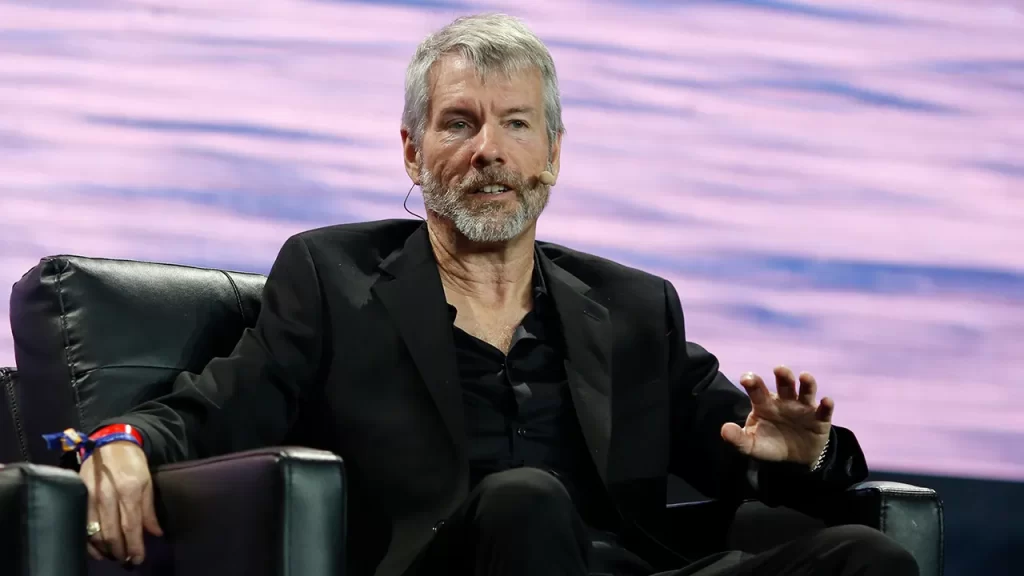
Michael Saylor’s company, Strategy, has continued its aggressive Bitcoin accumulation, announcing the purchase of 3,459 BTC between April 7 and April 13. Acquired at an average price of $82,618 per Bitcoin, this latest investment pushes the firm’s total BTC holdings to an astonishing 531,644 coins—valued at nearly $45 billion based on current market prices.
Funding the Buy with Equity Sales
According to a recent SEC filing, the purchase was funded through the sale of company shares. Strategy sold 959,712 shares of MSTR stock within the same timeframe, generating approximately $286 million in net proceeds. The transaction was part of its ongoing Common ATM equity offering program.
Even after this share sale, Strategy maintains substantial capacity for future funding. The company still holds over $2.08 billion in MSTR shares and approximately $21 billion in STRK shares that can be issued and sold down the line.
Holding Steady Despite Market Turbulence
The purchase comes on the heels of a one-week pause in acquisitions, during which the firm disclosed an unrealized loss of nearly $6 billion due to Bitcoin’s price drop. However, Saylor has shown no signs of changing course. On Sunday, he posted the company’s portfolio tracker on X (formerly Twitter)—a move that has historically signaled a pending buy.
Despite the recent volatility, Strategy’s Bitcoin stash still shows approximately $9 billion in unrealized profits, with Bitcoin trading above $84,500 at the time of the announcement.
Leading the Corporate Bitcoin Charge
Strategy remains the largest corporate holder of Bitcoin, owning around 2.5% of the total circulating supply. Other firms such as MARA Holdings, Riot Platforms, and Galaxy Digital Holdings trail behind.
Saylor’s firm continues to be a driving force in corporate Bitcoin adoption, frequently making large-scale purchases that reflect his unwavering belief in the cryptocurrency as a long-term store of value.
Metaplanet Ramps Up Bitcoin Investment
Meanwhile, in Asia, another Bitcoin-centric company is following a similar path. Metaplanet, often dubbed “Asia’s Strategy,” revealed its latest Bitcoin purchase on Monday. The Tokyo-based investment firm acquired $26 million worth of BTC, bringing its total to 4,525 coins.
Despite the price swings triggered by political developments—including proposed tariff policies from former President Donald Trump—Metaplanet remains committed to reaching its goal of holding 10,000 BTC by the end of 2025. It currently ranks as the ninth-largest public company globally in terms of Bitcoin holdings and holds the top spot in Asia.

April 14, 2025 – Sportsbet.io, the world’s favourite crypto-led sports betting site, is giving one lucky player two tickets to watch football’s biggest game: LALIGA’s El Clásico between Barcelona and Real Madrid.
The famous clash takes place in Barcelona in May, and it is likely to be a key decider in who wins this year’s LALIGA title.
Sportsbet.io will be sending the winner and their guest for a full VIP El Clásico experience, including match tickets, travel, accommodation, and exclusive on-spot activities.
Earlier this season, Sportsbet.io became Official Regional Partner of LALIGA, highlighting its commitment to working with the very best in sport to bring once-in-a-lifetime experiences to players.
Shane Anderson, Chief Brand Officer for Sportsbet.io (Yolo Entertainment) said: “El Clásico is more than just a football match, it’s a global spectacle, and we’re giving Sportsbet.io players the chance to experience it in style. This giveaway is all about rewarding our players with unforgettable moments, and there’s no bigger stage than El Clásico for that.”
To take part in this incredible giveaway, you’ll need to be following Sportsbet.io closely on X and/or Instagram.
To enter, on Instagram, simply follow, like the post, tag a friend you would take, and optionally share to your stories for an extra chance. To enter on X, follow, like, retweet and tag the friend who you’d like to take with you.
The winner will be announced on Sportsbet.io’s social channels and contacted directly.
Full conditions can be found here: https://sportsbet.io/promotions/2025-04-barcelona-matchday-giveaway.
About Sportsbet.io
Founded in 2016 as part of Yolo Group, Sportsbet.io is the leading crypto sportsbook. Sportsbet.io has redefined the online betting space by combining cutting-edge technology, with cryptocurrency expertise and a passion for offering its players with the ultimate fun, fast and fair gaming experience.
Official Regional Partner of LALIGA, Official Betting Partner of English football team, Hull City and a Club Partner of Premier League team Newcastle United, Sportsbet.io provides an expansive range of betting action across all major sports and eSports, offering players more than 1M pre-match events per year and comprehensive in-play content.
As the first crypto sportsbook to introduce a cash out function, Sportsbet.io is recognised as a leader in both online sports betting and within the crypto community.
In December 2023, a lucky Sportsbet.io won the biggest ever online slots jackpot while playing on the site, turning a $50 spin into a prize of more than $42 million.
Sportsbet.io prides itself on its secure and trustworthy betting service, with withdrawal times of less than 90 seconds, among the fastest in the industry.
For more information about Sportsbet.io, please visit https://sportsbet.io.
While global financial markets have been rattled by U.S. President Donald Trump’s erratic tariff policy announcements, the cryptocurrency space has demonstrated surprising resilience. According to an April 11 note from Greg Cipolaro, global head of research at New York Digital Investment Group (NYDIG), digital assets have remained relatively calm amidst the broader market chaos.
Stability Amid Traditional Market Declines
Trump’s unexpected move on April 2 to impose sweeping global tariffs—only to partially backtrack a week later—sent shockwaves through stocks, bonds, and foreign exchange markets. Yet, Cipolaro noted, “Despite the carnage in traditional financial markets, the crypto markets have been relatively orderly.”
The crypto analyst highlighted how, in previous periods of market-wide risk aversion, digital assets usually saw heightened volatility. However, that pattern hasn’t played out this time, at least not to the same degree. He added that crypto perpetual futures funding rates “have been persistently positive,” despite a short-lived liquidation surge following the initial tariff announcement.
Limited Impact on Stablecoins and Liquidations
When Trump first unveiled the tariffs on April 2, they affected nearly all global partners but were paused just days after taking effect on April 9—leaving China subject to tariffs as high as 145%. This about-face did little to clarify the administration’s stance and further destabilized investor confidence.
Still, Cipolaro pointed out that the liquidations seen in crypto markets on April 6 and 7 totaled just $480 million, which he described as “well below other notable liquidation events.” Even Tether (USDT), the stablecoin often viewed as a barometer for crypto confidence, dipped slightly below $1 without triggering a mass sell-off.
Bitcoin Proving Its Worth as a Store of Value
Bitcoin (BTC), which currently trades at around $84,730 according to CoinGecko, hasn’t been entirely immune to volatility. Since its peak of over $108,000 in mid-January, it has declined by 22.5%. However, Cipolaro emphasized that “at current prices [it] has fared far better than many other asset classes.”
He believes Bitcoin’s muted volatility in the face of such geopolitical shocks is turning heads. “Perhaps investors are increasingly searching for stores of value not tied to sovereign countries and thus not affected by the trade turmoil.”
Attractive to Risk-Parity Investors
One of the key dynamics Cipolaro identified is Bitcoin’s appeal to funds that use risk-parity strategies. These portfolios seek to balance risk rather than capital, and the narrowing volatility gap between Bitcoin and traditional assets may make it a more attractive addition.
“Risk parity funds allocating to Bitcoin can help dampen its volatility — making the asset more attractive and potentially reinforcing a virtuous cycle of increased adoption and stability,” Cipolaro explained.
Caution From Technical Indicators
Despite the optimism from NYDIG, not everyone is convinced the crypto market is out of the woods. Ruslan Lienkha, chief of markets at YouHodler, noted that a bearish technical pattern could be forming.
In a note dated April 12, Lienkha warned of a potential “death cross,” where the 50-day moving average falls below the 200-day moving average. He described this as “generally considered a bearish signal for the medium term, suggesting that markets may struggle to sustain upward momentum without a clear catalyst or a stream of positive macroeconomic developments.”
As confidence in the accuracy of U.S. economic data continues to erode, crypto entrepreneur Anthony Pompliano believes that Bitcoin holders were ahead of the curve in recognizing deeper flaws in the system—and positioning themselves for a financial advantage.
Bitcoiners Saw the Writing on the Wall
In an April 12 post on X, Pompliano remarked that Bitcoin investors were the first significant group to notice discrepancies in U.S. economic indicators. “Bitcoiners were the first large-scale group to recognize the economic data was wrong, and they figured out a way to financially capture upside if they were right,” he wrote.
Pompliano’s skepticism centers around key indicators such as inflation rates, employment figures, and GDP growth. He suggests these metrics are unreliable, especially in the context of economic measures like tariffs introduced under President Donald Trump’s administration.
A Growing Doubt Among Officials and Experts
Pompliano highlighted a March 20 interview with U.S. Treasury Secretary Scott Bessent on the All-In podcast. When asked if he trusted the current economic data, Bessent plainly replied, “no.” This, Pompliano said, is a pivotal moment: “Even the Treasury Secretary has now publicly acknowledged he doesn’t believe the data. He says we must listen to the people rather than blindly follow the government data reports.”
Concerns over the reliability of official data are not new. A report from July 2024 raised questions about whether traditional statistical methods can still deliver trustworthy information, pushing for new methodologies.
Tariffs, Uncertainty, and Bitcoin’s Resilience
The economic climate has been especially turbulent amid the ongoing tariff policies initiated by Trump. While some Wall Street analysts predicted the tariffs would strengthen the U.S. dollar, recent performance suggests otherwise. The dollar index has fallen 3.19% over the past five days, currently standing at 99.783. Since the start of 2025, it’s down 8.06%.
Jeff Parks, head of alpha strategies at Bitwise Invest, offered a bold prediction on April 9: “There is a higher chance Bitcoin survives over the dollar in our lifetime after today.”
Pompliano doubled down on the sentiment, saying, “The mainstream finance conversation has become an intellectual boondoggle where most people regurgitate ill-informed takes based on bad data.”
Bitcoin Diverges From Traditional Markets
Interestingly, while U.S. equity markets slumped on April 4 amid escalating tariff tensions, Bitcoin performed with unexpected strength. It held firm above $82,000 and even climbed to $84,720 while stocks were crashing—defying the typical correlation.
Analysts have long observed that cryptocurrencies tend to be more volatile during macroeconomic stress. Yet in this case, Bitcoin’s stability while traditional assets faltered has reinforced the narrative of it being a hedge against systemic risk.
Former BitMEX CEO Arthur Hayes described this current phase as potentially “up only mode,” attributing it to worsening conditions in the U.S. bond market. As investors grow wary of traditional safe havens, more may flock to alternative assets like Bitcoin.
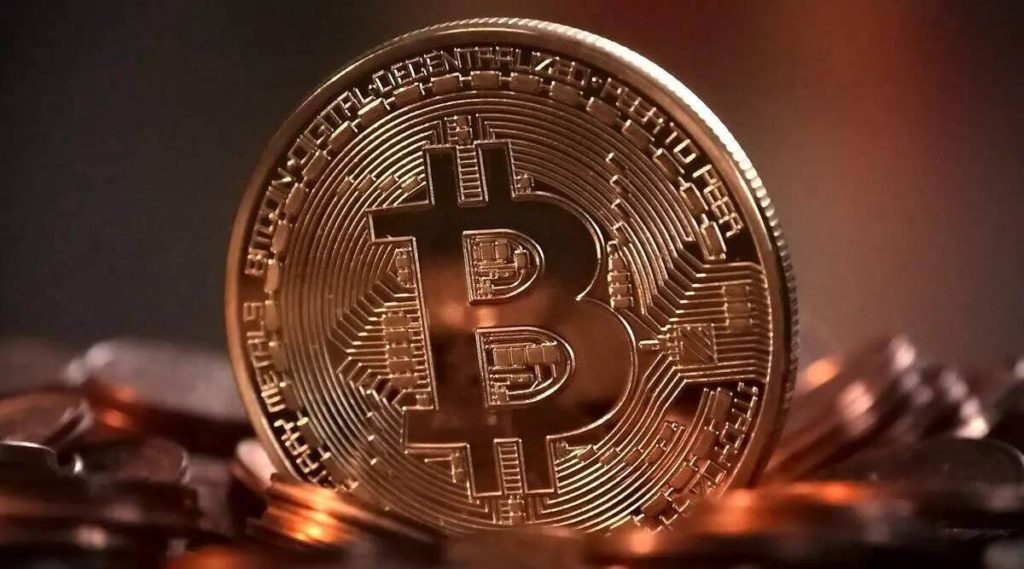
Ripple CEO Brad Garlinghouse has expressed optimism about Bitcoin’s future, suggesting a $200,000 price point isn’t far-fetched. He cites growing institutional interest and a friendlier US regulatory landscape as key drivers for long-term growth.
A Bold but Grounded Prediction
Speaking on Fox Business Network’s The Claman Countdown, Garlinghouse remarked, “I think $200,000 is not unreasonable.” He clarified that he wouldn’t predict XRP’s price, adding, “It’s too close to home.”
Bitcoin is currently trading around $83,500, a 3% daily increase, though still 23% below its January 20 peak. Despite short-term fluctuations, Garlinghouse believes long-term macroeconomic trends are far more important than day-to-day movements.
Regulatory Shift Could Unlock Crypto Growth
Garlinghouse emphasized the dramatic change in the US regulatory environment, noting the transition from “headwinds, hostility” to “tailwinds.” He believes this positive shift hasn’t yet been fully appreciated by the market.
“The largest asset managers in the world go from relatively frozen out or hostile to now a friendly market. This has sensible regulation that is thinking about pro-innovation here at home,” he said.
He also underscored crypto’s role as a hedge against inflation and economic instability. “The long-term value here is going to be very clear. It (crypto) is a hedge against inflation. It is a dynamic where the more utility we drive in the crypto markets, the more we’re going to see value accrete to that market,” Garlinghouse added.
XRP ETF Momentum Grows
New developments on the ETF front are also supporting the broader market. Teucrium recently launched the first leveraged XRP ETF in the US—the 2x Long Daily XRP ETF—which saw strong debut volume of $5 million.
Garlinghouse remains optimistic about XRP ETF approvals, predicting launches in the second half of the year. Analysts from JPMorgan and Standard Chartered estimate up to $8 billion in inflows during the first year if ETFs gain approval.
Ripple’s Strategic Moves and Expansion
Garlinghouse discussed Ripple’s $1.25 billion acquisition of prime broker Hidden Road, which he said would not have occurred under the previous regulatory environment. The acquisition aims to help institutions like BlackRock enter the crypto market with the infrastructure they trust.
“This allows even larger institutions like BlackRock, like the biggest Wall Street financial institutions, to come into this market in a way they understand with a safer prime broker to help clear transactions and a bigger balance sheet to do that. It’s good for the whole industry,” he noted.
Ripple’s headcount has also grown to around 1,100 employees, further signaling confidence in the company’s trajectory.
Stablecoins and Legislation on the Horizon
Garlinghouse highlighted growing momentum behind crypto regulation on Capitol Hill. Market structure bills and stablecoin legislation are gaining traction, with expectations that both could soon pass.
Ripple’s RLUSD stablecoin, launched under a New York trust license, has already surpassed $250 million in market cap and is nearing the $300 million mark. Garlinghouse believes these developments point to a maturing and increasingly integrated crypto ecosystem.