



The Digital Chamber, one of the largest crypto lobbying groups in Washington, files suit against Illinois this week. The organization wants to block the state’s new digital asset tax before it starts.
Illinois lawmakers passed the 0.2% levy last month as part of a $55.9 billion budget package. Governor JB Pritzker signed the measure into law in June, and it takes effect at the start of 2027.
The complaint lands in the Circuit Court of Sangamon County and names the state’s Department of Revenue and Attorney General as defendants. It runs more than 30 pages and targets the Digital Asset Tax Act directly.
Unlike a capital gains tax, the new rule does not care whether a transaction produces profit. It calculates charges from the value of the asset itself during any covered blockchain activity.
The lawsuit argues the tax breaches the uniformity and due process clauses in the Illinois constitution. It also claims violations of the Commerce Clause and the federal Internet Tax Freedom Act.
According to the filing, the law does not distinguish between gains and losses, between profitable and unprofitable transactions, between realized and unrealized appreciation, or between transfers that change ownership and transfers that do not. Instead it separates blockchain infrastructure from every other kind of financial system.
Federal law treats what an asset represents separately from the technology used to record its ownership, the complaint states. No other area of law draws a line based purely on recordkeeping method.
The Digital Chamber counts more than 250 companies among its members, including Anchorage Digital, Chainlink Labs, and Intercontinental Exchange, the parent company behind the New York Stock Exchange.
CEO Cody Carbone says the tax provision entered the budget the night before final consideration, leaving little room for scrutiny of its fairness or its compliance demands on smaller firms.
Before Pritzker signed the budget, The Digital Chamber and the Illinois Blockchain Association jointly asked officials to strip the tax out entirely rather than fold it into unrelated budget legislation.
The Crypto Council for Innovation separately urged the governor to use a line-item veto against the crypto provision, but that request went nowhere before the signing.
The group compares the approach to charging extra postage simply because a letter arrives by email instead of the mail, arguing the technology itself should not change the tax outcome.
Beyond blocking enforcement, the lawsuit asks a judge to award The Digital Chamber its legal fees and costs, plus a formal declaration that the statute cannot stand.
The Digital Chamber warns that letting Illinois proceed could invite other states to copy the model, potentially expanding similar treatment to AI systems or cloud based payment platforms next.

Revolut receives in-principle approval from Dubai’s Virtual Assets Regulatory Authority for a Virtual Assets Service Provider licence, moving the fintech closer to a full UAE crypto rollout.
The approval covers broker-dealer, management and investment, and exchange services for digital assets across the emirate. Revolut must still secure final regulatory clearance before it can begin serving customers with these products.
Joseph Khair, Head of Revolut Digital Assets FZE in the UAE, said the country continues to demonstrate global leadership in building a transparent framework for virtual assets. He called the approval a foundation for introducing regulated crypto services locally.
Once fully licensed, eligible UAE customers will be able to buy, sell, and hold cryptocurrencies through Revolut’s main app and its standalone exchange platform, Revolut X. Both products will operate under VARA’s regulated framework.
The announcement follows Revolut’s receipt of Stored Value Facilities and Retail Payment Services licences from the Central Bank of the UAE in June. Those approvals capped a process that began with preliminary clearance last September.
VARA was established in Dubai in March 2022 under the city’s Virtual Asset Regulation Law, the first legislation in the emirate built specifically to govern virtual assets. The regulator said last month it had issued its fiftieth VASP licence.
Applicants to VARA follow a two-stage licensing process, meaning in-principle approval alone does not permit a company to start serving customers. Revolut said it plans to keep working with the regulator to satisfy the remaining conditions.
Dubai has already granted full VASP licences to major digital asset firms including Binance, Crypto.com, OKX, Deribit, BitOasis, and HashKey. Revolut’s approval positions it to join that group of regulated operators in the emirate.
Revolut currently serves more than 75 million customers worldwide, with over 16 million of them using its existing crypto services in the United Kingdom and the European Economic Area.
The company has been adapting its digital asset offerings to different regulatory regimes across markets. It recently confirmed plans to phase out support for Tether’s USDT in parts of Europe under new Markets in Crypto-Assets rules.
Industry commentary framed the UAE approval as a notable move given regulatory pressure on crypto firms in parts of the West. Dubai’s clear licensing rules have continued to attract fintechs seeking a foothold with high-net-worth digital asset customers in the region.

Webull EU has received formal approval under Europe’s Markets in Crypto Assets Regulation, clearing the way for the platform to offer digital asset services to clients across the region.
The approval comes from the Autoriteit Financiële Markten, the Dutch financial regulator, making Webull one of the first dual-regulated investment firms in the Netherlands to hold MiCAR authorization.
Under the new framework, Webull users will be able to place orders for crypto assets directly through the platform, with custody handled internally by the European subsidiary.
Trade execution will run through a partnership with Coinbase Luxembourg, giving Webull a regulated pipeline for order routing without building its own exchange infrastructure from scratch.
Andries van Luijk, chief executive of Webull Securities Europe, called the approval a major milestone in the company’s push to expand its footprint across the continent.
He said the authorization reflects Webull’s commitment to giving European clients secure and compliant access to digital assets under the bloc’s regulatory standards.
MiCAR requires firms to meet strict investor protection and operational benchmarks, giving traders added assurance when holding or trading crypto through licensed platforms.
Approval currently covers only the Netherlands, though Webull has submitted passporting requests that would let it extend services across other EU member states.
Passporting is the mechanism that allows a firm licensed in one EU country to operate across the entire bloc without separate national licenses.
Webull expects to launch its crypto operations in late 2026, giving the company several months to build out infrastructure before going live.
The Nasdaq-listed firm operates in sixteen markets worldwide and serves more than twenty seven million registered users across stocks, options, futures, and now digital assets.
This approval lands amid a wider scramble among brokers and exchanges to secure MiCAR licensing before Europe’s compliance deadlines tighten further this year.
Rivals including Bitget and BingX have filed similar applications in Austria, while Ripple and Bridge have already secured licenses through Luxembourg regulators.
The trend signals growing competition among global financial firms racing to capture regulated crypto market share inside one of the world’s largest trading blocs.

BTC and ETH prices are sliding again as renewed conflict in the Middle East rattles risk assets across the board. Bitcoin opened lower on Thursday, dropping to the $62,200 range before clawing back some ground during the session.
The pullback comes after a second straight day of exchanged airstrikes between the United States and Iran. That exchange has effectively unraveled the fragile ceasefire reached in late June, sending shockwaves through global markets.
Shipping traffic through the Strait of Hormuz has slowed to a crawl as tankers avoid the contested waterway. Roughly a fifth of the world’s oil supply usually moves through that corridor, so any disruption ripples fast.
Oil prices have jumped on the news, adding fresh inflation worries just as central banks were starting to ease their tightening stance. Higher oil costs tend to squeeze consumer spending, which historically weighs on riskier assets like crypto.
ETH mirrored the bitcoin move, opening near $1,742 before ticking modestly higher through the morning session. Ether has now underperformed bitcoin for much of the past week as capital rotates toward safer positioning.
Despite the pullback, both BTC and ETH remain in stronger territory than they were just seven days earlier. Traders describe the current setup as choppy but not panicked, with dip buyers still showing up at key support levels.
A missile strike on a tanker near Qatar earlier in the week already tested market nerves once. Bitcoin briefly touched above $64,000 overnight before easing back, still holding a weekly gain near six percent.
Analysts say the market’s relatively muted reaction shows how desensitized traders have become to geopolitical shocks this year. Repeated flare-ups without full-scale escalation have left many treating these headlines as background noise rather than a reason to sell.
Options markets are pricing in continued volatility over the coming days as the ceasefire’s fate remains uncertain. Implied volatility on short-dated BTC contracts has ticked up, signaling traders expect bigger swings either direction.
For now, the $60,000 to $65,000 range continues to act as the battleground for bitcoin bulls and bears alike. Whether that range holds likely depends on how quickly diplomatic channels can pull the region back from the brink.
Ripple has received full authorization as a Crypto Asset Service Provider from Luxembourg’s financial regulator. The approval makes the company fully compliant under the EU’s Markets in Crypto Assets framework.
The CASP license makes Ripple one of a small group of digital asset firms fully authorized under MiCA, which came into full force on July 1. Firms without a license must now stop operating in the region entirely.
The MiCA framework completed its final transition period on July 1. The regime replaces national licensing systems with one framework covering the whole bloc.
Only about 210 of the more than 1,200 companies that used to operate in Europe managed to get licensed in time. The rest are legally required to stop serving EU customers.
Tether didn’t pursue MiCA compliance at all and watched its USDT get pulled from major European exchanges. Ripple now walks into the market as one of the few fully cleared players.
The CASP license builds on Ripple’s existing Electronic Money Institution license, also granted in Luxembourg. Together the two approvals cover both crypto and standard payment rails for European clients.
Ripple joins a growing group of major crypto firms authorized under MiCA, including Kraken, Coinbase, OKX, and Crypto.com. The company now holds more than 75 regulatory licenses worldwide.
Banks, fintechs and corporates can access Ripple’s cryptoasset and stablecoin payments infrastructure through a single integration. That covers collecting, exchanging and paying out funds across all 30 EEA countries.
Ripple’s UK and Europe boss Cassie Craddock said the company is now “fully compliant and ready to scale.” The remark frames the license as an operational milestone rather than a marketing moment.
The announcement barely mentions XRP itself. Most of the release focuses on Ripple’s payments business, with the token appearing mainly in the standard company description.
Ripple Payments has processed over $100 billion in volume across more than 60 markets. That track record gives the firm a tested base heading into a wider European rollout.
Whether this feeds into XRP’s price is a separate question from the compliance win. Most European payment volume through Ripple settles in RLUSD or fiat rather than on the XRP Ledger directly.
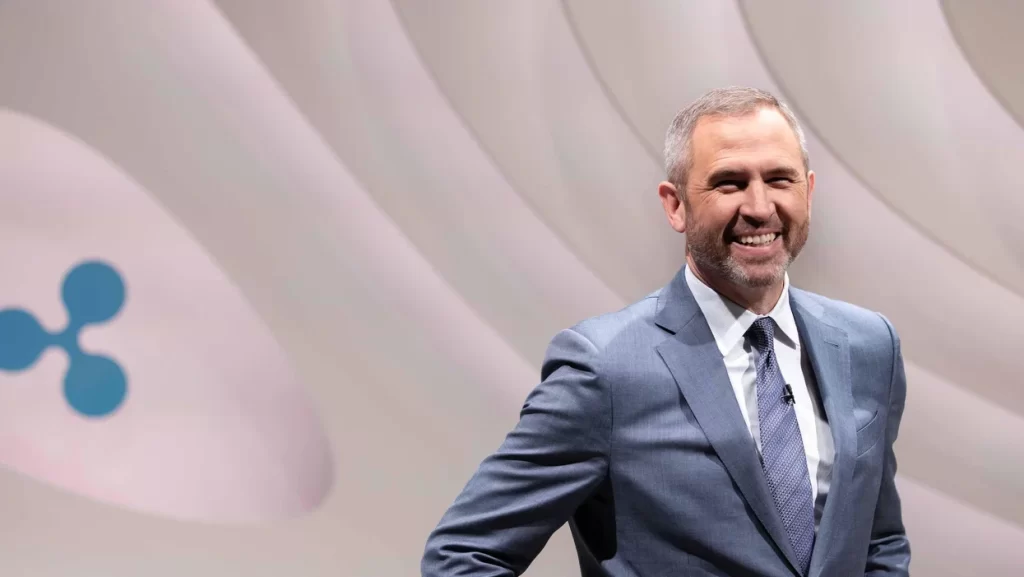
Ripple CEO Brad Garlinghouse criticizes Michael Saylor’s approach to funding Bitcoin purchases, arguing it has added pressure to the wider crypto market during the recent downturn.
Strategy recently authorized up to $1.25 billion in Bitcoin sales to support dividends, reserves and buybacks. The move marked a shift from the company’s long standing refusal to sell any of its holdings.
Garlinghouse addressed the topic in a CNBC interview shared by Squawk on the Street. “I think team Michael Saylor wasn’t focused on the right stuff, and that has hurt the overall market.”
He reinforced the point afterward on X, framing his criticism around a broader principle. “Financial engineering doesn’t drive long-term value. Utility does.”
Garlinghouse argues that lasting value in digital assets should come from real world use rather than complex capital structures built to keep buying Bitcoin.
His comments place XRP and Ripple’s strategy in direct contrast with Strategy’s model. Garlinghouse has positioned XRP at the center of Ripple’s 2026 push into payments, custody and treasury management.
Strategy’s enterprise value recently fell below the value of its own Bitcoin holdings for the first time. Its mNAV ratio sits at 0.99, a milestone that could weaken confidence in the company’s long running bet.
The company’s STRC preferred stock, designed to trade near a $100 reference level, has continued sliding well below that mark. Investor demand for the product has come under increasing scrutiny.
Strategy has approved a new Digital Credit Capital Framework allowing it to monetize up to $1.25 billion of Bitcoin if needed. The company still holds 847,363 BTC bought for roughly $64 billion.
That average cost sits near $75,650 per coin, leaving the position billions of dollars underwater whenever Bitcoin trades below $60,000.
Garlinghouse was careful to separate his criticism of Strategy’s financing method from his broader view on Bitcoin itself, saying he remains bullish on the asset long term.
His remarks land as both Bitcoin and XRP stay under pressure following months of weak price action across the wider crypto market.
Ethereum treasury firm Sharplink has acquired 5,000 ETH at a cost of approximately $7.85 million, representing the company’s first ether purchase in eight months. The move is drawing attention as a sign of renewed corporate demand for the asset during a period of sustained selling pressure.
The purchase is particularly notable given the timing. Crypto equities and digital asset treasury companies have faced persistent headwinds through the second quarter of 2026, making fresh balance sheet buying a more deliberate signal than it might otherwise appear.
Sharplink operates as one of a small group of listed companies that hold Ethereum as a primary treasury asset, mirroring the strategy that Strategy popularised with Bitcoin. The company’s decision to resume accumulation suggests internal conviction that current price levels represent value.
Ethereum has traded around the $1,560 to $1,580 range in recent sessions, well below peaks seen in prior cycles. Open interest in ETH derivatives has fallen nearly 30 percent over the past 30 days, reflecting broad deleveraging and a market that has been shedding leveraged long positions.
The Fear and Greed Index for the crypto market sat at 17 at the time of the purchase, firmly in extreme fear territory. Contrarian buyers have historically viewed such readings as potential entry points, though the current macro environment has complicated that playbook.
Liquidation data from the past 24 hours showed Ethereum longs absorbing particularly heavy losses, with more than 82 percent of ETH liquidations on the long side. Against that backdrop, Sharplink’s purchase signals a willingness to take a contrary position in a market shedding risk.
The company has not publicly stated a price target or accumulation schedule. However, the resumption of buying after an eight-month gap suggests a strategy that is responsive to price levels rather than operating on a fixed time-based buying programme.
Corporate Ethereum treasury strategies remain far less common than their Bitcoin equivalents. Sharplink is among the few public companies to have built its identity around ETH accumulation, and its return to buying will be tracked by others in the sector watching whether institutional appetite for the asset is returning.
The purchase adds approximately 5,000 ETH to Sharplink’s holdings at a moment when the broader market remains under pressure. Whether the move marks a turning point or simply reflects one company’s assessment of value at current levels will depend heavily on how Ethereum trades in the weeks ahead.

Circle Internet Financial has announced a partnership with Japanese financial giant Nomura Holdings to launch a blockchain-based foreign exchange settlement service in Japan, with a planned rollout targeting 2027.
The collaboration will allow Japanese businesses to convert yen directly into USDC, Circle’s US dollar-pegged stablecoin, enabling cross-border payments and FX transactions to clear in near real time.
Japan’s FX market processes roughly $440 billion in daily transactions, according to Bank for International Settlements data.
Traditional bank wire transfers between yen and foreign currencies currently take two to three business days to settle.
The new system aims to bring that timeline down to minutes by routing transactions over a blockchain network.
Nomura will take responsibility for client onboarding, regulatory compliance, and integration with existing Japanese banking infrastructure.
Circle will supply the USDC payment rails through Circle Japan, its local entity that already works with SBI Holdings on domestic distribution.
The move follows Japan’s Financial Services Agency clearing USDC under updated payment rules, making it the first global dollar stablecoin approved for domestic corporate use in the country.
Target use cases include cross-border supplier payments, transfers between overseas subsidiaries, and corporate foreign exchange settlement.
Circle issued USDC carries a market capitalisation of approximately $73.8 billion, ranking it as the second-largest dollar-backed stablecoin globally.
The Circle-Nomura deal follows Ripple’s own Japanese expansion, with the company launching its RLUSD stablecoin through SBI VC Trade just one day earlier after securing separate approval from the Financial Services Agency.

Bitcoin steadied above $64,000 this weekend as traders monitored competing signals from the Middle East, with US-Iran peace discussions set to continue in Switzerland alongside a renewed Iranian threat to close the Strait of Hormuz.
The cryptocurrency (BTC) traded around $64,200 on Sunday, up roughly 0.9% over 24 hours but essentially flat across the week. BTC had dipped below $63,000 on Friday before clawing back losses as risk sentiment improved slightly heading into the weekend.
Most major digital assets posted modest gains alongside Bitcoin. Ether rose 0.5% on the day and 3.3% across the week to approximately $1,734, while Solana added 1.5% to reach $73. Tron gained 1.2% while Hyperliquid’s HYPE token emerged as the week’s standout performer, surging 14.8% over seven days despite a small Sunday decline. Dogecoin lagged the broader market, dropping 4.9% across the week.
Geopolitical developments continue to dominate sentiment across crypto markets. US and Iranian officials including Vice President JD Vance are due to open permanent ceasefire talks in Switzerland, though Iran’s separate order to close the Strait of Hormuz has complicated expectations around a lasting resolution.
The Hormuz strait carries approximately 20% of global seaborne oil and its closure would push energy prices higher, raising inflation concerns and increasing pressure on risk assets including Bitcoin. Analysts note that a confirmed reopening would remove a significant overhang, while any genuine disruption to oil flows could drag prices back lower.
Bitcoin has effectively tracked the arc of Middle East diplomacy in recent weeks. The token initially rallied on early ceasefire news before selling off when a prior truce collapsed, then again when US strikes followed a brief agreement in June. Traders have grown increasingly cautious about pricing in deals before they are formally signed.
Markets are also watching exchange volumes. Combined crypto exchange activity fell 3.45% in May to $4.41 trillion, the lowest monthly figure since September 2024. Real-world asset perpetual futures were a notable exception, with volumes rising 10.4% against the broader trend and hitting a new record high.
With Swiss talks now underway, the market’s next direction will largely depend on whether a durable agreement takes hold or tensions escalate further. Analysts say a ceasefire that holds would clear the macro uncertainty weighing on Bitcoin, while a breakdown would likely trigger renewed selling across risk assets.
Traders are watching the $63,000 level as near-term support, with a reclaim of $66,000 on strong spot volume seen as the key signal of a recovery in underlying demand.

Two of crypto’s most closely watched research desks have reached opposite conclusions on Bitcoin’s cycle low.
Standard Chartered says the bottom is already behind us, while Galaxy Research argues it is still ahead.
Geoffrey Kendrick, Standard Chartered’s global head of digital asset research, made his call in a Friday note.
He wrote that the cycle low for Bitcoin (BTC) has likely already been set at fifty nine thousand dollars.
That figure represents a fifty three percent drawdown from Bitcoin’s all time high near one hundred twenty six thousand dollars.
Kendrick pointed to three catalysts behind the turn, including the SpaceX initial public offering on Nasdaq.
He noted that some exchange traded fund holders sold positions to free up cash for the SpaceX listing.
Falling oil prices and an anticipated Bitcoin purchase from Strategy were cited as the other supporting factors.
Standard Chartered is watching for net positive spot Bitcoin exchange traded fund inflows as a confirmation signal.
Renewed corporate treasury buying and continued declines in oil prices are the other signals on its checklist.
The bank maintains a year end target of one hundred thousand dollars for Bitcoin and four thousand for Ethereum (ETH).
Galaxy Research, led by Alex Thorn, reached a markedly different conclusion in a separate cycle study this week.
Thorn argued that the traditional four year cycle is compressing, which shifts where the eventual floor sits.
Galaxy’s base case places the bottom between forty thousand and forty six thousand dollars by late this year.
The firm found that only four of thirteen historical indicators tied to past cycle bottoms have triggered so far.
Bitcoin’s current decline of around fifty one percent remains shallower than the seventy seven to eighty five percent drops of past cycles.
Galaxy also outlined a harsher scenario in which a deeper washout could push prices toward thirty to thirty seven thousand dollars.
A milder outcome was also flagged, with steady buying potentially holding a floor near fifty one to fifty four thousand dollars.
Despite their disagreement on timing and price levels, both firms reject the steep eighty percent style collapses of prior cycles.
Bitcoin traded near sixty three thousand eight hundred dollars as the competing forecasts circulated among traders this weekend.
The split highlights how differently major research desks are reading the same on chain and flow based data.