

Aave, a decentralized finance (DeFi) protocol, has recently launched GHO, a new algorithmic stablecoin pegged to the United States dollar (USD) on the Ethereum mainnet.
Currently, there is approximately $2.19 million worth of GHO in circulation.
In a blog post on July 16, Aave introduced GHO as a decentralized and over-collateralized asset.
The stablecoin is backed by various digital assets, including Ethereum’s native currency Ether (ETH) and Aave’s native token AAVE.
The launch of GHO on the Ethereum mainnet followed a community governance vote, with an overwhelming majority of 424 participating addresses voting in favor of the stablecoin.
Aave aims to address transparency concerns associated with centralized stablecoins like Tether’s USDT.
The assets supporting GHO are transparent and verifiable through on-chain data, ensuring accountability.
Aave highlighted that all transactions involving GHO are executed via self-executing smart contracts, and the data related to these transactions is readily available and auditable from the blockchain or through user interfaces.
READ MORE: Synthetix Expands DeFi Offering with Introduction of Infinex Derivatives Exchange
Moreover, Aave announced that the revenue generated by GHO would contribute to its decentralized autonomous organization (DAO) treasury. The governance of GHO is entrusted to AAVE and stkAAVE token holders.
The GHO stablecoin is accessible to the public, allowing anyone to mint GHO using the assets they supply as collateral into the Aave Protocol V3 Ethereum market.
This ensures that GHO is overcollateralized by multiple assets, enhancing its stability and security.
GHO’s launch adds to the growing number of DeFi-native algorithmic stablecoins.
Previously, on May 4, Curve, another DeFi protocol, introduced its flagship algorithmic stablecoin crvUSD.
However, MakerDAO’s Ethereum-based stablecoin DAI remains the largest algorithmic stablecoin in circulation, with a market capitalization of approximately $4.28 billion according to DefiLlama data.
Although decentralized stablecoins like GHO are gaining traction, the centralized stablecoin market continues to be dominated by issuers such as Tether and Circle.
Tether’s USDT and Circle’s USD Coin (USDC) account for 87% of the total circulating supply of USD-pegged stablecoins.
Currently, GHO is trading slightly below its targeted $1 peg, with a price of $0.9927 and reaching a low of $0.9814 on July 16, according to CoinMarketCap.
Cointelegraph reached out to Aave for comment but has yet to receive a response.
Other Stories:
Investor Spends $1.04 Million on PEPE Coin as Ripple CEO Criticizes SEC in Landmark Case
ARK Invest Sells More Coinbase Shares, Expands Investments in Meta Platforms and Robinhood
Eeon Intervenes in SEC Lawsuit Against Binance, Seeks Representation for Customers

The United States Securities and Exchange Commission (SEC) has started reviewing BlackRock’s application for a Bitcoin spot exchange-traded fund (ETF), one day after acknowledging Bitwise’s similar submission.
This preliminary step marks the SEC’s readiness to evaluate the feasibility and market impact of a Bitcoin spot ETF, despite being the first phase of a complex regulatory process.
Exchange-traded funds or ETFs are investment products that often track specific indexes, and in the crypto context, they replicate the value of one or more digital assets and comprise a range of cryptocurrencies.
The SEC stated on July 14 that it’s reviewing multiple fund applications, including those from Wise Origin Bitcoin Trust, WisdomTree, VanEck, and Invesco Galaxy.
The financial industry considers BlackRock’s move to apply for a Bitcoin spot ETF noteworthy, given its market standing.
READ MORE: ARK Invest Sells More Coinbase Shares, Expands Investments in Meta Platforms and Robinhood
The application includes an agreement for surveillance-sharing with Coinbase, a leading cryptocurrency exchange.
The ongoing competition to debut a Bitcoin ETF in the U.S. is viewed positively in the crypto sector.
With several applications in progress, the likelihood of approval increases, as the SEC can evaluate diverse strategies and considerations.
Despite the developments, the SEC has not yet approved a Bitcoin spot ETF within the U.S. Meanwhile, Canada has already greenlit this type of financial product.
Purpose Bitcoin, 3iQ CoinShares, and CI Galaxy Bitcoin are three substantial funds that have received regulatory approval in Canada.
Other Stories:
Synthetix Expands DeFi Offering with Introduction of Infinex Derivatives Exchange
Eeon Intervenes in SEC Lawsuit Against Binance, Seeks Representation for Customers
Investor Spends $1.04 Million on PEPE Coin as Ripple CEO Criticizes SEC in Landmark Case
San Francisco, US, July 17th, 2023, Chainwire
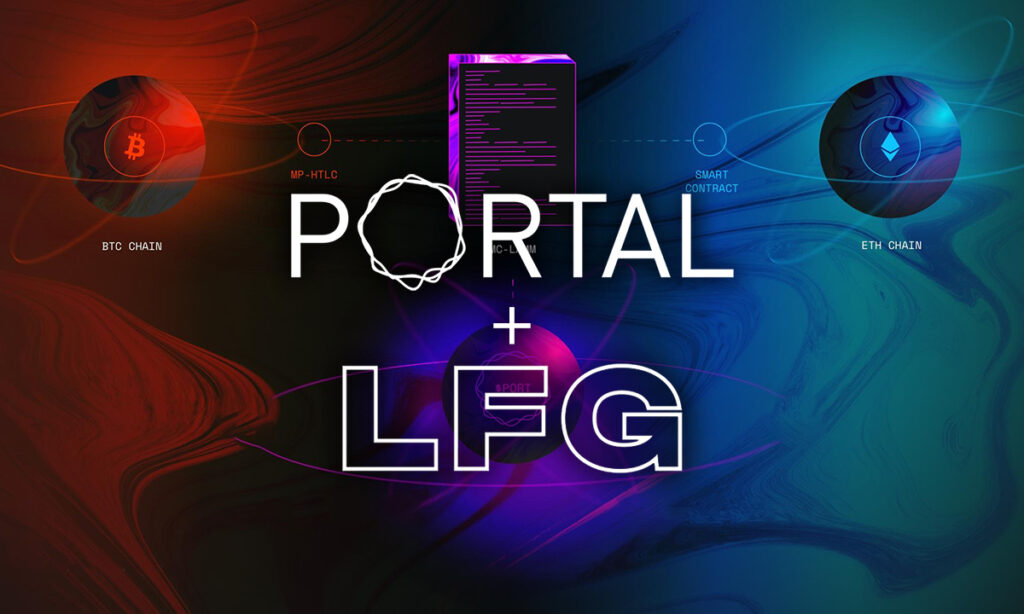
Portal, a self-hosted wallet and true cross-chain Layer-2 DEX built on Bitcoin, is thrilled to announce that LFG Market, a marketplace for Ordinal NFTs and Bitcoin-based BRC-20 tokens, has chosen to integrate the Portal DEX protocol to offer users cross-chain trading of Ordinals and BRC-20 tokens. The integration of Portal DEX will make cross-chain transactions between Bitcoin and other digital assets fast, secure, and private.
With this, LFG users will be able to purchase the Ordinal NFTs and BRC-20 tokens using assets from other chains such as Ethereum without bridges or custodians. Utilizing Portal’s “cross-chain Atomic Swaps” technology for payments in any NFT marketplace is a monumental “first” in the NFT ecosystem.
“LFG is looking for solutions that allow ETH and other NFT collectors seamless access to Ordinal trading, and we found Portal to be the best solution available. So it makes total sense to integrate Portal’s DEX protocol,” said LFG Market Co-founder Jason Rosenstein.
The creation of Ordinal inscriptions on the Bitcoin blockchain has led to over $210 million in Ordinals trading volume, according to the latest quarterly report by DappRadar. With DEXes gaining a stronger foothold in the crypto industry, the interest in NFTs on Bitcoin is only expected to shoot up in the future. According to Nansen, 4% of the US population owns an NFT; but it was almost non-existent on Bitcoin until the Ordinals revolution in 2023.
For Ordinals to truly take off as the value layer for data and information, cross-chain solutions are needed to bring the much bigger non-Bitcoin NFT audiences from across the blockchain space to access Bitcoin Ordinals with security and trust-minimization. Whether it’s Eth NFT fans or Solana NFT fans, there still is no ability to exchange their treasured NFTs in a trust-minimized way across chains. “Bridge” solutions and wrappers are cumbersome, often custodial, and highly vulnerable to security threats.
Portal’s “cross-chain Atomic Swaps” functionality being built into LFG Market and other DEXes allows for stablecoin payments – that today only exist on EVM-compatible chains – seamless access to Bitcoin BRC-20 and Ordinal purchases.
While the LFG Market currently accepts payments only in BTC, other tokens such as ETH, USDC, USDT, and even tokens on Layer 2 EVMs like Arbitrum and others will be accepted after integrating the Portal DEX protocol. Since Portal’s Atomic Swaps operate at Layer 2 without bridging, it is both the safest and least-expensive way to trade cross-chain. Portal is working on supporting as many compatible blockchains, wallets, and DeFi apps as possible.
Portal CEO Chandra Duggirala said, “Based on our research, we know that marketplace and DEX operators value UX and liquidity. We’ve worked tirelessly to ensure that our infrastructure integrates smoothly with their existing setups, minimizing engineering overhead, while cross-chain liquidity aggregation helps them increase volumes and offer more assets and features to their users.”
Portal believes that blockchains are “specialized” and that each chain is optimized to do one thing, at the expense of other tradeoffs. Bitcoin is purpose-designed to be sound, peer-to-peer money with superior censorship resistance. Ethereum, on the other hand, was designed for composable utility. By enabling seamless swapping of assets between incompatible chains, Portal helps aggregate liquidity across many chains, ending the fragmentation problem, and helping marketplaces like LFG and others grow their user bases and value propositions.
About LFG Market
LFG’s mission is to create a platform that simplifies and enhances the trading process of Ordinals and BRC-20 tokens. LFG is a seamless and efficient trading environment that enriches the digital asset ecosystem and facilitates novel financial interactions on top of Bitcoin.
For further information, visit: Website | Twitter | Discord
About Portal
Portal is building the cross-chain DEX protocol and ecosystem tools to help DEXes and users seamlessly own, exchange and contract across blockchains while minimizing custodial risk. With Portal, DeFi becomes a service that anyone can provide, maintaining anonymity within open, transparent markets with a security model as robust as Bitcoin mining.
For media inquiries, please contact: [email protected]
For further information, visit: Website | Twitter | Telegram
Contact
CEO
Chandra Duggirala
Portal
[email protected]

Binance, a popular cryptocurrency exchange, has successfully integrated the Bitcoin Lightning Network into its platform, enabling users to make BTC withdrawals and deposits using this layer-2 scaling solution.
In a blog post on July 17, Binance confirmed the development and highlighted the availability of the Lightning Network option for Bitcoin transactions, alongside other choices such as BNB Smart Chain, BNB Beacon Chain, BTC (SegWit), and Ethereum ERC-20.
The decision to integrate the Lightning Network came after Binance temporarily halted BTC withdrawals in May due to a surge in pending transactions caused by high network gas fees.
These fees were primarily driven by the emergence of memecoins in the form of BRC-20 tokens, which introduced a new token standard on the Bitcoin network.
READ MORE: Investor Spends $1.04 Million on PEPE Coin as Ripple CEO Criticizes SEC in Landmark Case
The integration of the Lightning Network was first hinted at by Binance in May, but it was officially announced on June 20 when users noticed Binance’s Lightning nodes.
Binance now joins the ranks of other prominent exchanges such as Bitfinex, River Financial, OKX, Kraken, and CoinCorner that have embraced this layer-2 scaling solution.
In April, Coinbase CEO Brian Armstrong expressed his intention to integrate the Bitcoin layer 2 network on Coinbase, but no specific timeline was provided.
The Lightning Network is designed to enhance the speed and cost-effectiveness of Bitcoin transactions by enabling users to establish off-chain transaction channels.
With the Lightning Network integration, Binance aims to provide its users with a more efficient and seamless experience when conducting Bitcoin transactions.
By leveraging this layer-2 scaling solution, users can enjoy faster and more cost-effective transfers, thereby addressing the challenges posed by high transaction fees and network congestion.
As the cryptocurrency industry continues to evolve, the adoption of technologies like the Lightning Network represents an important step towards improving the scalability and usability of cryptocurrencies.
The integration of this solution by Binance and other leading exchanges underscores the growing recognition of the Lightning Network’s potential to enhance the efficiency and accessibility of Bitcoin transactions, ultimately benefiting users across the ecosystem.
Other Stories:
Synthetix Expands DeFi Offering with Introduction of Infinex Derivatives Exchange
Eeon Intervenes in SEC Lawsuit Against Binance, Seeks Representation for Customers
ARK Invest Sells More Coinbase Shares, Expands Investments in Meta Platforms and Robinhood
The United States Securities and Exchange Commission (SEC) has taken a significant step in the potential approval of a spot Bitcoin exchange-traded fund (ETF).
BlackRock, a prominent financial firm, has had its application accepted by the SEC, following a similar acknowledgment of Bitwise’s application the previous day.
Accepting BlackRock’s proposal marks the beginning of the official review process for their ETF.
While this is just the initial stage of a lengthy regulatory journey, it signifies the SEC’s willingness to explore the concept of a spot Bitcoin ETF and evaluate its potential impact on the market.
ETFs are investment funds that typically track specific indexes and are commonly traded on exchanges.
In the realm of cryptocurrencies, a cryptocurrency ETF refers to a fund that mirrors the value of one or more digital tokens and encompasses a range of cryptocurrencies.
On July 14, the SEC also announced that it is currently reviewing applications for various funds, including Wise Origin Bitcoin Trust, WisdomTree, VanEck, and Invesco Galaxy.
READ MORE: Bitcoin Long-Term Holders Return as BTC Price Surges
BlackRock’s participation in the race to launch a spot Bitcoin ETF holds great significance due to its stature in the financial industry.
Their filing for a spot Bitcoin ETF includes an agreement for “surveillance-sharing” with Coinbase, a prominent cryptocurrency exchange.
The competition among companies striving to be the first to introduce a Bitcoin ETF in the United States is viewed as a positive development for the crypto industry.
With multiple applications being considered, the chances of success increase, and the diverse proposals allow the SEC to evaluate different strategies and concerns.
While the SEC has not yet approved a spot Bitcoin ETF in the United States, such financial products are already available in Canada.
Regulators in the country have approved three significant funds: Purpose Bitcoin, 3iQ CoinShares, and CI Galaxy Bitcoin.
The acceptance of BlackRock’s application and the ongoing review process for other ETF proposals indicate a growing recognition of the potential of cryptocurrencies in the mainstream financial sector.
As the SEC continues its evaluation, the market eagerly awaits the decision on the first spot Bitcoin ETF in the United States.
Other Stories:
Coinbase Temporarily Suspends Staking Services
SEC Stresses Crucial Clarification Amid Coinbase Battle
Cardano Surges 23.9% Following Favorable XRP Ruling, Investors Eye Further Gains
Synthetix, a decentralized finance (DeFi) protocol, is set to expand its product offerings with the introduction of a new derivatives front-end called Infinex.
The upcoming exchange aims to provide a decentralized trading infrastructure that caters to both novice and experienced traders, offering features similar to centralized exchanges (CEX).
This move is in response to the key issues identified with the current platform, Kwenta, a derivatives decentralized exchange (DEX) operating on Optimism.
Kain Warwick, the founder of Synthetix, highlighted some of the challenges faced by traders on the current platform.
Users are required to bridge their assets to the layer-2 rollup and exchange them for sUSD, Synthetix’s stablecoin used as margin collateral, before they can begin trading.
Additionally, every order or cancellation on the platform incurs a small fee due to the need for the trader’s wallet signature.
Warwick emphasized that the goal of Infinex is to address these issues and eliminate any doubts about the ability of decentralized perpetuals (Perps) to compete with centralized exchanges.
READ MORE: Coinbase Temporarily Suspends Staking Services
Warwick also pointed out the advantages of a noncustodial decentralized exchange, playfully mocking centralized exchanges like FTX for their counterparty risks.
He highlighted the dramatic collapse of FTX in 2022 as an example.
Infinex aims to offer a user-friendly experience for traders familiar with platforms like Binance.
It will provide access through a simple username and password, while still maintaining a noncustodial setup.
Each user will be assigned a unique public-private key pair generated by Infinex, which will be stored locally in the browser.
These keys will be used solely for signing trade orders and not for fund withdrawals.
While the technical implementation details of Infinex were not disclosed, Warwick mentioned that they were entrusted to the core developers.
The launch of the new DEX is expected to coincide with the release of Synthetix’s version three of its perpetual futures trading system, which is scheduled for the coming months.
With the introduction of Infinex and the improvements to its derivatives trading system, Synthetix aims to address the existing limitations and provide a more seamless and efficient trading experience for its users.
By combining the benefits of decentralized finance with features typically associated with centralized exchanges, Synthetix aims to further establish itself as a leading player in the DeFi space.
Other Stories:
Bitcoin Long-Term Holders Return as BTC Price Surges
SEC Stresses Crucial Clarification Amid Coinbase Battle
Cardano Surges 23.9% Following Favorable XRP Ruling, Investors Eye Further Gains
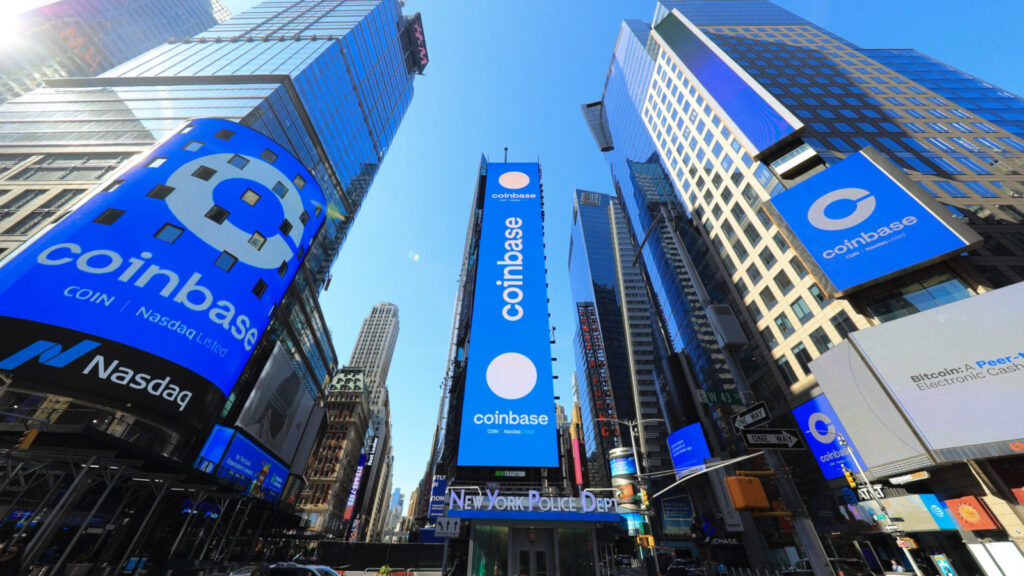
Coinbase, the popular cryptocurrency exchange, has been hitting new highs in the stock market, prompting ARK Invest, the investment management firm led by renowned investor Cathie Wood, to sell off more of its shares in the company.
This marks the second time in a week that ARK Invest has divested a portion of its Coinbase holdings.
At the same time, Wood’s firm has been actively investing in other companies like Meta Platforms and Robinhood Markets.
Recent trading data obtained by Cointelegraph reveals that on July 14, ARK Invest sold a total of 478,356 Coinbase shares, valued at around $53 million.
This sale coincided with Coinbase’s 52-week high of $114.43 per share.
The transactions included the sale of 263,247 Coinbase shares by ARK Innovation ETF, 93,227 shares by ARK Next Generation Internet ETF, and 35,666 shares by ARK Fintech Innovation ETF.
In June, Wood’s firm initiated purchases of Meta Platforms shares following the announcement of the launch of Threads, a social media app similar to Twitter.
ARK Innovation ETF acquired 69,793 Meta shares, while ARK Fintech Innovation ETF purchased 111,843 shares of Robinhood.
READ MORE: Bitcoin Long-Term Holders Return as BTC Price Surges
Furthermore, ARK Next Generation Internet ETF increased its holdings with 12,559 Meta shares and 169,116 Robinhood shares.
As of Friday, according to CoinMarketCap, Coinbase’s closing stock price was $105.31, experiencing a 1.58% decline as investors took profits.
Throughout the week, the price surged by 33%, reaching a 24-hour high of $114.43, indicating a year-to-date increase of 213%.
Alongside the general upward trend in crypto-related stocks, Coinbase received a boost from a summary judgment in the United States Securities and Exchange Commission vs. Ripple lawsuit.
This recent sale by ARK Invest follows previous divestments.
On July 11, Wood’s ARK Innovation ETF sold 135,152 Coinbase shares worth $12 million, and in March, ARK Fintech Innovation ETF sold 160,887 Coinbase shares.
ARK Invest’s moves in the cryptocurrency and technology sectors continue to attract attention, and investors closely follow their investment decisions.
As the market dynamics evolve, it will be interesting to observe how ARK Invest adjusts its portfolio and identifies potential opportunities in the ever-changing landscape of digital assets and emerging technologies.
Other Stories:
SEC Stresses Crucial Clarification Amid Coinbase Battle
Coinbase Temporarily Suspends Staking Services
Cardano Surges 23.9% Following Favorable XRP Ruling, Investors Eye Further Gains

Significant investment activity has been observed in the PEPE coin market, as reported by data analytics firm Lookonchain.
Between June 14 and July 11, a total of 536 Ethereum, equivalent to approximately $1.04 million, was spent on purchasing a staggering 613 billion PEPE coins.
The investor, known as “osf_rekt,” made the latest purchase of 173 billion PEPE coins just 16 hours ago, spending 141 Ethereum, which amounts to roughly $265,000.
PEPE coin, a meme-themed cryptocurrency that debuted in April, has been creating significant waves in the crypto market since its launch.
Within just a month, it reached a market capitalization of billions of dollars, showcasing its rapid growth and popularity.
Currently ranked 72nd in the global cryptocurrency market according to CoinGecko, PEPE coin is trading at $0.00000154 with a market capitalization of $646 million.
READ MORE: Coinbase Temporarily Suspends Staking Services
The 24-hour trading volume stands at a robust $73,568,386, indicating a high level of investor interest in this meme coin.
Despite the inherent volatility and unpredictability associated with meme coins and the crypto market in general, the PEPE coin continues to attract substantial investments.
Its impressive rise in value and significant market capitalization demonstrate the confidence investors have in its potential for returns.
The CEO of Ripple, Brad Garlinghouse, recently referred to the SEC as a “bully” following a landmark court decision in favor of XRP.
Garlinghouse expressed joy over the outcome, highlighting that it marked the first time the SEC lost a crypto case.
The SEC has been actively involved in crypto-related enforcement cases, leading to concerns within the crypto sector about the agency’s authority and its impact on the industry.
The Ripple case is particularly significant, as it challenges the SEC’s classification of XRP as a security.
The recent court ruling has been seen as a blow to the SEC, and it has prompted discussions about the agency’s reach and the need for clarity in regulations surrounding digital assets.
In conclusion, the PEPE coin market has witnessed substantial investment activity, with billions of coins being purchased over a month.
The cryptocurrency’s market capitalization and trading volume demonstrate its popularity among investors.
Meanwhile, the Ripple CEO’s criticism of the SEC highlights the ongoing debates surrounding regulatory oversight in the crypto industry.
Other Stories:
Bitcoin Long-Term Holders Return as BTC Price Surges
SEC Stresses Crucial Clarification Amid Coinbase Battle
Cardano Surges 23.9% Following Favorable XRP Ruling, Investors Eye Further Gains
Eeon, a third-party entity, has entered the legal battle between the United States Securities and Exchange Commission (SEC) and Binance, a cryptocurrency exchange.
According to court filings submitted to the United States District Court for the District of Columbia, Eeon argues that the SEC and Binance’s attorneys have failed to adequately represent the interests of Binance’s customers, prompting Eeon to step in and seek representation on their behalf.
Eeon asserts that they are the appropriate party to be involved in this case, citing a court order from June 17, 2023, which identified them as “Customers.”
They claim that they are not ordinary customers, but rather stakeholders, investors, and owners of cryptocurrency held by Binance and its subsidiaries.
Eeon firmly believes that their interests were not adequately taken into consideration during the legal proceedings.
The crux of Eeon’s argument is that cryptocurrencies should be classified as commodities rather than securities.
READ MORE: SEC Stresses Crucial Clarification Amid Coinbase Battle
They argue that cryptocurrencies are primarily used for personal and household purposes rather than commercial transactions.
Eeon also highlights the lack of specific regulations for cryptocurrencies, which limits the SEC’s jurisdiction over these assets.
Furthermore, Eeon alleges that Binance has exerted control over customers’ crypto assets by blocking access and withdrawals without proper notice.
They contend that the SEC’s actions have worsened the situation for investors instead of protecting their interests.
Eeon accuses the SEC of wrongly accusing customers of money laundering.
Consequently, Eeon is seeking a court order to grant customers access to their frozen assets on Binance’s platforms.
Eeon also argues that offshore fund transfers are a common and accepted practice, separate from money laundering activities.
They provide examples of various entities, such as e-commerce platforms, freelance services, consulting firms, small export companies, and travel agencies, that routinely engage in international money transfers without being associated with money laundering.
In their counterclaim, Eeon demands compensation from both Binance and the SEC.
They propose that the compensation should amount to 20% of the daily value of withheld funds per customer, totaling $1000 per day.
Additionally, Eeon asserts that both Binance and the SEC should equally share the responsibility of paying penalties, with $500 assigned to each party.
Cointelegraph has reached out to Binance for further information on the matter but has not yet received a response.
Other Stories:
Coinbase Temporarily Suspends Staking Services
Bitcoin Long-Term Holders Return as BTC Price Surges
Cardano Surges 23.9% Following Favorable XRP Ruling, Investors Eye Further Gains

United States Senator Cynthia Lummis has taken to Twitter to stress the importance of a recent court ruling by Judge Analisa Torres, which determined that Ripple’s XRP token should not be classified as a security when traded on digital asset exchanges.
Lummis used this ruling as a platform to emphasize the urgent need for Congress to establish a comprehensive and unambiguous regulatory framework for cryptocurrencies.
Lummis highlighted the significance of the court ruling and its implications for cryptocurrency regulation.
She emphasized that this verdict underscores the immediate necessity for Congress to create a robust crypto framework that prioritizes the protection of consumers.
As a long-time proponent of Bitcoin, Senator Lummis also underscored the importance of a transparent cryptocurrency framework that safeguards investors and fosters innovation in the crypto industry.
Furthermore, Lummis stressed the importance of maintaining the Howey test, which is the legal standard used to determine whether an investment qualifies as a security.
READ MORE: Cardano Surges 23.9% Following Favorable XRP Ruling, Investors Eye Further Gains
She specifically mentioned the Responsible Financial Innovation Act, also known as the Lummis-Gillibrand bill, a legislative initiative co-introduced by herself and Senator Kirsten Gillibrand.
The purpose of this bill is to provide clarity and establish regulatory guidelines for digital assets, aligning them with the interpretation of the Howey test.
Lummis’s call for congressional action carries significant weight, particularly given the wide-ranging implications of the legal dispute between Ripple Labs and the U.S. Securities and Exchange Commission.
The outcome of this case could set a precedent that shapes the regulatory landscape for digital assets in the United States.
The absence of well-defined guidelines leaves entrepreneurs and investors in a state of uncertainty, hindering innovation and economic growth.
While it remains uncertain how Congress will address Lummis’s plea for regulatory clarity in the cryptocurrency market, her efforts indicate an increasing recognition among lawmakers that the crypto industry requires a progressive regulatory strategy to unlock its full potential.
Other Stories:
Bitcoin Long-Term Holders Return as BTC Price Surges